
INTENDED POTENTIAL
Each country possesses certain positive qualities that enable it to compete for investment when attracting foreign capital. These can be natural resources, geopolitical features, the legal system, level of production, technological and cultural development, etc.
Since Ukraine has declared its independence, a certain rating of its investment attractiveness potential has also emerged.
Land takes the first place in this rating. Ukraine is one of the largest European countries with an area exceeding
600,000 km2 (almost 6% of Europe) with a land fund of over 60 million hectares. Agricultural land is about 19% of allEuropean farmland, including arable land — about 27%. The area of agricultural land is 42.7 million hectares (more than 70% of the territory of the country), and arable land is 32.5 million hectares (78.4% of all agricultural land). Forests make up 17.6% of the country, water areas — 4.0%. Per capita farmland is the highest among European countries. It amounts to 0.9 hectares, including 0.7 hectares of arable land (the average level in European countries is 0.44/0.25 hectares, respectively). A particular difference is black earth or chernozem. According to various scientific sources, its area ranges from 15.6 million to 17.4 million hectares (about 8% of world reserves).
The geopolitical position has traditionally and historically been the second most important indicator of the economic attractiveness of the country. From ancient times, large trade routes passed through the territory of Ukraine. Even in the times of Kievan Rus, there was the “route from the Varangians to the Greeks” (linking the Scandinavian countries with the Byzantine Empire) and the northern branch of the Great Silk Road.
There also was a route through Kyiv from the countries of Western Europe to the east, to the region of the Caspian Sea. The topic of forming a new-format Silk Road, which implies the participation of Ukraine, is being actively discussed now. In June 2015, the Chinese Ambassador to Ukraine Zhang Xiun stated that China is ready to invest in Ukrainian infrastructure to implement the New Silk Road initiative. Ukraine shares borders with seven countries, including two with maritime and land neighborhood, and also has a direct sea outlet to Turkey. Noteworthy, the country’s location provides economic advantages, especially in the development of logistics.
The industrial and technological level occupies the third place in the rating and has historical roots. In the times of the USSR, quite a powerful production and technological potential were formed in Ukraine. Much has been lost in the new economic environment after the collapse of the Soviet Union. Still, some industries have recovered and are
developing. In particular, this is fair about aviation, chemical and mining industries, some units of the machine building industry, and others. The industrial sector needs replenishment with highly qualified personnel, which in turn contributes to the existence and development of the scientific and technological sphere of the country. That is why the scientific and educational base has the fourth position among all the factors of the investment attractiveness of Ukraine. This base includes an extensive network of research institutes, laboratories, experimental facilities, and a good educational level of specialists in universities, which makes them competitive in world markets (such as IT). It also includes a rather high proportion of scientists (Ph.D.’s) and students — potential technicians and managers.
Among other factors of investment attractiveness are climatic conditions, minerals, and some other points. There are even purely cultural and social things: commitment to democratic European values, national traditions, historical belonging to Europe, and a desire to join the EU…
All this drives the following thought: What foreign capital would refuse to work in such a country?
REALITIES
However, investment reality is far from high hopes. For more than 10 years, FDI in Ukraine has been fluctuating within $1-3 billion, with a single peak for 2007-2008 (see Table 1).
We must mention that the main world investor — the USA — is on the 14th place in Ukraine (as of 2019) with the $537 million total volume of FDI. The Russian Federation is ranked first (in 2018 — 27.8% of total investments, banks capitalization) and next comes… Cyprus (19.5%). This is a clear indicator of Round tripping investments — Ukrainian business takes out the money and then returns it to the country as ‘investments’ (so, the ultimate controlling investor is a resident thyself). According to the NBU, the volume of such FDI of domestic origin was about $500 million in 2018, and the share of Ukrainian money in total FDI was over 20.6%. Over the past eight years, these investments have reached the level of $8.4 billion, with the most significant inflows in 2010- 2013 (about one-third of total FDI). Such operations are mainly carried out through Cyprus, as well as Austria, the Netherlands and Switzerland. According to the Ministry of Finance, the lion’s share of FDI in Ukraine is returned from offshore zones and capitalization of banks. Thus, returning the capital of domestic business rather than the inflow of purely foreign capital into the development of the Ukrainian economy is practiced.

Anyway, for a European country with a population of over 42 million, these are minor amounts. For comparison, Poland with a population of about 38 million has FDI of almost 10 times higher than in Ukraine. At the same time, Polish FDI has significantly increased — almost 1.5 times — in the timeframe from 2004 (joining the EU) to 2008 (the global financial crisis). This contributed to the quality growth of exports: it rose 1.6 times by the end of 2013 (compared to 2008), which exceeded the growth of imports (1.5 times).
As for non-resident equity, only $1.71 billion (according to other data — $2.476 billion) came to Ukraine in 2018 (January-October), but $491.5 million was gone. The largest investors of this period were Germany ($141,8 million), the United Kingdom ($103.5 million), and by a landslide — the Netherlands ($57.7 million) and Poland ($41.5 million). For comparison, FDI in Poland in 2018 amounted to more than $12 billion…
As for the investment market volume, financial transfers of Ukrainian labor migrants are more than impressive. In the first half of 2019, they sent home $5.5 billion, which is by $254 million more than the figure for the same period last year. By the way, this increase indicates about 50 thousand new employable citizens of Ukraine who went to work abroad (we assume that one labor migrant transfers $1 thousand). The loss of this work potential puts an additional strain on the social sphere and the entire country’s economy, reducing its professional and human resources.
CONTROVERSIAL POPULARITY
According to the State Statistics, the largest investments in the first half of 2019 were directed to financial and insurance activities ($487.4 million), as well as to the industrial sector ($258.7 million). Further down are professional, scientific and technical activities ($140.3 million), real estate operations ($121.9 million).
Paradoxically, even though the mentioned-above agricultural land takes the first place in the rating of investment attractiveness of Ukraine only $59.6 million has been invested in agriculture, forestry and fisheries. The agricultural sector is the only sector able to attract big money to the country. It is the most popular one in the international investment environment in the long run. Still, there is one more condition for that — the opening of the land market. This is probably what Prime Minister O. Goncharuk is hoping for when promising to attract a $50-billion investment in the coming years.
However, when analyzing the public reaction to the lifting of the moratorium on land sales, as well as expert opinions, there are doubts about the reality of these plans. There is a titanic “battle” between the authorities and lay public for opening the land market. Time will tell who will be the winner, and now we will address the numbers. If we compare the average price of 1 hectare of leased land (around 4000 UAH — this amount is forecasted for opening the land market) and the average price for the sale of 1 hectare (around 20 thousand UAH), we will find that selling land is not profitable. Leasing is. We’ll calculate the simple difference between selling and long-term leasing land for 10 years (considering the cost per hectare). At the current prices, a landowner will receive 40 thousand UAH from leasing. They will continue adding 4 thousand UAH to this amount annually. A person who sells land will receive 20 thousand UAH one-time. If the state, for example, sells land for 1 billion UAH, it will be only a one-off profit. But if they lease, they will receive 1 billion UAH in 5 years and 2 billion UAH in 10 years while keeping the land as own property. There is a difference between instant and long-term benefits, and the second demonstrates the state’s approach to the land fund economy.
The argument that only the owner will be effective on the land is partly speculative. The country’s 49-year lease rate is almost an eternity under radical market transformations. If we return to the above calculations, we will see that the state will get tenfold income for leasing land compared to selling it (including control of its use).
EXPECTATIONS AND OPPORTUNITIES
The Cabinet of Ministers Chairman O. Goncharuk was discussing the recovery of the economic situation in the country and made a promise at a press briefing: “In the next five years (we consider this situation real and we set such an ambition), we will achieve a 40% economy increase. To do this, we need to raise $50 billion in investments.” Thus, to recover the economy and achieve GDP growth of 40% in the next 5 years, Ukraine must attract 10 billion of investments. There are statistics according to which GDP growth was 2.5% in the first quarter of 2019 and 4.6% in the second (compared to the same period in 2018). This exceeded the forecasts of the NBU and some foreign organizations for 2019 by up to 3%. However, according to the forecasts of the National Bank, GDP growth will be 3.2% in 2020, and 3.7% in 2021.
It is worth revisiting the numbers. According to the Prime Minister, if Ukraine’s GDP is going to increase by 40% by the end of 2024, its annual growth rate should be 8%. The numbers might not be even, they may be smaller sometimes. In 2020 and 2021, GDP growth will total 6.9% according to the NBU forecast. So, the next three years — 2022, 2023 and 2024 should give us 33.1%, which is slightly more than 11% annually. Is GDP growth by 11% real for Ukraine? According to statistics, in 2017, the global economy grew by 3.2% in general, and by the end of 2018, the growth was 3.0% on average.
We should mention the amount of expected investment as a necessary condition for GDP growth. In 2018, FDI in Ukraine was about $2.4 billion (see Table 1), and in the first half of 2019, it was $1.074 billion (see Table 2).

These volumes are clearly not sufficient to achieve the government’s planned economic impact. To accelerate economic growth, annual investment in Ukraine must exceed $10 billion. The Minister of Finance of Ukraine O. Markarova states: “If we now attract $1.5 billion, $2 billion, $3 billion in recent years, and $2.4 billion last year, this is not enough for the country and an economy like ours. Let’s say, this is completely invisible. These investments should include extra $10 billion.” Here’s one more comparison: the World Bank estimates that if Ukraine continues to keep its GDP growth at the level of 3%, it will take at least 50 years to catch up with Poland…
ISSUES, CAUSES AND SOLUTIONS
In the media and backrooms of power, the decrease in foreign investment in Ukraine has been directly linked to Russian aggression. Without any doubt, this is a significant factor, but is it decisive? If we analyze the “investment history” of Ukraine over 10-15 years (see Table 1), we can see that in 2014 (the period of social instability and the beginning of aggression of the Russian Federation), FDI sharply reduced to the level of 2002-2004 next year. In the years after 2014, despite the aggressive geopolitical environment, the country’s economy was able to survive and even began to show positive dynamics (GDP growth was outlined). The elections caused a decline in FDI in the first half of 2019 — investors are waiting and watching. However, such negative trends have been common for almost all previous periods of presidential or parliamentary elections. The new government is now creating a comfortable
environment for foreign capital. The fact that FDI was a bit over $1 billion in the first half of this year is not yet an economic reflection. However, the essence of their decrease is probably in politics. In this regard, it is worth noting that sharp fluctuations in FDI during periods of governmental changes indicate that business is highly dependent on
political conditions. Most importantly, investment amounts are chronically incompatible with the country’s needs and its potential over the years of independence, so they cannot have any impact on the economic recovery and GDP growth. And this phenomenon is no longer dependent on the aggression of the Russian Federation…
On October 11, the President of Ukraine V. Zelensky signed the Law “On Amendments to Certain Legislative Acts of Ukraine on Encouraging Investment Activity in Ukraine” (No. 132-IX, entered into force 17.10.2019) to improve the investment climate. Still, there were similar precedents: the Law “On Amendments to the Tax Code of Ukraine on Improving the Investment Climate in Ukraine” (No. 1797-VIII of 12.12.2016), in which contradictions were found in several months, so it was re-introduced…
The RE: think. Invest in Ukraine investment forum is also widely announced. The event took place in Mariupol on October 29 with the participation of President V. Zelensky and Prime Minister O. Goncharuk. More than 50 representatives of international investment funds and companies, more than 350 guests took part, including businesspersons, government and local authorities, embassies. There also was an exhibition of investment projects… For Ukraine, this was the first international event of this kind.
At the Annual Meeting of the Yalta European Strategy in Kyiv, the President of Ukraine V. Zelensky reassured the guests of the paramount importance of foreign investment for the country and the desire to improve the economic environment for them: “We have a number of projects where I invite foreign business under my personal guarantees and security guarantees. This is energy, infrastructure, and transparent land turnover.”
THE SOURCE OF ALL PROBLEMS
All these good intentions usually come to naught because of many serious obstacles. Without removing them, no initiative, even with guarantees from the authorities, can be effective.
Corruption and, consequently, legal instability, bureaucracy, and often the incompetence of many officials are the main causes of inefficient and even harmful activity of the authorities.
According to 2018 data, Ukraine ranked 138th out of 180 ranks in the CPI and is considered the most corrupt in Europe after the Russian Federation (in 2017, Ukraine was close to Iran, the Gambia and Sierra Leone). According to the IMF report, in 2018, Ukraine was the poorest country in Europe, also ranked last among European countries in terms of official salary.
Representatives of many international organizations and leaders of developed European countries have already hinted that the main deterrent mechanism, not only for investment but also for economic cooperation with Ukraine, is determined precisely by the presence of systemic and large-scale corruption in the country. Criminal business has grown in power; people perceive oligarchy and politics as a whole. This — the presence of business in the executive or legislative branches — is unacceptable for European countries. An interesting fact: according to the Polish weekly digest Wprost, there are no politicians in the top ten richest people of the country…
Corruption and poverty, economic backwardness of the country are two interrelated and interdependent phenomena.
Surely, in these circumstances, it is impossible to speak about the legal justice of the judicial system. Foreign business does not trust it.
Due to incompetence, the mechanisms of doing business in Ukraine are extremely complicated. For example, according to the Doing Business rating, a business spends 327.5 hours a year to complete the entire tax procedure in Ukraine, while the average in Eastern Europe is 214.8, and among other developed countries — 154.9. There is almost a double difference.
Unfortunately, many representatives of the Ukrainian authorities are now inviting foreign capital or business (manufacturers, investors) under “personal guarantees”. It is nonsense. This is a throwback to the imperial times when a nobleman could allow or forbid something. The guarantees should be uniform — legal and legislative. The rest is populism, an attempt to advertise oneself as a patriot who worries about the state. Serious investment has been coming into the country for many years, if not decades. The main condition for the presence of foreign (as well as domestic) business is political, legislative and social stability in the country. It is about forming the economic situation, not by a “guarantor” but the law.
After all, the authorities generously giving out “personal guarantees” today can be dismissed tomorrow, and it is doubtful that the new team will be committed to the protégé of their political opponents. This situation makes businesses entirely dependent on a fast-paced political environment. Only the law equal for everyone and compliance with it can guarantee economic security for investors.
That’s why investors expect not only the legal changes in Ukraine but also improvements of the mechanisms of implementation of legislation, in particular, the proper functioning of the judicial system, the impartiality of the power and control bodies. Most importantly, a conscious and sincere desire of Ukrainian officials to promote the development of their country.
Solving these issues can transform Ukraine, given its potential, into one of the most desirable countries to create a strong financial and economic environment. Only then investments will come from the “impossible” category into the “inevitable” one.
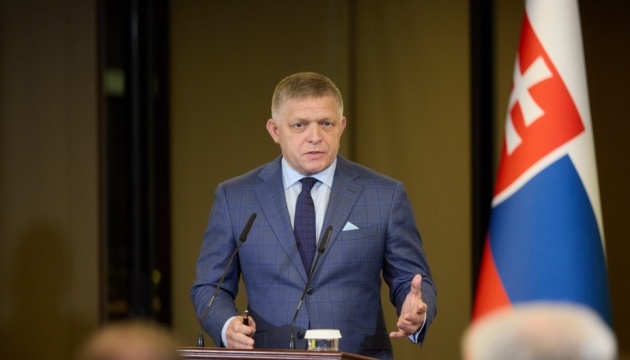
The company SEPS, Slovakia’s transmission system operator, has sent an official letter to Ukrenergo announcing the unilateral termination of the Agreement on Mutual Emergency Assistance. The termination of the contractual terms will take effect in May 2026. This was reported by Ukrenergo on its Telegram channel. “The reasons why our colleagues decided to cancel the […]
The company SEPS, Slovakia’s transmission system operator, has sent an official letter to Ukrenergo announcing the unilateral termination of the Agreement on Mutual Emergency Assistance. The termination of the contractual terms will take effect in May 2026. This was reported by Ukrenergo on its Telegram channel. “The reasons why our colleagues decided to cancel the […]
The administration of Donald Trump has begun a large-scale process of releasing oil from the country’s strategic reserves, submitting a request for 86 million barrels of crude oil. This was reported by Bloomberg, citing the United States Department of Energy. In a statement, the department said that supplies from the Strategic Petroleum Reserve are part […]
Oil flows through the Strait of Hormuz have collapsed amid the escalation of the conflict in the Middle East, with supplies now far below normal levels. This is stated in a new report by Goldman Sachs. The bank estimates that average daily flows through the Strait of Hormuz have dropped by 97% compared with normal […]
Saudi Arabia, the world’s largest oil exporter, has reduced its oil production by about 2 million barrels per day to roughly 8 million barrels per day due to the conflict in the Middle East, according to Reuters, citing two sources. Riyadh is redirecting more oil to Yanbu on the Red Sea coast, bypassing the Strait […]
Naftogaz has definitively won a legal dispute with the Russian gas monopoly Gazprom over the payment of $1.4 billion in debt for gas transit services, according to the Ukrainian company’s press service. “The Swiss Federal Supreme Court has fully rejected Gazprom’s request to overturn the arbitration award of June 16, 2025, under which the Russian […]

The fortune of Pavel Durov, the owner of the messenger Telegram, has dropped from $17.1 billion to $6.6 billion, according to Forbes, citing investment bankers. The 61% decline in his wealth is attributed to falling valuations of comparable technology companies. Sources say that over the past year no new investor presentations from Telegram have appeared […]

BMW is working on a new SUV designed to compete with the iconic Mercedes-Benz G-Class, according to Motor1. Official information about the model remains limited, but more details about the upcoming vehicle are gradually emerging within the industry. According to insiders, the project is internally known at BMW under the codename G74, although this name […]

JPMorgan shares increased because of the announcement of financial results for the 2nd quarter ended on June 30. Since the beginning of the year, JPMorgan shares have lost almost 30% because the global COVID-19 pandemic has hit the global economy, and the US Federal Reserve has cut rates to zero greatly reducing the profitability of […]
Next
Agricultural holding “Industrial Milk Company” (IMC) is planning to raise $ 20 million funding from the European Bank for Reconstruction and Development for appending of the floating capital. According to the bank’s website, the board of directors plans to consider the relevant draft at the meeting on April 20. The total cost of the project […]
Next
The Council of the European Union is set to approve two EU legislative acts on Tuesday, February 24, providing Ukraine with a €90 billion loan. The measures will allow technical work on the loan to continue even as Hungary blocks a third bill required to complete the process. This was stated by European Commissioner Valdis […]
Next
Shares of Zoom Video Communications, which rose 716% over the past 12 months, rose 5.8% during trading on Monday, but closed with an increase of 1.23%. This is very different from the general decline in the market on Monday – major US stock indexes closed lower: the S&P 500 by 1.86%, the Dow Jones by […]
Next
Microsoft will stop supporting Windows 10 on October 14, 2025. This was reported by the company’s press service. Thurrot writes that this means the date of the “death” of Windows 10. The publication adds that the new generation of operating system, which Microsoft will present next week, will not be called Windows 10, at least, […]
Next
The Digital Future Investment company became a co-investor in the startup YouAppi round “B”. According to the CEO of the Digital Future, Alexei Vitchenko, this is the first transaction of the Ukrainian investment company in the “B” round level. The deposit amount is not disclosed. American-Israel YouAppi service was founded in 2011. YouAppi technology is […]
Next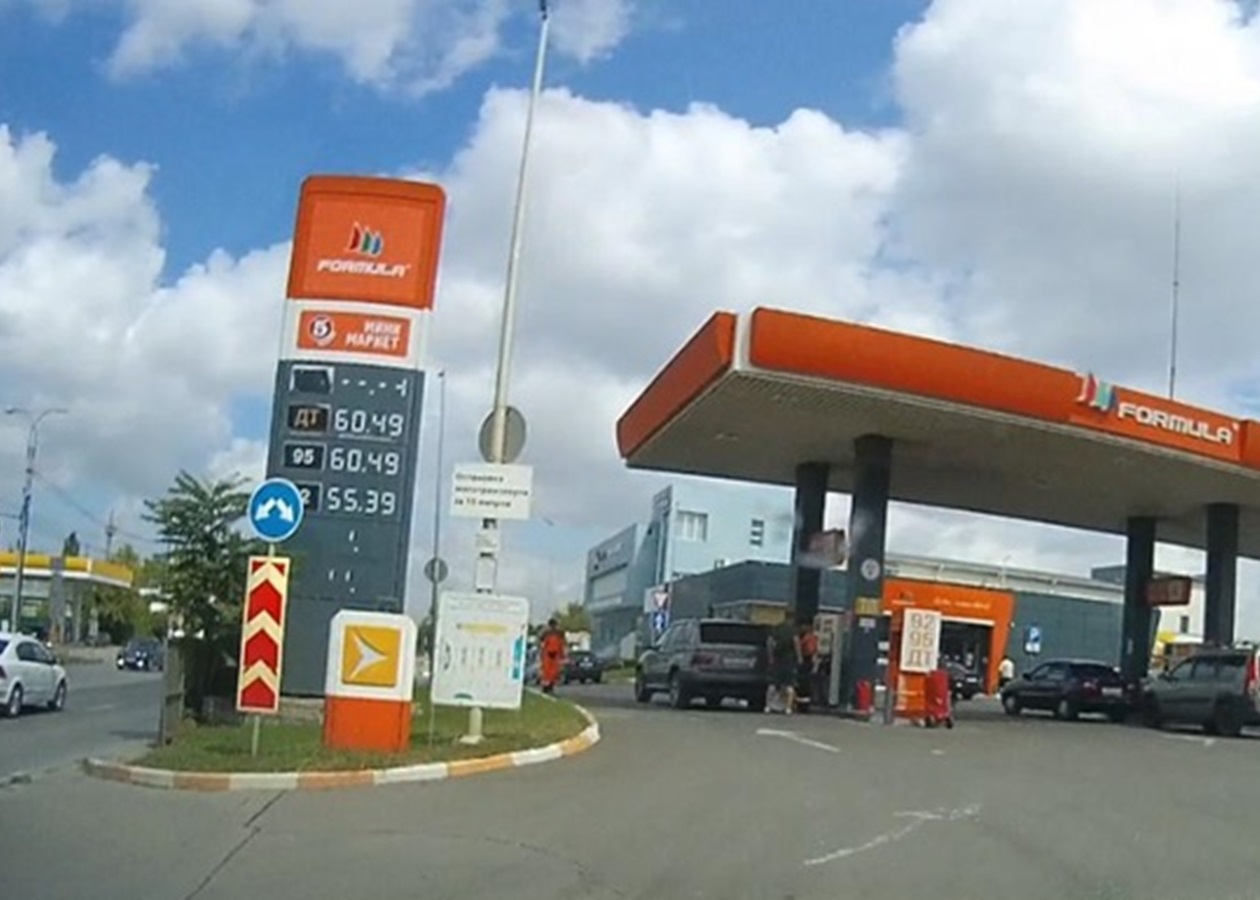
In temporarily occupied Crimea, gas stations have restricted the sale of AI-95 gasoline due to shortages, The Moscow Times reports. According to local residents, this type of fuel has disappeared from most stations, while at those where it is still available, sales are mostly made using vouchers issued by companies. The price of AI-95 has […]
Next
The European automotive market began 2026 in decline: in EU countries, the United Kingdom, and the European Free Trade Association (EFTA), 961,382 new cars were registered in January — 3.5% fewer than a year earlier, according to Carscoops. Sales of Tesla in the region fell by 17% to 8,075 vehicles. The company’s market share declined […]
Next
In the United States, Ford Motor Company announced a large-scale recall of nearly 500,000 Ford Edge and Lincoln MKX vehicles and more than 105,000 Mustang vehicles. According to Reuters, the first recall is due to a possible malfunction in the braking system, while the second is due to a failure of the exterior lighting. In […]
Next
Shares of Pfizer and BioNTech fell 1.74% and 2% (respectively) on Thursday amid news that companies will deliver half of their planned number of vaccines against COVID-19 in 2020. On November 20, Pfizer and its German partner BioNTech applied to the FDA (US Food and Drug Administration) for permission to use their vaccine in an […]
Next
Ukrainian companies need to boldly experiment with artificial intelligence (AI). Success will belong not to those with the most powerful model, but to those who integrate it most effectively into their processes. This was discussed during a panel at this year’s Forbes Tech 2025, according to the press service of Metinvest. The discussion featured Oleksii […]
Next
For the three quarters of 2021, the budget was overfulfilled in terms of revenues by 5.3%, or UAH 46.65 billion, from the plan and exceeds last year’s level by 20.8%. This was reported on the website of the State Treasury. In particular, in September the budget was overfulfilled by 6.4%, or UAH 6.2 billion, and […]
Next
The United States has given Germany a six-month deadline to resolve the issue of Rosneft’s German assets, allowing them to be temporarily exempted from U.S. sanctions, Bloomberg reported, citing informed sources. The Trump administration has indicated to Berlin that it is considering issuing a limited, non-renewable general license for Rosneft Deutschland. German authorities are currently […]
Next
Hyundai Motor Company and General Motors have unveiled initial plans for five jointly developed vehicles. Four of the vehicles — a compact crossover, a sedan, a pickup truck, and a mid-size pickup — are targeted at markets in Central and South America. All models will be available with both gasoline engines and hybrid powertrains. The […]
Next
TUI will receive another 1.2 billion euros in state aid in connection with the effects of the coronavirus pandemic, the press service of the travel concern said. “The € 1.2 billion stabilization package strengthens the group’s position, providing sufficient liquidity in an unstable market environment. This applies to both the tourist season of the winter […]
Next
Rising prices for memory chips are significantly affecting the production cost of smartphones. According to analysts at Counterpoint Research, in the first quarter of 2026 the cost of memory for manufacturers of budget smartphones could increase by 25%, reaching about 43% of the total cost of components. This estimate is based on a typical configuration […]
Next