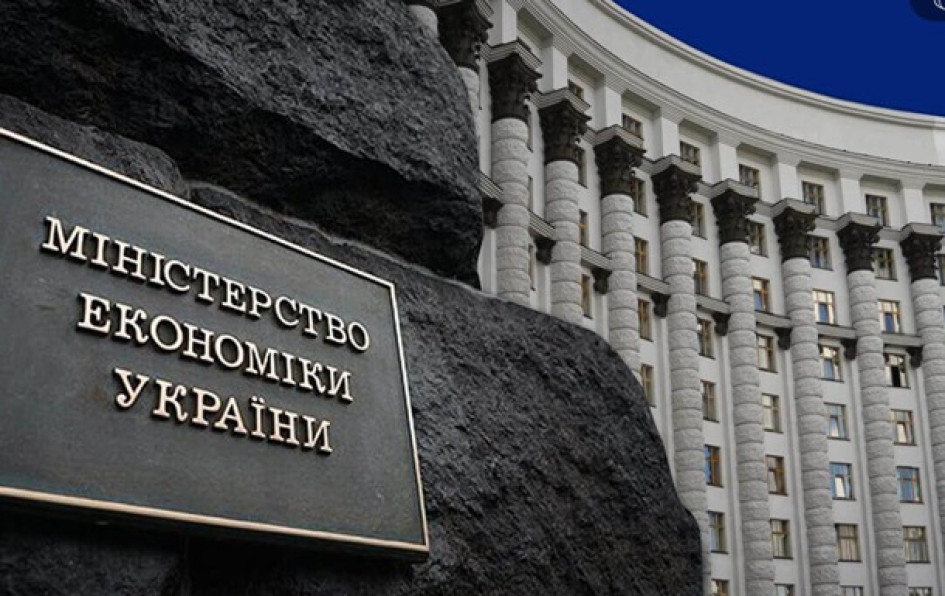
In addition to “standard” privatization and the sale of sanctioned assets, the Ministry of Economy, Environment, and Agriculture of Ukraine is also working at the conceptual level on the possibility of partially selling strategic assets. This was stated by Deputy Minister Daria Marchak in an interview with Interfax-Ukraine.
“We are talking about assets that are strategic for the state, where a controlling stake must remain in state ownership. We are currently shaping a vision for the procedure and possible instruments of such partial privatization. Among the potential mechanisms are auctions, IPOs, or private placements,” she said when asked to comment on government statements about the possible privatization of assets such as state-owned banks, Ukrnafta, and Energoatom.
According to Marchak, specific assets are being discussed within the government and with international partners in order to begin preparing them.
“The immediate goal is to prepare several companies for the possibility of attracting a minority shareholder in 2026. This is not only about the sale procedure itself, but also about ensuring transparency and clarity of all financial flows within the companies,” the deputy minister noted.
She explained that this involves issues such as public service obligations (PSOs), audit reporting, and transparent corporate governance.
“All of this represents a major body of work that needs to be carried out within each company to prepare it for the possible entry of a minority shareholder. Our task is to bring in a strategic international investor who will contribute capital, expertise, and new technologies,” Marchak emphasized.
She added that ideas such as investment accounts and a “people’s IPO” — the sale of small share packages to Ukrainian citizens — are also being discussed. However, the main objective is to ensure that state asset management and share sales can ultimately generate added value.
“We want state-owned companies in Ukraine to become the foundation of the capital market, enabling the emergence of new investment instruments and attracting foreign investment. Something akin to a sovereign fund may also appear, generating additional value for the country. However, this would be the final stage in terms of public asset management processes,” the deputy minister said.
Regarding the involvement of privatization advisors, she noted that different approaches are being considered for “standard” privatization and partial privatization. Discussions are ongoing with international partners — the IFC, World Bank, EBRD, European Commission, and the UK government — on how best to structure cooperation.
“The general approach is to involve partners who will take responsibility for specific assets and help prepare them for sale. With our international partners, we are determining who can handle which part of the work: due diligence, mitigation of legal risks, or M&A processes. In a way, we are creating a matrix of support,” Marchak explained.
According to her, it is still too early to announce anything specific, as negotiations are ongoing. However, discussions are becoming increasingly concrete, with the aim of ensuring that each major asset is professionally prepared for sale.
“Advisors are clearly needed. The question is what functions they will perform and who will pay them. In the case of full privatization, the government is unlikely to fund the preparation of each individual asset. For partial privatization, we are asking international partners to support the provision of advisory services for preparing and facilitating sales. It is up to them whether they use their own resources or hire external consultants,” she added.
Marchak also noted that during discussions with Ukraine’s investment community, experts expressed satisfaction with the privatization procedures but called for post-privatization support. Therefore, one of the key tasks for the team this year is to develop a framework for such support.