OnePlus may exit the U.S. and European markets as early as this April

OnePlus may soon cease operations in the United States, the United Kingdom, and EU countries, 9to5Google reports. According to unofficial information, the wind-down of operations in these regions could take place as early as April 2026.

This was reported by insider Yogesh Brar, and 9to5Google itself confirms the information, citing a source familiar with internal processes at OnePlus. The move would involve a full exit from key global markets, with a renewed focus on Asia—particularly China and India.

An additional signal to the market was the recent resignation of OnePlus India head Robin Liu after seven years in the role, which has further fueled rumors of a major brand restructuring.

At the same time, it remains unclear how a potential shutdown would affect existing users. Previously, OnePlus had promised to maintain support, including software updates and service maintenance.

Rumors about a possible withdrawal from global markets first emerged earlier this year, but official representatives of the brand denied such plans at the time. As of now, the company has not provided a clear response to the new reports, leaving the situation uncertain.

Apple has officially discontinued the Mac Pro and does not plan new models

Apple has officially stopped selling the Mac Pro, bringing an end to one of the most powerful and expensive computers in its lineup. As reported by 9to5Mac, the device has already been removed from the company’s website, and its purchase page now redirects users to the general Mac catalog.

Moreover, Apple confirmed that it does not plan to release new generations of the Mac Pro, effectively shutting down this product line for good. The last version of the model, introduced in 2019 and updated in 2023 with the M2 Ultra chip, never received further development and remained on sale unchanged with a starting price of $6,999.

Instead, the company is focusing on the Mac Studio, which is now positioned as its primary professional desktop computer. The device is available with more advanced chips, including the M3 Ultra, and offers configurations with a 32-core CPU, 80-core GPU, up to 256 GB of unified memory, and storage of up to 16 TB.

Following the discontinuation of the Mac Pro, Apple’s desktop lineup now consists of three models: iMac, Mac mini, and Mac Studio. The company also continues to develop its laptops, including MacBook Air, MacBook Pro, and the new MacBook Neo.

In addition to being surpassed by the newer Mac Studio, advances in software have also reduced the need for ultra-powerful workstations. In particular, macOS Tahoe introduced the ability to link multiple computers via Thunderbolt 5 to scale performance, partially replacing use cases previously handled by the Mac Pro.

The Indian rupee has fallen to a historic low

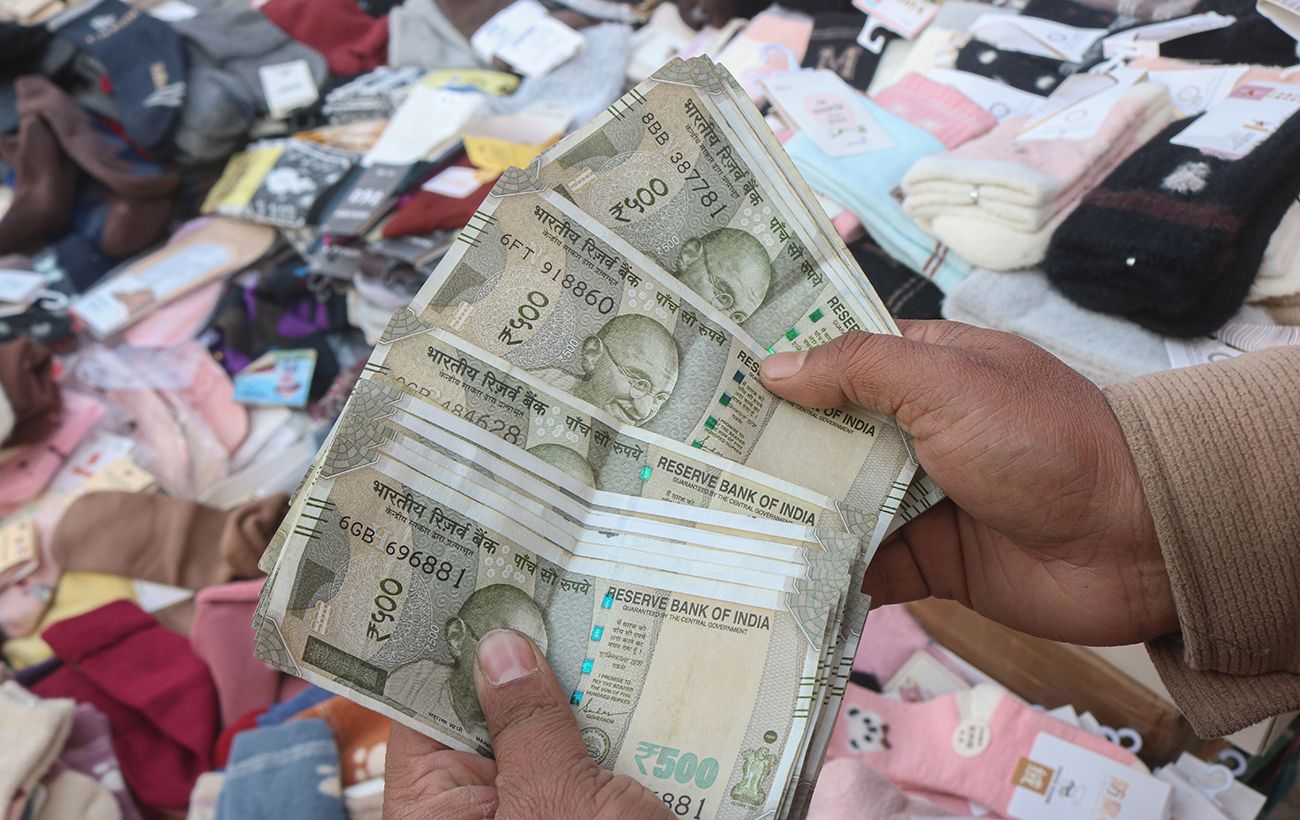
India’s currency dropped to a record low, breaching the level of 94 rupees per dollar, amid an energy supply crisis triggered by the war in the Middle East, Reuters reports.

By the end of the financial year in March, the rupee may post its steepest decline in more than a decade. On Friday, it weakened by 0.6% to 94.6525 per dollar, surpassing the previous all-time low of 93.98 reached earlier this week. Since the U.S.–Israeli strikes on Iran began on February 28, the rupee has fallen by about 4%, and by more than 10% since March 31, 2025.

A comparable collapse occurred in 2011–2012, when the rupee dropped nearly 14% due to a global decline in risk appetite driven by concerns over eurozone debt levels and weaknesses in India’s external sector.

Although investor sentiment improved slightly after the U.S. president’s decision to give Tehran another 10 days to reach a deal to end the war, reports indicate that Donald Trump is considering sending additional U.S. troops to the Middle East.

Analysts have downgraded India’s GDP growth forecast, predicted further weakening of the rupee, and some also expect central bank rate hikes over the next 12 months, as the conflict could trigger a surge in global inflation.

Even if the war with Iran does not drag on, Bernstein analysts see a real possibility that the rupee could breach 98 per dollar in 2026, with pressure primarily stemming from India’s strained current account balance.

Société Générale recommends shorting the rupee against the dollar, with a target of 96 rupees per dollar.

Ukraine’s GDP decline offset 66% of 2025 growth

Ukraine’s economy remains challenging at the start of the year. According to estimates by the Ministry of Economy, GDP fell by 1.2% in January–February. This was reported by Economy Minister Oleksii Soboliev during a Q&A session with the government in the Verkhovna Rada.

In 2025, the economy showed growth of 1.8%, while inflation stood at 8%.

According to calculations by Ekonomichna Pravda, the decline in the first two months of 2026 effectively offset about 66% of last year’s GDP growth.

Among the reasons for the deterioration, the minister cited intensified Russian attacks, unusually cold weather, and energy constraints that forced some enterprises to suspend operations.

The sectors most negatively affected were electricity supply, extractive industries, metallurgy, and transport.

At the same time, Soboliev noted that some of these factors are temporary. Despite the overall decline, certain sectors showed positive dynamics: in January, domestic trade grew by 13%, construction by 3%, and manufacturing indicators also increased.

In addition, according to the National Bank of Ukraine, the business sentiment index rose to 45.9 in February from 41 in January, while goods exports increased by 1.7% in January and by a further 3.6% in February.

The Ministry of Economy expects economic activity to begin recovering alongside warmer weather and improvements in the energy sector.

India has purchased Tunguska systems from Russia for $47 million

India’s Ministry of Defence has signed a contract with JSC Rosoboronexport for the supply of Tunguska anti-aircraft gun-missile systems to the Indian Army worth over $47 million, the ministry said.

“These advanced missile systems will enhance India’s multi-layered air defense capabilities against aerial threats, including aircraft, unmanned aerial vehicles, and cruise missiles,” the statement reads.

It is also noted that the agreement “will further strengthen the India–Russia strategic defense partnership.”

The Tunguska air defense system is designed to protect motorized infantry and tank units, as well as various facilities, from air attacks. The system is capable of effectively engaging low-altitude aerial targets, including drones, cruise missiles, helicopters, and aircraft.

Earlier, Russian media reported that India is allegedly considering the purchase of up to 40 Russian fifth-generation Su-57 fighter jets to strengthen the country’s air force.

Thailand and Iran have agreed on the transit of vessels through the Strait of Hormuz

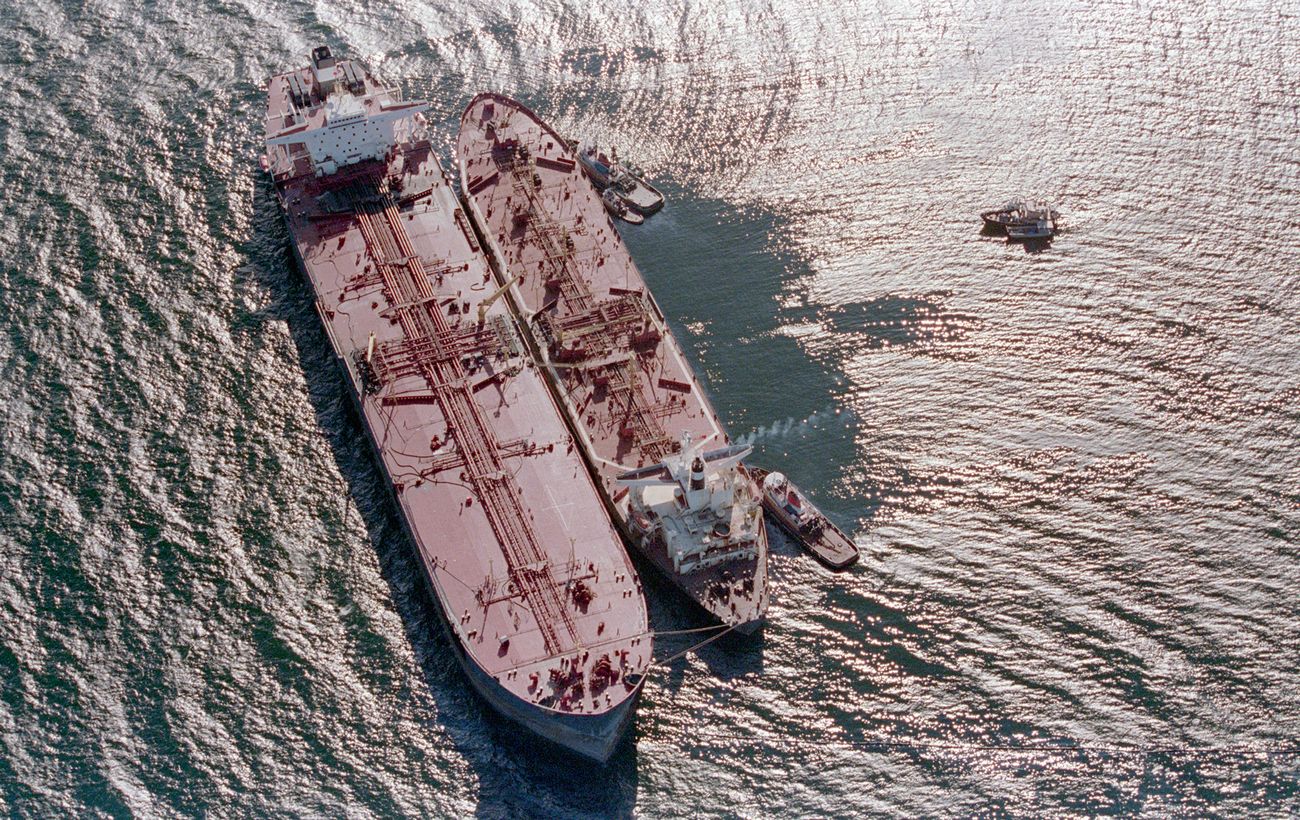
Thailand has reached an agreement with Iran on the safe passage of Thai oil tankers through the Strait of Hormuz. This was reported by the Israeli newspaper The Times of Israel, citing a statement by Thailand’s Prime Minister Anutin Charnvirakul.

“An agreement has been reached to ensure the safe transit of Thai oil tankers through the Strait of Hormuz,” the official said during a press conference.

Amid tensions surrounding the Strait of Hormuz, such an agreement is of strategic importance for Thailand, which seeks to secure its energy supplies.

According to the prime minister, the deal is expected to ease concerns about fuel imports into the country.

Earlier, media outlets reported that the Thai authorities were preparing to begin negotiations on purchasing Russian oil.

Business Activity in the U.S. Falls to an 11-Month Low

Business activity growth in the United States slowed to an eleven-month low in March, as companies faced increased uncertainty and rising living costs linked to the ongoing war in Iran, which has been underway for nearly a month, according to S&P Global.

The preliminary S&P Global U.S. Composite PMI fell to 51.4 this month, down from 51.9 in February. A reading above 50 indicates expansion.

The services sector — the main driver of the U.S. economy — has been hit harder by inflationary pressures caused by the conflict than the manufacturing sector.

The Services PMI also declined to 51.1 from 51.7, marking its lowest level in eleven months. Meanwhile, the Manufacturing PMI rose to 52.9, reaching a two-month high.

According to Chris Williamson, Chief Business Economist at S&P Global Market Intelligence, March survey data point to an “unwelcome combination” of slowing growth and rising inflation following the start of the joint U.S.-Israeli offensive on Iran in late February.

“Companies report a hit to demand due to heightened uncertainty and the impact on the cost of living caused by the conflict. Issues related to travel, transportation, and tourism are being exacerbated by financial market volatility and availability constraints, including concerns over higher interest rates, a sharp rise in energy prices, and supply chain delays,” he said.

Williamson added that companies are building “buffer inventories” and reducing headcount to cut overhead costs.

PMI data indicate that overall U.S. GDP — a key measure of economic growth — is expanding at an annualized rate of just 1.0%, with “modest growth of 1.3% expected for the first quarter overall.”

Ukraine Maintains Its Position Among the World’s Largest Steel Producers

Even amid the full-scale war with Russia, Ukraine remains among the world’s top 20 steel producers. Metallurgy continues to be one of the key revenue-generating sectors of the economy, employing tens of thousands of people and supporting a broad industrial ecosystem.

“The backbone of Ukraine’s steel industry today consists of six key enterprises: fully integrated plants — Metinvest’s Zaporizhstal and Kametstal, as well as ArcelorMittal Kryvyi Rih — along with steelmaking facilities Interpipe Steel, DMZ, and Dniprospetsstal,” the publication notes.

According to journalists, all of these plants are operating under significant security risks and economic constraints. For example, Zaporizhstal resumed production after halting operations at the start of the full-scale invasion. It is now capable of producing up to 4 million tonnes of pig iron and 3.6 million tonnes of hot-rolled products annually. The plant employs around 8,500 people, more than 1,300 of whom have been mobilized into the Defense Forces.

The war has had a major impact on the sector: Ukraine has lost part of its production capacity, including the Azovstal and Illich Iron and Steel Works plants in Mariupol. Logistics have also been disrupted due to the blockade of seaports, forcing companies to shift exports to overland routes.

“About 60% of production is currently exported, mainly to EU countries. At the same time, the domestic market is gradually recovering due to reconstruction needs,” said Andrii Hlushchenko, an analyst at GMK Center.

Despite these challenges, the industry continues to operate thanks to its own raw material base: Ukraine has significant iron ore reserves, allowing it to sustain the metallurgical cycle even during wartime.

Experts note that metallurgy will play a key role in Ukraine’s post-war recovery, as demand for steel in housing, bridges, and transport infrastructure is expected to grow.

Last year, the metallurgical sector accounted for 15.2% of Ukraine’s export revenues ($6.4 billion). Key exports included iron ore ($2.8 billion) and steel ($2.4 billion). The mining and metals sector also generated nearly 20% of total capital investment in Ukraine’s industry in 2024. Meanwhile, the largest companies in the sector — Metinvest, ArcelorMittal Kryvyi Rih, Interpipe, DCH Steel, and Ferrexpo — collectively paid nearly $1 billion in taxes.


Apple to Introduce Ads in Its Maps App

Apple is planning to introduce advertising into its mapping service, Apple Maps, as part of its continued push to expand its paid services business. According to Bloomberg, an official announcement could come in the near future.

The new system will function similarly to Google Maps: businesses and venues will be able to purchase advertising placements within search results. For example, a restaurant could pay to appear at the top of the results when a user searches for “sushi” or another type of cuisine.

Through this move, Apple aims to strengthen its services segment, which already generates over $100 billion annually and accounts for more than a quarter of the company’s total revenue. Advertising is expected to help offset a potential slowdown in growth across other business areas.

The advertising business is overseen by senior executive Todd Teresi, who reports to Senior Vice President of Services Eddy Cue. Apple’s advertising division is currently estimated to generate around $8.5 billion in annual revenue, but the company intends to significantly expand it.

Ads are expected to appear in Apple Maps as early as this summer—initially on iPhone and other Apple devices, and later in the web version. This will mark another step following the introduction of advertising formats in the App Store, Apple News, and podcasts.

Musk Announces Terafab Project — Set to Become the World’s Largest Chip Manufacturing Facility

American billionaire Elon Musk has announced plans to build what he calls “the largest chip manufacturing plant in the world” in the United States. He made the statement during a live broadcast on his social media platform X.

The project will be called Terafab and will be a joint venture involving Musk’s other companies — Tesla, SpaceX, and xAI.

According to Musk, the Terafab project is planned for Austin, Texas, and represents the next step toward expanding the use of solar energy and building what he described as a “galactic civilization.”

Musk noted that current chip manufacturing capacity from existing suppliers will not be sufficient to meet the future needs of his companies.

“We will either build Terafab, or we won’t have chips,” he said. “And we need chips, so we will build Terafab.”

The facility is expected to produce two types of chips: those designed for applications such as the Full Self-Driving system and Optimus robots, as well as more powerful chips intended for space-related projects.

The total cost of the project is estimated to reach at least $20 billion. Construction is expected to begin with the Advanced Technology Fab in Austin, where Tesla’s headquarters is located.

WP2Social Auto Publish Powered By : XYZScripts.com