World’s Largest Gas Giants Declare Force Majeure

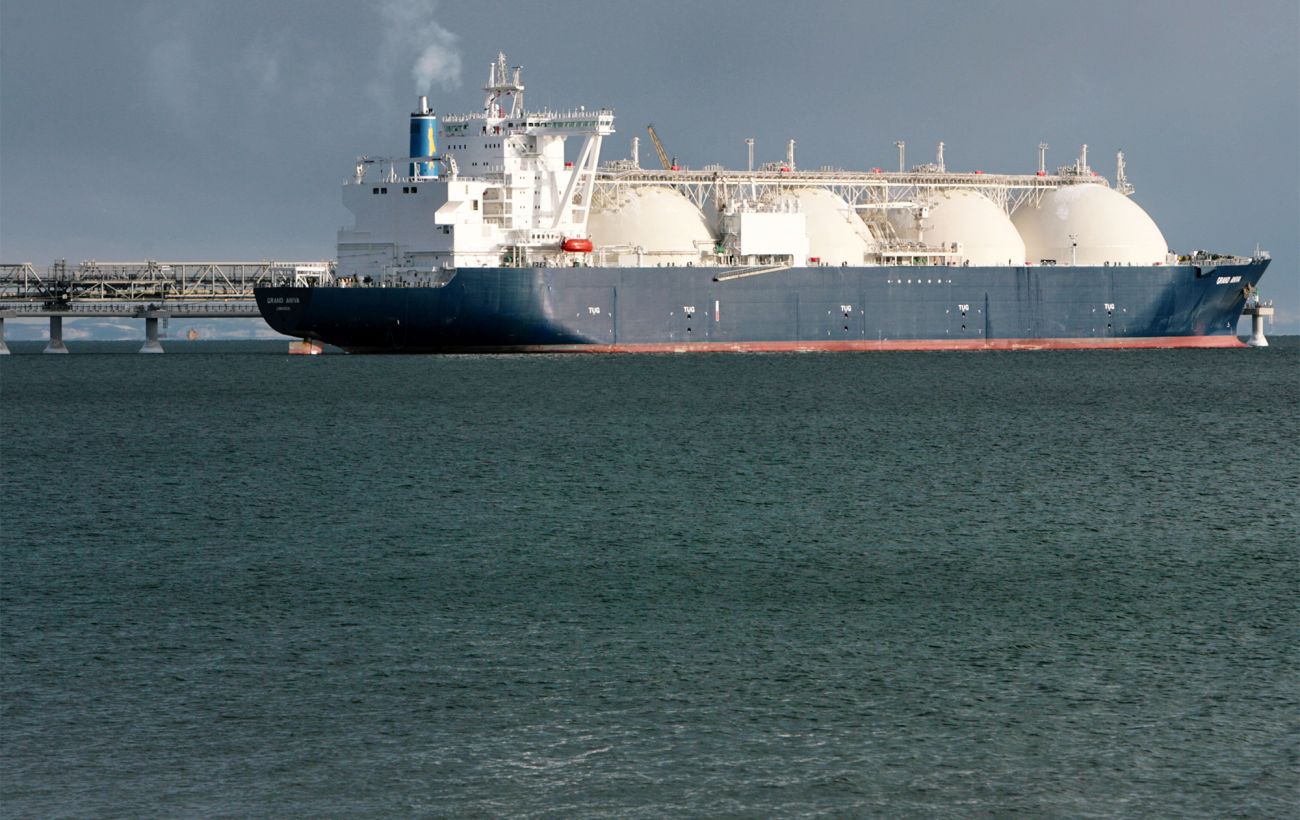
The world’s largest natural gas traders have declared force majeure following a halt in production in Qatar, according to Reuters, citing its sources.

Several companies that purchase liquefied natural gas (LNG) from QatarEnergy, including Shell, TotalEnergies, and several firms in Asia, have declared force majeure to their customers to whom they supply gas.

Qatar, the world’s second-largest exporter of LNG, announced last week that it had suspended production at its facility with an annual capacity of 77 million tons and declared force majeure on LNG supplies.

Shell — the world’s largest LNG trader — and TotalEnergies maintain long-term partnerships with QatarEnergy and are partners in the company’s large-scale North Field Expansion Project, which aims to increase production capacity by 2027.

Analysts estimate that Shell purchases about 6.8 million tons of Qatari LNG per year, while TotalEnergies purchases about 5.2 million tons annually and resells it to clients worldwide.

Experts say it is currently difficult to predict how markets will react to this force majeure situation. However, if the disruption affecting Shell and TotalEnergies continues for an extended period, global gas prices could rise.

IEA Countries Agree to Release Record Amount of Oil

Member states of the International Energy Agency (IEA) have unanimously agreed to use one-third of their strategic reserves to “address disruptions in oil markets caused by the war in the Middle East,” according to a statement on the agency’s website.

“The challenges we face in the oil market are unprecedented in scale, so I am very pleased that IEA member countries have responded with extraordinary collective measures of unprecedented size. Oil markets are global, so the response to major disruptions must also be global,” said Fatih Birol, Executive Director of the IEA.

The 32 member countries of the IEA will release 400 million barrels onto the market. In total, they hold about 1.2 billion barrels in government reserves. Governments may also access up to 600 million barrels from the inventories of commercial companies with which they have agreements. This will be the sixth such operation since the agency was created in 1974. The previous largest release was 182 million barrels in 2022 following Russian invasion of Ukraine.

Through the Strait of Hormuz, which is now effectively closed due to threats from Iran, an average of 20 million barrels of oil and petroleum products per day were shipped in 2025. This represented about 25% of global seaborne oil trade. Currently, shipments have fallen to less than 10% of pre-war levels.

Meanwhile, Sanae Takaichi, Prime Minister of Japan, said even before the final IEA decision that her country would begin distributing oil from its reserves on March 16. Japan holds one of the world’s largest reserves. According to Takaichi, the government will draw from private-sector stocks an amount equivalent to 15 days of Japan’s consumption, while state reserves will supply the equivalent of one month of consumption.

Oil prices have meanwhile risen by more than 4%, with Brent crude reaching $91.9 per barrel and West Texas Intermediate rising to $87.3 per barrel.

National Bank of Ukraine Supplies Banks with Cash Foreign Currency

The National Bank of Ukraine conducted operations on March 9–10, 2026, to exchange banks’ non-cash foreign currency for cash in order to replenish the cash desks of banking institutions, the regulator reported.

On March 9, the announced volume of operations amounted to $100 million and €80 million. Five banks participated in the operation. The total volume of applications included four bids for $53.1 million and four bids for €42 million, all of which were fully satisfied.

On March 10, the announced volume of operations was $100 million and €35 million. One bank participated, submitting a bid for $20 million and €10 million, which was also fully satisfied.

The central bank noted that the moderate demand for operations aimed at replenishing banks’ cash reserves with foreign currency indicates that banks currently have sufficient supplies of cash currency and that the need for additional support remains limited.

The National Bank of Ukraine also emphasized that exchange operations between the central bank and Ukrainian banks involving cash and non-cash foreign currency will in no way affect the volume of International Reserves of Ukraine.

China Warns of Risk of New Chip Crisis for the Auto Industry

The Ministry of Commerce of China has warned of the possibility of a new global semiconductor supply crisis due to the conflict surrounding chipmaker Nexperia, according to ITReseller. The dispute between the company’s Dutch headquarters and its Chinese division is escalating and has already raised concerns within the automotive industry.

Nexperia is one of the key manufacturers of semiconductors used in automotive electronics. Its chips are used in control systems, power management, and other electronic components in vehicles, meaning that any disruption to the company’s operations could quickly affect global supply chains.

The conflict began after authorities in The Hague decided to take control of the company, which had previously been owned by the Chinese corporation Wingtech. Management of the shares was subsequently transferred to a Dutch lawyer as part of a legal process.

Nexperia’s Chinese division did not agree with these changes and in September announced its independence from the headquarters in the Netherlands. Since then, the two sides have accused each other of actions that complicate negotiations and destabilize the company’s operations.

A new escalation occurred after the Chinese division stated that employee service accounts in China had been blocked. According to representatives of the unit, this significantly complicated the company’s day-to-day activities.

China’s Ministry of Commerce said such actions had “seriously disrupted the company’s normal production and operations.” The ministry warned that if the conflict leads to a new global crisis in semiconductor production and supply chains, the Netherlands should bear responsibility.

Nexperia’s headquarters did not deny the reports of IT restrictions but emphasized that they had not affected production at the chip assembly and testing plant in Guangdong Province.

Concerns about potential disruptions are not unfounded. At an earlier stage of the conflict last autumn, serious supply problems emerged after China introduced export controls on Nexperia chips produced in the country.

Despite mediation efforts by Beijing, The Hague, and institutions of the European Union, tensions remain high. Moreover, the company’s headquarters has suspended shipments of silicon wafers to the Chinese facility, further complicating the situation.

Nexperia’s products are widely used in the automotive industry, meaning that any serious disruption in production could quickly affect car manufacturers worldwide.

Ukraine Access Begins Publishing Analytical Briefs on Ukraine’s Investment Landscape

A new analytical platform, Ukraine Access, has started publishing research briefs dedicated to Ukraine’s evolving investment environment and economic transformation.

The platform focuses on monitoring structural shifts in key sectors of the Ukrainian economy, as well as tracking policy developments, regulatory dynamics and market signals that shape investment opportunities.

Ukraine Access provides concise analytical briefs and sector observations covering industries central to Ukraine’s long-term development, including energy transition, industrial production, agribusiness and infrastructure modernization.

The platform aims to offer a structured perspective on Ukraine’s market entry architecture for investors, analysts and international partners seeking to better understand the country’s emerging economic landscape.

More information and analytical materials are available at: https://ukraineaccess.com


Porsche Denies Rumors About Canceling Electric Boxster and Cayman

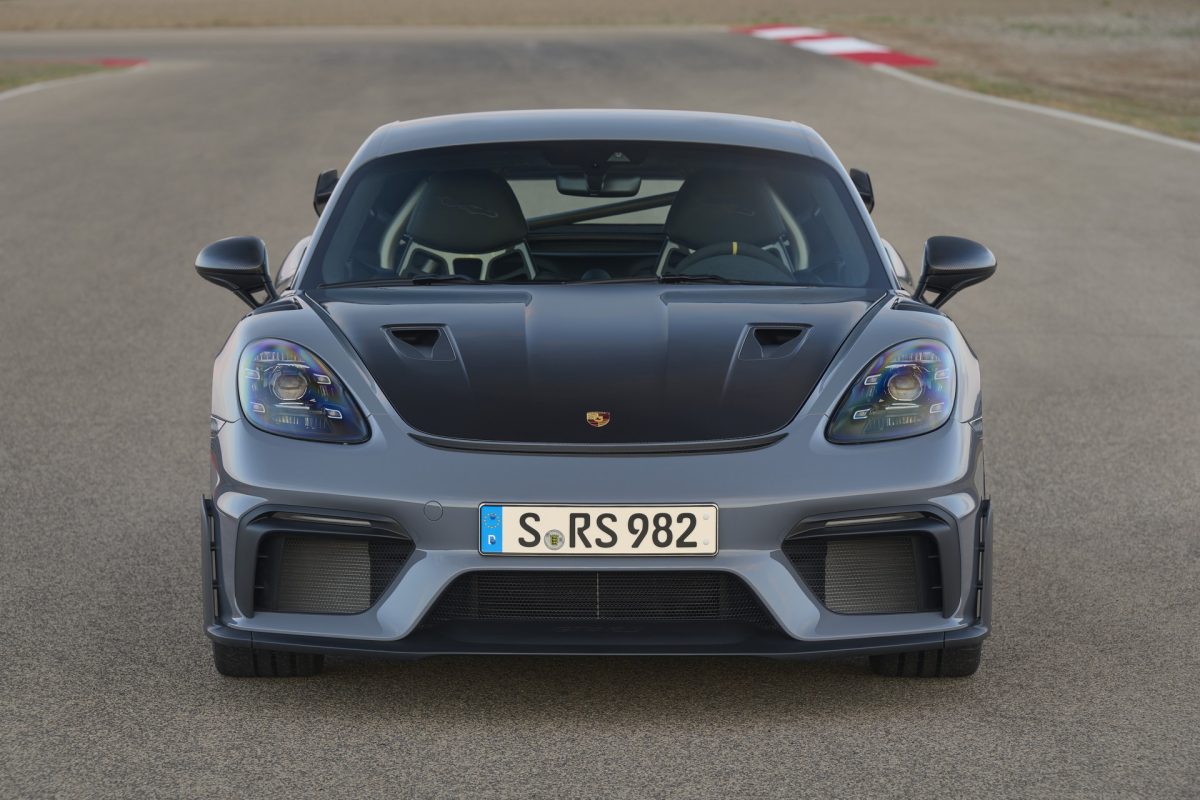
Porsche has stated that rumors about canceling the electric versions of the Porsche 718 Boxster and Porsche 718 Cayman are not true, according to Motor1. Although the official debut date of the electric successors has not yet been announced, the company says development is continuing.

Four years ago, Porsche announced its intention to replace the Porsche 718 lineup entirely with electric models. Gasoline versions with internal combustion engines stopped production in October last year, but the electric replacements have not yet been unveiled. Because of this delay, speculation began circulating online that the project might be canceled altogether.

Daniel Schmollinger, head of Porsche Cars Australia, denied these rumors. According to him, he has already had the opportunity to test the upcoming electric sports car on a racetrack and was very impressed. He said the vehicle retains the characteristic handling and driving feel associated with the Boxster, while the electric powertrain makes the performance even more striking.

At the same time, the company has partly stepped back from its initial strategy of full electrification. Porsche has already stated that “top” versions of the 718 models may once again receive gasoline engines. It is still unclear whether this refers to upgraded versions of the previous 718 generation or an adaptation of the new PPE Sport platform, which was originally developed for electric vehicles.

According to insiders, Porsche may initially bring back gasoline-powered 718 versions as an evolution of the Porsche 718 (982) generation, equipped with an electrified flat-six engine from the Porsche 911 GTS. These models could serve as a temporary solution until the arrival of the next generation of Boxster and Cayman, which could potentially support both electric and traditional powertrains.

The company emphasizes that its management regularly reviews its development strategy and evaluates different options. Therefore, Porsche does not rule out a scenario in which future Boxster and Cayman models will be offered in two versions simultaneously — with electric drivetrains and with internal combustion engines. This would allow the brand to satisfy both electric vehicle enthusiasts and fans of classic sports cars.

Apple Prepares New Premium Line of Ultra Devices

Apple is working on launching a new line of premium Ultra devices that will complement — rather than replace — the existing Pro series, according to Mark Gurman of Bloomberg.

According to him, alongside the expansion of the budget segment represented by the new iPhone 17e and MacBook Neo, the company is also preparing a new category of high-end devices that will be positioned above the Pro versions.

One of the first gadgets in the new series could be a MacBook with a touch-enabled OLED display. The model is expected to be about 20% more expensive than Apple’s most powerful laptop versions scheduled for release in 2025.

Another key device will be the company’s first foldable smartphone. According to Gurman, it may be called the iPhone Ultra. The name is partly a marketing decision: the expected price of more than $2,000 may appear less extreme within a new premium category. The unfolded device is expected to feature a 4:3 aspect ratio, while the crease between the screens will be almost invisible.

The third device in the series could be new wireless headphones called AirPods Ultra. According to preliminary information, they may include built-in cameras and infrared sensors that will enable Visual Intelligence features — a technology allowing artificial intelligence to analyze the surrounding environment and provide contextual information to the user.

Apple may later expand the Ultra lineup to other devices as well. For example, similar models could appear among iPad tablets with OLED displays or among iMac desktop computers with larger screens.

Saudi Arabia Begins Cutting Oil Production

Saudi Arabia has been forced to start reducing its oil production, according to Bloomberg, citing a source.

According to the report, the reason is the rapid filling of crude storage tanks amid the effective blockade of the Strait of Hormuz.

The world’s largest oil exporter has followed the example of neighboring countries — the United Arab Emirates, Kuwait, and Iraq — which had previously taken similar steps.

Traditionally, Saudi Arabia produces about 10 million barrels of oil per day, around 7 million of which are exported. Under current conditions, the national oil company Saudi Aramco is trying to mitigate the situation by redirecting part of the shipments bypassing the Hormuz route to the port of Yanbu on the Red Sea coast. However, the pipeline’s capacity is not sufficient to fully compensate for the blocked export volumes.

Audi Stops Accepting Orders for Flagship A8 Sedan in Germany

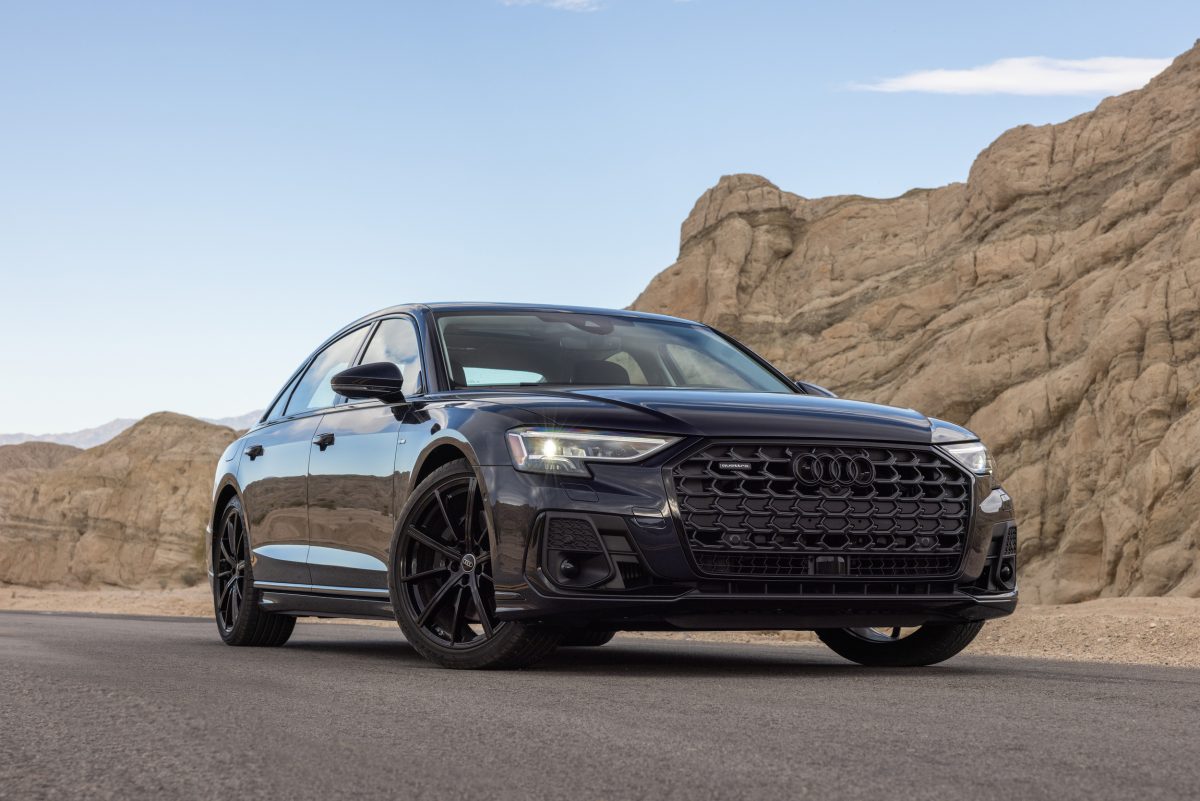
Audi has quietly stopped accepting orders for its flagship sedan, the Audi A8, in Germany. According to Motor1, the model has disappeared from the brand’s online configurator, and the option to place orders in Audi’s home market ended on February 18.

As confirmed by company representative Marcel Bestle, orders for the A8 in Germany were closed about two weeks ago. The availability of the model in other markets will now depend on remaining inventory and other factors. At the same time, the company has not yet announced the exact date when production of the sedan will end, although halting orders in its key market effectively signals that the model’s life cycle is nearing its end.

The current generation of the A8, known as the Audi A8 D5, has been produced since 2017. The update introduced at the end of 2021 failed to significantly boost interest in the car or help it compete effectively with models such as the BMW 7 Series and the Mercedes-Benz S-Class. During the facelift, a long-wheelbase version with the historic Horch name was also introduced for the Chinese market. It was intended to compete with luxury Maybach variants, but the move did not deliver the expected results.

Despite this, the final fate of the flagship sedan has not yet been decided. Audi says it will provide more details about a possible successor later. However, the key word remains “possible,” as a decision on developing a new generation has not yet been confirmed.

According to German media reports, the manufacturer is still searching for a suitable platform for a potential successor. Another facelift for the current generation has been ruled out because new environmental requirements — particularly the upcoming Euro 7 standard — will require significantly cleaner powertrains.

Samsung Galaxy S26 Series Sets Pre-Order Record in Korea

The Samsung Galaxy S26 smartphone lineup by Samsung Electronics has set a new pre-order record in South Korea, according to Android Authority.

During the first seven days — from February 27 to March 5 — the company received 1.35 million orders for the new flagship devices. For comparison, last year’s Samsung Galaxy S25 lineup reached 1.3 million pre-orders only after 11 days.

As expected, the flagship Samsung Galaxy S26 Ultra proved to be the most popular model, accounting for around 70% of all pre-orders. Last year, the Samsung Galaxy S25 Ultra generated about 52% of orders, making the current result particularly notable.

Meanwhile, the base models — Samsung Galaxy S26+ and the standard Samsung Galaxy S26 — together accounted for about 30% of orders. The company did not disclose the exact distribution between the two versions. Last year, interest in these models was roughly even: 26% of buyers chose the standard Galaxy S25, while 22% opted for the S25+ version.

The S26 series smartphones are available in four main colors, as well as two exclusive variants offered only on Samsung’s website. Buyers of the Galaxy S26 Ultra most often chose classic colors — white and black. Owners of the Galaxy S26+ were slightly more adventurous, frequently opting for the Cobalt Violet shade, although black remained one of the most popular choices.

WP2Social Auto Publish Powered By : XYZScripts.com