Russian Companies Report Nearly 9 Trillion Rubles in Losses Last Year

The financial performance of companies in Russia deteriorated significantly amid slowing economic growth and mounting economic challenges. This is evidenced by data from Rosstat, reported by the pro-government newspaper Vedomosti.

According to the results of 2025, the combined losses of organizations increased by 7.5% year-on-year, reaching 8.9 trillion rubles.

A total of 17,200 companies — or 27.1% of the total — reported losses. At the same time, 46,400 organizations posted profits. Together they earned 35.9 trillion rubles, which is 1.3% less than the previous year.

Following the weaker financial results, investment activity also declined. According to Rosstat, investment in fixed capital fell by 2.3% in 2025 after four consecutive years of growth — 8.4% in 2024, 9.8% in 2023, 6.7% in 2022, and 8.6% in 2021.

This trend occurred despite a reduction in the key interest rate by the Central Bank of Russia by five percentage points — from 21% to 16% annually.

Analysts noted that the decline in the net financial results of Russian businesses is linked to rising costs and worsening conditions in commodity sectors.

“Pressure came from lower export prices in the first half of the year, sanctions restrictions, and rising logistics costs,” experts explained.

According to Alexander Chernov, the situation in the economy remains uneven. Profits in manufacturing increased by 6.6%, while the financial sector recorded growth of more than 50%. However, the current picture represents “the first signal of cooling corporate finances after several successful years,” Chernov concluded.

Slovakia Officially Notifies Ukraine of Suspension of Emergency Energy Assistance

The company SEPS, Slovakia’s transmission system operator, has sent an official letter to Ukrenergo announcing the unilateral termination of the Agreement on Mutual Emergency Assistance. The termination of the contractual terms will take effect in May 2026. This was reported by Ukrenergo on its Telegram channel.

“The reasons why our colleagues decided to cancel the agreement were not explained by the management of SEPS. For its part, Ukrenergo has never violated any contractual obligations with SEPS and has always acted in the spirit of good neighborly relations and respect for European legislation,” the statement said.

The Ukrainian company also commented on the possible impact of the Slovak operator’s decision on the situation in Ukraine’s power system.

“We emphasize once again that there will be no changes for Ukrainian consumers. Emergency assistance from Slovakia has been used by Ukrenergo quite rarely and in very limited volumes. The last such case was recorded in January this year,” Ukrenergo explained.

The company also added that the termination of the emergency assistance agreement will not affect commercial electricity exchanges.

“Electricity imports from Slovakia to Ukraine have been and continue to be carried out without any restrictions, in accordance with the results of daily and long-term auctions for cross-border transmission capacity allocation,” the statement concluded.

Slovakia Officially Notifies Ukraine of Suspension of Emergency Energy Assistance

The company SEPS, Slovakia’s transmission system operator, has sent an official letter to Ukrenergo announcing the unilateral termination of the Agreement on Mutual Emergency Assistance. The termination of the contractual terms will take effect in May 2026. This was reported by Ukrenergo on its Telegram channel.

“The reasons why our colleagues decided to cancel the agreement were not explained by the management of SEPS. For its part, Ukrenergo has never violated any contractual obligations with SEPS and has always acted in the spirit of good neighborly relations and respect for European legislation,” the statement said.

The Ukrainian company also commented on the possible impact of the Slovak operator’s decision on the situation in Ukraine’s power system.

“We emphasize once again that there will be no changes for Ukrainian consumers. Emergency assistance from Slovakia has been used by Ukrenergo quite rarely and in very limited volumes. The last such case was recorded in January this year,” Ukrenergo explained.

The company also added that the termination of the emergency assistance agreement will not affect commercial electricity exchanges.

“Electricity imports from Slovakia to Ukraine have been and continue to be carried out without any restrictions, in accordance with the results of daily and long-term auctions for cross-border transmission capacity allocation,” the statement concluded.

U.S. Begins Emergency Release of Oil from Strategic Reserves

The administration of Donald Trump has begun a large-scale process of releasing oil from the country’s strategic reserves, submitting a request for 86 million barrels of crude oil. This was reported by Bloomberg, citing the United States Department of Energy.

In a statement, the department said that supplies from the Strategic Petroleum Reserve are part of a previously announced large-scale release of 172 million barrels of oil. The crude is expected to reach the market by the end of next week.

Under the terms of the arrangement, companies will be required to return the borrowed oil to the Department of Energy, adding additional barrels as compensation.

Overall, the withdrawals are expected to last four months and are part of a coordinated initiative with other countries to release 400 million barrels. The move is intended to reduce prices for oil, gasoline, diesel, and jet fuel, which have surged after the outbreak of the war between United States and Israel against Iran.

Regarding the release of 172 million barrels of oil, the Department of Energy stated that the White House has already taken steps to replenish the withdrawn reserves by about 200 million barrels over the next year. The department specified that the replenishment volume will exceed the withdrawn amount by approximately 20%.

Oil Shipments Through the Strait of Hormuz Collapse by 97%

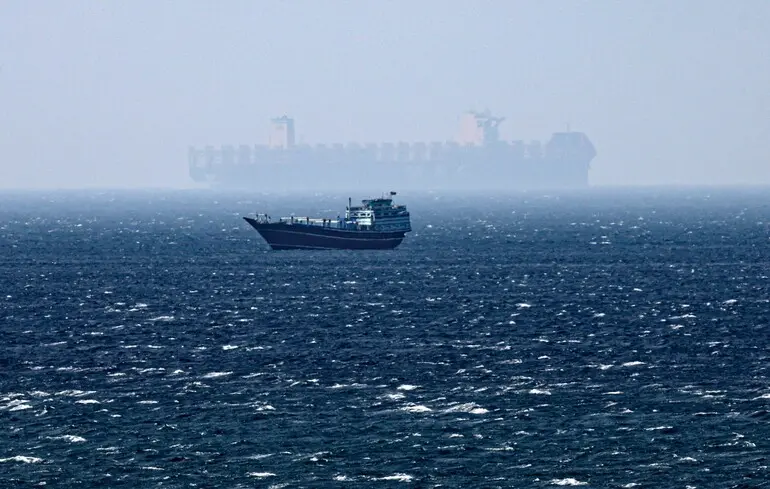
Oil flows through the Strait of Hormuz have collapsed amid the escalation of the conflict in the Middle East, with supplies now far below normal levels. This is stated in a new report by Goldman Sachs.

The bank estimates that average daily flows through the Strait of Hormuz have dropped by 97% compared with normal levels. In recent days, shipments have stabilized at around 0.6 million barrels per day.

These disruptions have dealt a significant blow to exports from the Persian Gulf. According to Goldman Sachs, the total reduction in flows from the region amounts to about 16 million barrels per day, even accounting for partial rerouting through alternative ports.

Shutdowns in production and refining are also intensifying the supply shock. According to the International Energy Agency, as of March 10 losses in crude oil and condensate production amount to at least 10 million barrels per day.

Governments are beginning to respond to the supply shock, although Goldman Sachs expects these measures will offset only part of the losses. Member countries of the International Energy Agency have agreed to release 400 million barrels of oil from strategic reserves, implying a potential release rate of about 3.3 million barrels per day.

Analysts suggest that participants may release 213 million barrels from the Strategic Petroleum Reserve at an average rate of 2.4 million barrels per day over the next 90 days if flows through the Strait of Hormuz begin to recover from March 21.

They estimate that the coordinated release of oil from global reserves and other policy measures could mitigate roughly half of the impact on global commercial inventories.

Markets are increasingly pricing in the possibility of longer disruptions. Brent crude has risen from just under $90 to more than $100 per barrel since the beginning of the week.

Prediction markets also suggest the conflict may last longer: the probability of the war ending in March has dropped to around 19%, although the most likely scenario still assumes a settlement between early April and mid-May.

Saudi Arabia Cuts Oil Production by 20%

Saudi Arabia, the world’s largest oil exporter, has reduced its oil production by about 2 million barrels per day to roughly 8 million barrels per day due to the conflict in the Middle East, according to Reuters, citing two sources.

Riyadh is redirecting more oil to Yanbu on the Red Sea coast, bypassing the Strait of Hormuz. However, production has still fallen to around 8 million barrels per day after output was halted at two offshore oil fields — Safaniya oil field and Zuluf oil field.

According to another source, Saudi Arabia’s production has even dropped below 8 million barrels per day.

The combined production capacity of these two fields exceeds 2 million barrels per day, mainly consisting of heavy and medium crude oil.

The pipeline leading to Yanbu is primarily designed to transport lighter grades of crude. The state oil giant Saudi Aramco declined to comment.

This reduction is significant compared to February, when the country supplied 10.111 million barrels per day to the market and produced 10.882 million barrels per day.

Naftogaz Wins Final Court Case Against Gazprom for $1.4 Billion

Naftogaz has definitively won a legal dispute with the Russian gas monopoly Gazprom over the payment of $1.4 billion in debt for gas transit services, according to the Ukrainian company’s press service.

“The Swiss Federal Supreme Court has fully rejected Gazprom’s request to overturn the arbitration award of June 16, 2025, under which the Russian company must pay Naftogaz more than $1.4 billion in debt for services related to organizing the transportation of natural gas, plus interest,” the statement said.

The court also ordered the Russian company to pay court costs of 200,000 Swiss francs and reimburse Naftogaz 250,000 Swiss francs for legal expenses incurred during the proceedings before the Swiss Federal Supreme Court.

“Thus, Switzerland’s highest judicial authority has confirmed the validity of the arbitration ruling and definitively rejected the arguments of the Russian side. Naftogaz will continue working to enforce this decision and is pursuing a number of other legal proceedings against the aggressor state,” said Serhii Koretskyi, Chairman of the Board of Naftogaz.

The company recalled that Naftogaz had been obligated to organize the transit of natural gas through the territory of Ukraine for Gazprom until the agreement expired on January 1, 2025. After the start of the full-scale invasion and the suspension of gas transit through the Sokhranivka entry point, transit operations were maintained through the Sudzha entry point.

Despite this, Gazprom refused to pay in full for the organization of gas transportation, thereby violating its contractual obligations.

In September 2022, Naftogaz initiated arbitration proceedings against Gazprom. The arbitration concerned payment for services related to organizing the transportation of natural gas through Ukraine, which Gazprom failed to pay in full and on time.

Durov Loses Two-Thirds of His Fortune After Telegram Valuation Collapse

The fortune of Pavel Durov, the owner of the messenger Telegram, has dropped from $17.1 billion to $6.6 billion, according to Forbes, citing investment bankers.

The 61% decline in his wealth is attributed to falling valuations of comparable technology companies.

Sources say that over the past year no new investor presentations from Telegram have appeared publicly, and the company’s initial public offering may not take place anytime soon.

“Right now is not the best time for a listing: Telegram is blocked in key markets, including Russia and Iran. The company is unlikely to go public at a lower valuation than the one previously stated by Durov,” one investment banker said.

For a more conservative estimate, analysts suggest comparing the company with its closest competitor — the American messaging platform Snapchat. In terms of monthly users, the companies are comparable. By the end of 2025, Snapchat had 946 million users, while Telegram’s audience exceeded 1 billion. However, Snapchat’s revenue in 2025 reached $5.9 billion, nearly three times higher than Telegram’s projected revenue of about $2 billion. Snapchat finished the year with a $460 million loss, while Telegram reported a $222 million loss in the first half of the year alone. As a result, Snapchat’s market capitalization nearly halved over the year to $8.7 billion, which influenced the reassessment of Telegram’s valuation and Durov’s wealth.

Another factor putting pressure on Durov’s financial position is Telegram’s bond obligations. The company’s first bond issue, placed for five years with a 7% coupon, must be repaid on March 22, 2026. Durov has partially refinanced the debt but still needs to repay $1.1 billion. In June, the company issued new bonds worth $1.7 billion with a higher yield of 9%, reflecting increased risks for investors.

Durov first appeared in the Forbes ranking in 2016. At that time, his wealth in the list of the “200 richest businessmen in Russia” was estimated at $600 million, and by 2018 he had become a billionaire. Forbes gave his fortune its highest valuation in 2021 — $17.2 billion — when Telegram issued its first convertible bonds tied to the price of a future IPO. At that time, investors valued the company at around $30–35 billion. Durov himself estimated the service at $30 billion in 2024, a figure bankers discussed ahead of a potential Telegram stock market listing.

According to one market analyst speaking anonymously, Durov could partially settle with investors using Telegram shares without conducting an IPO.

“Look at the funds that bought the second bond issue — these include BlackRock, Abu Dhabi Investment Authority, Mubadala Investment Company, and other major investors. Durov may have promised them a stake in the company,” the analyst noted.

BMW Is Building a Rival to the Mercedes G-Class

BMW is working on a new SUV designed to compete with the iconic Mercedes-Benz G-Class, according to Motor1. Official information about the model remains limited, but more details about the upcoming vehicle are gradually emerging within the industry.

According to insiders, the project is internally known at BMW under the codename G74, although this name is unlikely to be used for the production model. If the vehicle reaches the market, it could receive the traditional X designation, similar to the BMW X5, BMW X6, or BMW X7. A separate positioning similar to the flagship BMW XM is also possible.

The new crossover is expected to become a technological showcase for the brand and could replace the XM at the top of the lineup sometime after 2028.

Preliminary reports suggest the vehicle will be built on a modified version of BMW’s CLAR platform, which underpins several large BMW models. This architecture already serves as the basis for crossovers such as the X5 and XM, but it is expected to be significantly reinforced for the new SUV to provide genuine off-road capability.

The design remains a mystery for now, as test prototypes have not yet been spotted. The new model is expected to feature more “boxy” proportions and a vertical silhouette typical of classic off-road vehicles. It may also include large off-road tires, increased ground clearance, and protective body cladding.

Stylistically, the SUV will likely incorporate elements of BMW’s new Neue Klasse, already introduced with the latest BMW iX3 and BMW X5. The interior is rumored to follow the minimalist style of future BMW models, featuring a large central display and a panoramic screen stretching along the lower edge of the windshield. A third row of seats is also expected.

There is no confirmed information yet about powertrains, but the model will likely offer several options. One candidate is the 4.4-liter twin-turbocharged V8 used in the BMW X5 M and BMW XM. It will most likely be paired with a hybrid system. Although a fully electric version is not ruled out, BMW may decide against it, considering the weak results of the electric Mercedes-Benz G-Class Electric.

A high-performance version developed by BMW M could also appear. The division’s head, Frank van Meel, has previously hinted that the company is considering creating an SUV with the M badge.

If the model reaches production, it will be very expensive. For comparison, the Mercedes-Benz G550 starts at about $155,000 in the United States, while the Mercedes-AMG G63 costs nearly $200,000. Therefore, BMW’s future SUV will likely be priced above $150,000.

According to preliminary estimates, the model could debut in late 2028 or early 2029, with production planned for the second half of 2029. The vehicle may be assembled at BMW’s plant in Spartanburg, where several of the brand’s large crossovers are already produced.

After Price Surge, Memory Accounts for Nearly Half the Cost of Budget Smartphones

Rising prices for memory chips are significantly affecting the production cost of smartphones. According to analysts at Counterpoint Research, in the first quarter of 2026 the cost of memory for manufacturers of budget smartphones could increase by 25%, reaching about 43% of the total cost of components.

This estimate is based on a typical configuration of a low-cost smartphone — 6 GB of LPDDR4X RAM and 128 GB of eMMC storage. For devices that previously cost less than $200, such an increase in component costs could be particularly significant.

Mid-range smartphones priced between $400 and $600 typically use 8 GB of LPDDR5X and 256 GB of UFS 4.0 storage. Analysts expect prices for these components to rise by 14% and 11% respectively in the first quarter, and by a further 20% and 16% in the second quarter.

The price increases will also affect flagship models, although their cost structure is somewhat different. In premium smartphones priced above $800, an additional factor will be the use of the latest 2-nanometer process for mobile processors. A configuration with 16 GB of LPDDR5X and 512 GB of UFS 4.1 storage could become $100–150 more expensive.

In the cost structure of flagship smartphones, RAM accounts for about 23% while flash storage makes up roughly 18%. Combined, this totals around 41% of component costs — nearly the same proportion as in budget models. However, because of higher capacities and more advanced standards, flagship devices may experience larger price increases in absolute terms.

According to Counterpoint Research, prices for mobile DRAM could rise by more than 50% in the first quarter, while NAND flash memory prices could increase by more than 90%. Due to high price sensitivity, the budget smartphone segment is expected to be hit the hardest. Manufacturers may also prioritize producing more expensive models that offer higher margins.

To offset rising costs, companies may reduce production of cheaper models, use smaller memory capacities, or cut costs in other device features. However, analysts believe price increases are the most realistic scenario: budget smartphones could become about $30 more expensive, while flagship models may rise by $150–200.

WP2Social Auto Publish Powered By : XYZScripts.com