
Porsche Records Its Steepest Sales Decline Since 2009

Porsche has reported its largest annual drop in sales in the past 16 years, Bloomberg reports. In 2025, the automaker delivered 279,449 vehicles to customers, a 10% decline compared with 2024. The last time Porsche experienced such a sharp contraction was in 2009, when the global financial crisis caused demand to collapse by 24%.

China proved to be the biggest blow for the brand. Porsche’s sales in the country plunged by 26% amid a difficult environment in the premium segment and extremely fierce competition, particularly in electric vehicles. Even against local rivals, Porsche underperformed other key competitors: BMW and Mercedes-Benz saw sales in China fall by 12.5% and 19%, respectively.

In response to weakening demand, Porsche in 2025 shifted its focus toward more reliable internal combustion engine models and postponed the launch of some fully electric vehicles. This strategic pivot cost the company an estimated €1.8 billion in forgone profit.

The situation in Europe was no better. Sales in Germany fell by 16%, while the region as a whole recorded a 13% decline. Porsche attributed this to supply gaps for the 718 and ICE-powered Macan models caused by new EU cybersecurity requirements for vehicle software that took effect in July 2024. As a result of these rules, the gasoline-powered Macan—previously a bestseller—was removed from the lineup in 2025, even though it had generated strong sales in 2024.

Against the broader downturn, the North American market remained relatively stable. In the United States, Porsche’s sales held steady year on year, while Mercedes and Audi each posted declines of 12%. Analysts attribute this to dealers accelerating vehicle registrations in anticipation of potential tariffs. At the same time, Porsche’s lack of manufacturing capacity in the U.S. leaves it exposed to tariffs, which the company estimates may have cost it around €700 million in 2025.

By year-end, fully electric vehicles accounted for 22.2% of Porsche’s global deliveries, while plug-in hybrids made up another 12.1%. The company noted that the share of fully electric models was at the upper end of its 2025 target range of 20–22%, but this proved insufficient to offset the overall weakening of demand in its key markets.


OpenAI and Microsoft Fail to Avoid Trial in Elon Musk Lawsuit

OpenAI and Microsoft have lost their final attempt to have Elon Musk’s lawsuit dismissed, Bloomberg reports. A federal judge in Oakland, California, rejected the companies’ motion to terminate the case and ruled that it should proceed to a jury trial. The trial is scheduled to begin in late April.

Musk alleges that OpenAI’s leadership, headed by Sam Altman, violated the startup’s founding mission as a public charity when it accepted billions of dollars in investment from Microsoft and began transforming into a commercial entity. Musk was one of OpenAI’s co-founders in 2015 and later founded his own artificial intelligence company, xAI, in 2023.

OpenAI has called Musk’s lawsuit baseless, saying it is part of a “long-running campaign of harassment.” The company emphasized that it remains focused on supporting the OpenAI Foundation, which it says is among the best-funded nonprofit organizations.

However, Judge Yvonne Gonzalez Rogers declined to dismiss Musk’s central claim that OpenAI breached its obligation to operate as a charitable organization. In her ruling, the judge noted that while the evidence is not definitive, Musk argues that his financial contribution was clearly intended as a charitable donation and was subject to two fundamental conditions: open-source development and the preservation of OpenAI’s nonprofit status. According to the judge, these conditions were consistent with OpenAI’s original charter and mission.

The court also ruled that the fact Musk donated $38 million through an intermediary does not deprive him of the right to demand compliance with those conditions. A different conclusion, the judge said, would significantly weaken oversight mechanisms for enforcing obligations of charitable trusts.

In addition, the judge allowed fraud claims to proceed. She cited internal correspondence from 2017 in which OpenAI co-founder Greg Brockman initially reaffirmed the company’s commitment to a nonprofit model but later acknowledged in a private note that public statements about such commitment may have been untrue.

Musk’s attorney, Marc Toberoff, said the ruling confirms the existence of substantial evidence that OpenAI’s leadership knowingly misled Musk about the company’s charitable mission in favor of personal enrichment.

The judge also stated that it is up to the jury to determine whether Microsoft helped OpenAI breach its obligations to donors, including Musk. At the same time, she dismissed claims of Microsoft’s “unjust enrichment,” noting the absence of any quasi-contractual relationship between Musk and the corporation.

The conflict between Musk and Altman, once partners, has continued since 2024. Musk’s xAI has become one of OpenAI’s main competitors, and last year Altman’s company rejected Musk’s surprise offer to acquire the nonprofit’s assets for $97.4 billion. Altman has described the lawsuit as an attempt to use the legal system to slow down a rival’s development.

Hard Drive Prices Rise Amid Artificial Intelligence Boom

Traditional hard drives have become another casualty of the rapid development of artificial intelligence. According to Tom’s Hardware, the 12 most popular and widely used HDD models have increased in price by an average of 46% in just four months.

The trend is evident both in the United States, where the analysis was conducted by Tom’s Hardware, and in Europe, where similar offerings were reviewed by ComputerBase journalists. The sharpest price increases have been recorded in the large-capacity hard drive segment—particularly in product lines such as Seagate IronWolf NAS, Toshiba Cloud-Scale, and Western Digital Red, as well as other models designed for servers and network storage.

At the same time, the price hikes have affected other HDDs regardless of their capacity or intended use. In some cases, prices have risen by nearly 70%, indicating a systemic issue rather than isolated price fluctuations.

Analysts suggest that the increase in costs may not be directly linked to shortages or hype around memory chips. Instead, the expansion of artificial intelligence is seen as the key driver: training and operating AI systems require massive volumes of data that must be stored somewhere, and traditional hard drives remain a critical component of this infrastructure.

Azerbaijan Expands Gas Exports to Europe

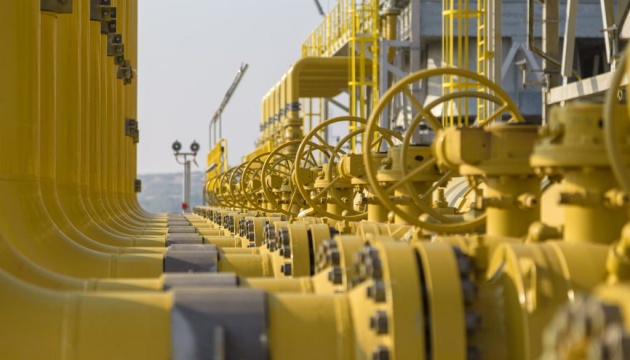
Azerbaijan’s state oil company SOCAR has announced the start of gas supplies to Germany and Austria. Deliveries began in January 2026 as part of the expansion of Azerbaijani gas exports to the European market.

SOCAR described its entry into the German and Austrian markets as “the next important milestone” in the development of its export strategy.

The gas is being transported via Italy through the Trans Adriatic Pipeline (TAP), which is the European segment of the Southern Gas Corridor. With the launch of supplies to Germany and Austria, the total number of countries purchasing Azerbaijani gas has reached 16. In addition to these two countries, Azerbaijani gas is already supplied to Italy, Greece, Bulgaria, Romania, Hungary, Serbia, Slovenia, Croatia, Slovakia, North Macedonia, Ukraine, Turkey, Georgia, and Syria.

SOCAR emphasized that the expansion of supply geography is in line with the gas strategy implemented under the leadership of President Ilham Aliyev and reflects the company’s course toward strengthening its presence in both Europe and the Middle East.

The expansion comes amid a sharp decline in the presence of Russian gas on the European market. According to Reuters, Gazprom’s gas supplies to Europe fell by another 44% in 2025 to 18 billion cubic meters, reaching their lowest level since 1973.

Gas Withdrawals from Storage Decline in Ukraine

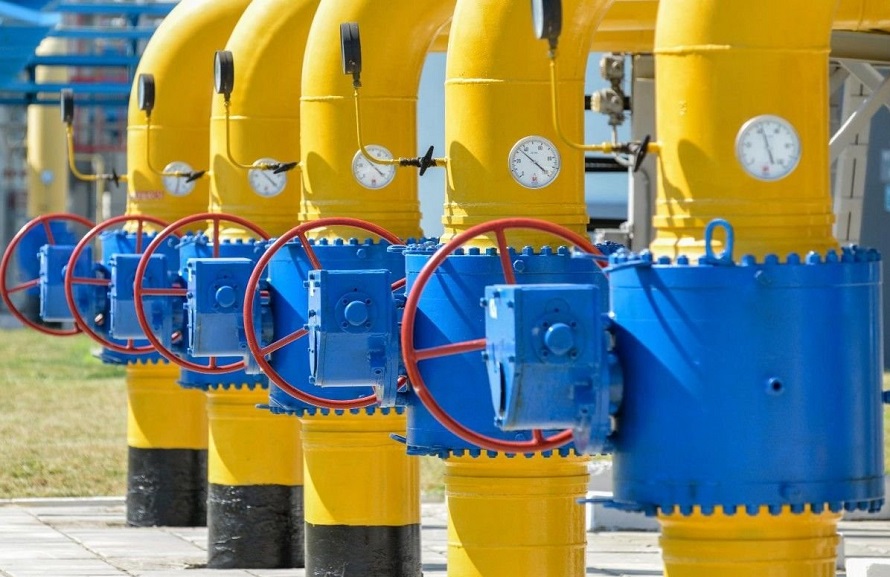
Since the beginning of January 2026, Ukraine has been withdrawing an average of 40 million cubic meters of gas per day from underground gas storage facilities (UGS), despite reduced production as a result of shelling. This compares with an average daily withdrawal of 58 million cubic meters in the same month over the past three years, former Energy Minister Olha Buslavets reported.

“The reason is not only gas imports, but also reduced consumption by combined heat and power plants (CHPs) due to the destruction of generating equipment,” Buslavets noted.

In recent days, Ukraine’s net gas imports (taking into account re-exports by non-residents under the short-haul regime of up to 3 million cubic meters per day) have fluctuated in the range of 21–22 million cubic meters per day. Imports are coming from Hungary, Poland, Slovakia, and in small volumes from Moldova/Romania.

According to data from the European Aggregated Gas Storage Inventory (AGSI) platform, as of the end of the week Ukraine’s gas storage facilities contained 11.6 billion cubic meters of natural gas, including 4.7 billion cubic meters of technological “buffer gas.” This is 30% higher than last year, or 2.7 billion cubic meters more.

At the same time, gas storage levels in Europe have fallen to 56.1 billion cubic meters, with storage facilities 52% full. This is 22% below the average of the past five years and 20% lower than last year’s level, or about 14 billion cubic meters less.

Ukrzaliznytsia Operates 97 “Points of Invincibility” at Railway Stations

At railway stations operated by Ukrzaliznytsia, 97 “Points of Invincibility” are already in operation, with another 50 set to open soon.

The company noted that the Points of Invincibility are open around the clock.

“Here people can warm up, rest, and recharge their phones and other gadgets. All points are equipped with backup power, stable communications, water, and everything needed for an extended stay. Visitors are also offered hot tea,” the statement said.

In addition, family zones for parents with children have been set up at 40 railway stations.

Ukrzaliznytsia plans to open another 50 Points of Invincibility in the near future at smaller stations and stops across the country, including in the Kyiv, Kharkiv, Odesa, Lviv, and Dnipropetrovsk regions.

According to the company, since the beginning of winter, nearly 360,000 people have already used these Points of Invincibility. During the severe cold spells after January 9, assistance was provided to about 65,000 residents.

“In addition to stationary points, ‘Invincibility Railcars’—mobile assistance units—continue to operate in Brovary, Fastiv, Boryspil, and Vasylkiv. Over six days of operation, they assisted nearly 3,400 people.

In the near future, such railcars will appear in Irpin, Bucha, Vyshneve, Boyarka, and Borodianka.”

Ukrzaliznytsia also reported that two ‘Invincibility Railcars’ will be sent to the Polish city of Chełm, where the railway station is temporarily closed for reconstruction and passengers are forced to wait for trains to Ukraine outdoors.

Ukraine’s Economy Ministry Estimates Annual GDP Growth

The Ministry of Economy, Environment and Agriculture has preliminarily estimated Ukraine’s real gross domestic product (GDP) growth in 2025 at 2.2%.

The ministry noted that in 2025 Ukraine’s economy operated amid continued attacks on energy infrastructure, complex logistics, and high security risks.

At the same time, growth was supported by key sectors, including domestic trade, construction, and manufacturing—particularly the production of defense goods, pharmaceuticals, metallurgy, and construction materials.

“In 2025, growth among key economic activities was driven by domestic trade, construction—thanks to recovery projects—and manufacturing, especially defense production and metallurgy. Government business-support programs and budgetary investments in the restoration of critical infrastructure also played an important role,” said Oleksii Sobolev, Minister of Economy, Environment and Agriculture.

Among the factors supporting economic activity in 2025, the ministry highlighted the implementation of recovery and business development programs financed by international financial assistance, including the Affordable Loans 5–7–9% program, under which entrepreneurs received new loans totaling approximately UAH 93.7 billion.

Positive dynamics were also underpinned by rising household consumption amid wage growth. As of January 6, 2026, the average nominal salary based on job vacancies had increased by 30.8% year-on-year to UAH 27,530, while the average salary indicated in résumés rose by 39.9% to UAH 30,216.

In addition, significant capital expenditures from the state budget were directed toward restoring critical infrastructure, housing programs, and procurement for the defense-industrial complex.

Within the industrial structure, the role of higher value-added activities continued to grow. Over the first 11 months of 2025, the share of machine building in total industrial sales increased to 9.1%, up from 5.7% in 2021. Capacity utilization also improved, particularly in pharmaceuticals, furniture manufacturing, woodworking, food processing, and textiles.

Economic momentum was constrained by Russia’s large-scale missile attacks on electricity generation and gas infrastructure, lower harvests of certain crops due to adverse weather conditions, logistical challenges, and weakening demand, particularly in agriculture.

Praise from Trump for Intel’s CEO triggers 10% surge in the company’s shares

Intel shares jumped 10% following a new meeting between the company’s CEO Lip-Bu Tan and U.S. President Donald Trump, CNBC reports.

In a post on the Truth Social platform, Trump described Lip-Bu Tan as a “very successful executive” and publicly praised Intel for producing the first processor manufactured in the United States using technology below 2 nanometers. The president also stated that the government is “proud to be a shareholder of Intel” and has already “earned tens of billions of dollars for the American people” in just a few months.

According to Trump, current policy is aimed at bringing advanced semiconductor manufacturing back to the United States, with Intel playing a key role in this effort. In response, Lip-Bu Tan thanked the president and U.S. Commerce Secretary Howard Lutnick for their “full support and encouragement,” and noted that Intel’s new Core Ultra Series 3 processors, produced using the Intel 18A process technology, have already begun shipping to customers.

Alphabet becomes the world’s fourth company with a market value exceeding $4 trillion

Google’s parent company, Alphabet, has become the fourth company in the world to reach a market capitalization of $4 trillion, following Nvidia, Microsoft, and Apple, Reuters reports.

On January 12, Alphabet’s market value hit $4 trillion, as the company’s strong focus on artificial intelligence dispelled doubts about its strategy and brought it back to the forefront of the high-stakes race in the tech industry.

In 2025, Alphabet’s shares rose by approximately 65%, and have gained a further 6% since the beginning of this year.

Recently, the tech giant also overtook Apple in market capitalization for the first time since 2019, becoming the second most valuable company in the world.

Every fifth smartphone sold in 2025 was an iPhone

The global smartphone market showed moderate growth last year. According to estimates by Counterpoint Research, worldwide shipments increased by 2% year on year. At the same time, Apple significantly strengthened its position: in the fourth quarter, iPhones accounted for a record 25% of the global market, and for the full year 2025 the company increased its share to 20%, boosting shipments by 10%.

Samsung Electronics remained in second place in the fourth quarter with a 17% market share, but managed to raise its full-year share to 19%. The South Korean manufacturer trailed Apple only slightly, though its growth was driven by different factors. While Apple’s success was fueled by demand for the relatively expensive iPhone 17, Samsung increased sales mainly thanks to more affordable models in the Galaxy A lineup. At the same time, the premium segment performed well, with the Galaxy Fold 7 and Galaxy S25 outperforming their predecessors. Overall, Samsung’s smartphone shipments grew by 5% over the year.

Apple posted the fastest growth among the top five vendors. Geographically, this was supported by a stronger presence in emerging markets as well as in smaller countries where demand for 5G-enabled smartphones increased. Notably, even after the launch of the iPhone 17, previous-generation models remained in high demand in Japan, India, and Southeast Asia. Analysts attribute this to the end of the replacement cycle for devices purchased during the pandemic.

Globally, the most dynamic growth in smartphone shipments last year was recorded in Japan, the Middle East, and African countries, while demand in mature markets remained subdued.

Xiaomi retained third place worldwide with a 13% share but did not demonstrate significant shipment growth. The brand delivered its strongest results in Latin America and Southeast Asia. Vivo ranked fourth, increasing shipments by 3% and capturing 8% of the global market by focusing on higher-priced models, with India being particularly successful for the company. Oppo, by contrast, reduced shipments by 4% but formally retained fifth place with an 8% share. However, taking into account the integration of the Realme brand under Oppo, their combined position would correspond to fourth place with 11% of the market.

Outside the top five, the most notable growth was posted by Nothing and Google, with increases of 31% and 25%, respectively.

For the current year, analysts forecast a 2.1% decline in shipments due to memory shortages and rising component prices driven by the artificial intelligence boom.

WP2Social Auto Publish Powered By : XYZScripts.com