Asus Exits the Smartphone Market for Good

Asus has officially confirmed that it no longer plans to release new smartphones and is effectively exiting the smartphone market. The announcement was made by Asus Chairman Jonney Shih during a special event at the Taipei Nangang Exhibition Center, according to GSMArena.

According to Shih, Asus will now focus its financial and engineering resources on commercial computers as well as on areas related to “physical artificial intelligence,” including robotics and smart glasses. At the same time, the company assured current users that they will not be left without support: service maintenance, software updates, and warranty obligations for smartphones already sold will remain in place.

During his speech, the executive also summed up the company’s financial results for the year. He said Asus’s revenue in 2025 reached approximately $23.4 billion, up 26% year-on-year. Particularly strong growth was recorded in the AI server business, which doubled, growing by 100% and exceeding the company’s own forecasts.

In recent years, Asus’s presence in the smartphone market has been gradually shrinking. The company scaled back its Zenfone lineup and significantly slowed the release of gaming-focused ROG Phone models. In 2025, Asus introduced only two devices—the ROG Phone 9 FE and the Zenfone 12 Ultra—which, according to unofficial estimates, failed to achieve strong sales.

DDR5 Memory Prices in Europe Surge 4.4x in Six Months

The cost of computer memory in Europe has risen sharply in recent months, with the steepest increases recorded in the DDR5 segment. According to analysts at 3DCenter, average retail prices for DDR5 modules in Germany have increased 4.4 times since July last year.

Researchers estimate that from July to mid-January, average DDR5 prices in Germany rose by around 340%. A clear pattern has emerged: the cheaper a module was initially, the more sharply its price increased over time. December proved to be the most explosive month, with retail DDR5 prices jumping by 93% in that period alone. In November, prices rose more moderately—by about 1.5 times—while January, which has not yet ended, has already seen an additional increase of 27.6%.

Older-generation DDR3 and DDR4 memory also became more expensive, though to a lesser extent. On average, prices for these modules in German retail increased by 219%. However, the pace of growth accelerated noticeably between October and January: in January alone, DDR3 and DDR4 prices rose by 46.3%. Analysts do not rule out that these memory types could eventually “catch up” with DDR5 in terms of the scale of price increases.

A similar trend is observed in laptop SODIMM modules. While DDR3 memory for mobile systems rose by 75% to 134%, DDR5 in this segment posted price increases ranging from 216% to 344%, depending on capacity. Overall, all types of mobile memory in Germany became roughly three times more expensive on average between July and January.

Other components have not been immune either. Internal solid-state drives increased in price by an average of 79% over six months, with M.2 SSDs rising faster than SATA models. Traditional 3.5-inch hard drives gained about 53% in price, while external storage devices (HDDs and SSDs) rose by only 11%.

Against this backdrop, gaming graphics cards from AMD and Nvidia appear relatively stable, with average prices increasing by around 14%. However, some models became significantly more expensive—by up to 21% and even 33%—primarily higher-end Nvidia solutions that are often used for compute-intensive tasks as well.

Renault Will Manufacture Drones for Ukraine

At the plants of the French automotive group Renault—which operated in Russia until March 2022 and owned two-thirds of AvtoVAZ—drones for Ukraine will now be manufactured, the Financial Times reports.

The automaker has signed an agreement with the French defense company Turgis Gaillard under which drones will be produced at two Renault facilities as part of a Ministry of Defense project to provide military assistance to Ukraine.

“We were approached because of our expertise. The project is moving forward and is being led by the Ministry of Defense. We confirm our participation in this project at the request of the state,” said Renault CEO Fabrice Cambolive.

Details on which specific drones will be produced and under what terms have not been disclosed. In June, the French government approached the country’s automotive and defense companies with a request to cooperate in the production of unmanned aerial vehicles.

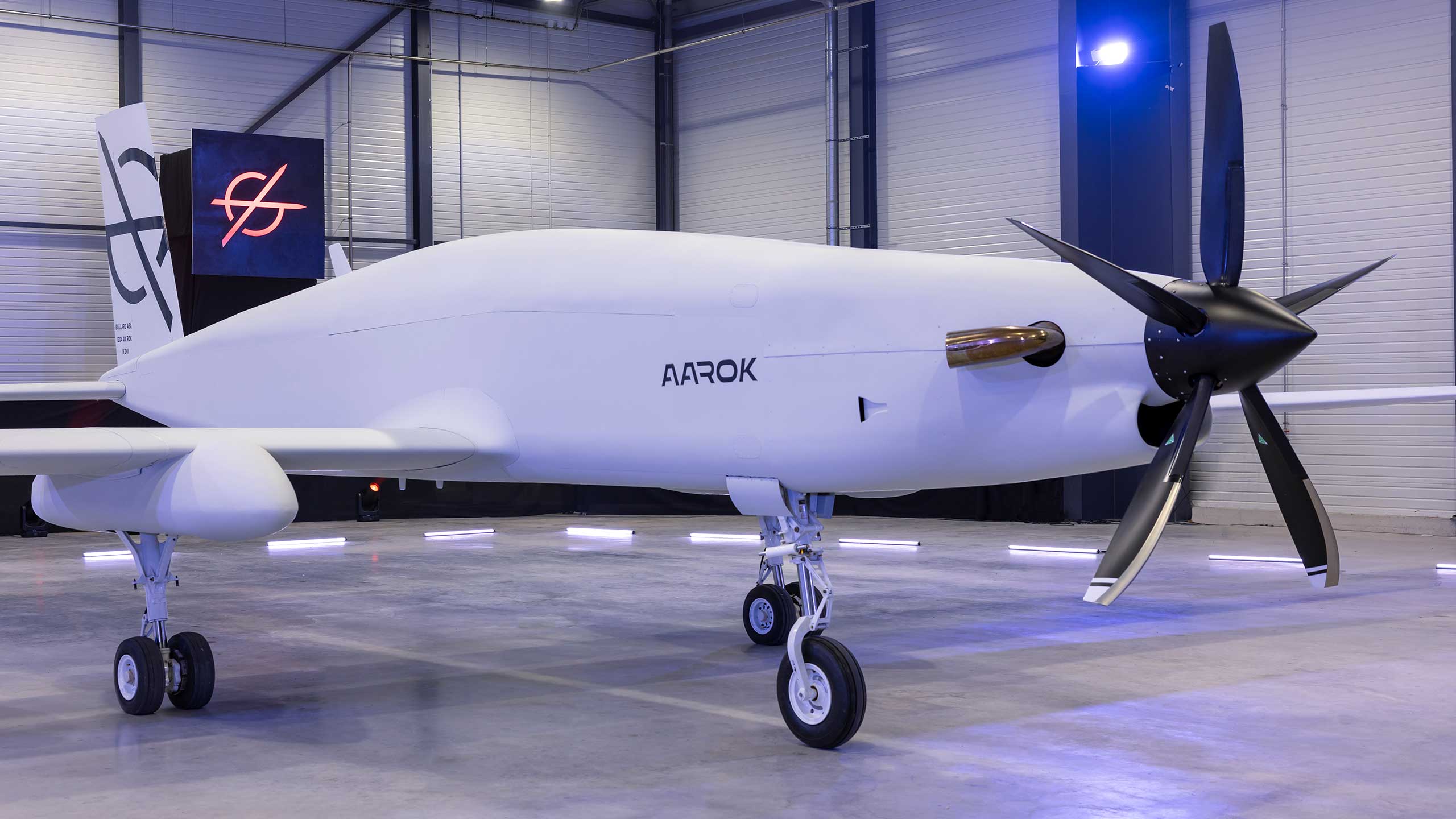
Founded in 2011, Turgis Gaillard manufactures, among other systems, the long-range UAV Aarok, with a 22-meter wingspan and a payload capacity of nearly three tons of fuel, weapons, or specialized equipment. The drone can remain airborne for more than 20 hours and reach speeds exceeding 450 km/h.

According to media reports, Renault and Turgis Gaillard may also establish production of a tactical drone with a wingspan of around 10 meters at an “extremely competitive price,” with output potentially reaching up to 600 units per month by the end of the first year of operations.

The Wealth of the World’s Billionaires Hits a Record High

The combined wealth of the world’s billionaires rose to a record $18.3 trillion last year—the highest level ever recorded, according to a press release by Oxfam, the international confederation fighting global poverty.

In 2025, billionaires’ wealth increased by more than 16%, growing three times faster than the average annual rate over the past five years, reaching the historic high of $18.3 trillion.

Overall, the total wealth of billionaires grew by $2.5 trillion last year—an amount nearly equal to the combined wealth of the poorest half of the world’s population, 4.1 billion people. Oxfam estimates that an increase of $2.5 trillion would be enough to eradicate extreme poverty 26 times over.

The organization also noted that since 2020, billionaire wealth has increased by 81%.

For the first time, the number of billionaires worldwide exceeded 3,000 last year. Meanwhile, the world’s richest person, Elon Musk, became the first individual whose net worth surpassed half a trillion dollars.

Oxfam also reported that billionaires are 4,000 times more likely to hold political office than ordinary citizens.

“The widening gap between the rich and everyone else is creating a political deficit that is extremely dangerous and unsustainable,” said Amitabh Behar, Executive Director of Oxfam International.

Ukraine’s Ministry of Digital Transformation Explains How Online Gambling Monitoring Will Work

Ukraine has begun a two-stage rollout of the State System for Online Monitoring of Gambling (DSOM), the Ministry of Digital Transformation’s press service reported.

“The Cabinet of Ministers has adopted the resolution necessary to launch the State Online Monitoring System. For the first time, the state will be able to see how the legal gambling business operates in real time. This is an important step toward a transparent gambling market in Ukraine,” the statement said.

According to the Ministry, during the first stage the system will record basic financial transactions in the gambling market, including the acceptance of bets, actual payout of winnings, refunds to players, and top-ups of gaming balances. This will allow the state to see the real picture of how the legal market operates not through retrospective reports, but in real time, and to create a basis for transparent accounting of tax revenues.

In the second stage, which is scheduled to begin later this year, the functionality of DSOM will be expanded, along with enhanced oversight of gaming processes and stronger protection of players’ rights. The system is expected to monitor the results of each game, operating parameters of gaming machines (including payout percentages), transactions involving gaming substitutes for the hryvnia, compliance with established betting limits, and the accuracy of winnings calculations. The Ministry emphasized that no players’ personal data will be collected.

According to Deputy Minister of Digital Transformation Nataliia Denikeieva, the state system establishes uniform and transparent rules of oversight for all operators working within the legal framework.

“DSOM sets unified and transparent control rules for everyone who operates legally, pays taxes, and assumes responsibility for responsible gaming. At the same time, a black gambling market still exists in Ukraine—a space without rules, restrictions, or any state oversight. Therefore, strengthening digital control over the legal market cannot happen in isolation. It must go hand in hand with a systematic and tough fight against illegal gambling operators. Only this balance makes it possible to achieve the main goal of the reform: a transparent, predictable, and responsible gambling market,” she said.

Meanwhile, Oleksandr Kohut, President of the Association of Ukrainian Gambling Operators, highly praised the launch of the system, calling it “a major step toward industry transparency.”

“The launch of DSOM is a major story about the industry’s move toward transparency and about the real contribution of the gambling sector to the country’s economy. In 2021, the industry paid UAH 0.24 billion in taxes; in 2022, UAH 0.72 billion; in 2023, UAH 10.4 billion; in 2024, UAH 17.1 billion; and in 2025, UAH 17.4 billion. This shows that the industry has already emerged from the shadows and is paying substantial taxes,” he said.

Ukraine Ready to Offer 25% Stake in Energoatom for Sale

Ukraine is ready to move forward with the privatization of major state-owned companies, including the sale of a 25% stake in Energoatom. This was stated by Minister of Economy, Environment and Agriculture Oleksii Sobolev on the sidelines of the World Economic Forum in Davos.

“We have to be ready for privatization, but this also requires a serious approach on the other side and a certain level of support from financial institutions to finance such transactions. For example, in the case of Energoatom, we are prepared to sell a quarter of the company,” he said.

At the same time, Sobolev noted that large European nuclear energy companies are currently facing their own challenges, which complicates the potential acquisition of a stake in a Ukrainian asset during or after the war. According to him, the implementation of such projects would require a joint agreement approved by the European Union.

The minister also emphasized the need for large-scale domestic financing. “We are expanding the formal economy and collecting more taxes. But if you look at the numbers, Ukraine is currently redistributing around 50% of its GDP. So we are earning and doing our part,” Sobolev added.

U.S. Dealers to Sue Honda

A serious conflict is brewing within Honda’s dealer network over the Afeela electric vehicle brand, which the company is developing jointly with Sony, Carscoops reports. U.S. dealers, particularly in California, have openly criticized Honda’s sales strategy, arguing that the new project diverts resources away from the core Honda and Acura brands at a time when demand for electric vehicles is beginning to slow. Honda, however, appears unwilling to change course.

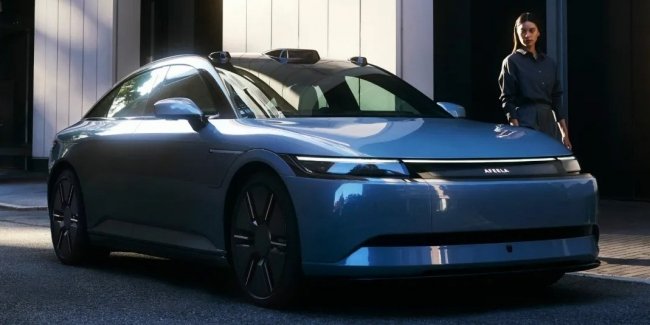
At this year’s CES, Sony Honda Mobility unveiled the production version of the Afeela 1 electric sedan, which is scheduled for a limited launch in California by the end of 2026. The company also hinted at a second model line—an electric crossover currently under development. Sales, delivery, and servicing of Afeela vehicles will be handled directly, without involving Honda’s traditional dealer network, although some service support will be provided through independent repair networks.

This direct-to-consumer sales model is the main source of dealer frustration. Back in August last year, the California New Car Dealers Association filed a lawsuit against Honda and Sony, claiming that the approach violates state law. In response, Sony Honda Mobility has argued that it is a separate legal entity and therefore not required to use Honda’s existing dealer infrastructure.

Bill Feinstein, chairman of Honda’s Dealer Advisory Board, told Auto News that even if Afeela is aimed at a different, more tech-oriented audience, he sees no compelling reason to completely bypass the dealer network that has supported the brand for decades. Honda, for its part, has emphasized that it clearly and transparently warned its partners in advance that dealers would not be involved in the sales or distribution of Afeela vehicles.

The project’s economic rationale is also a cause for concern. According to Feinstein, it is difficult to justify launching a premium electric sedan priced above $90,000 amid declining consumer interest in EVs, high interest rates, and intense price competition. He also stressed that dealers fear a drain on financial and engineering resources: funds invested in the development, production, and marketing of Afeela could instead have been allocated to expanding mainstream Honda and Acura models with greater sales and profitability potential.

Porsche Records Its Steepest Sales Decline Since 2009

Porsche has reported its largest annual drop in sales in the past 16 years, Bloomberg reports. In 2025, the automaker delivered 279,449 vehicles to customers, a 10% decline compared with 2024. The last time Porsche experienced such a sharp contraction was in 2009, when the global financial crisis caused demand to collapse by 24%.

China proved to be the biggest blow for the brand. Porsche’s sales in the country plunged by 26% amid a difficult environment in the premium segment and extremely fierce competition, particularly in electric vehicles. Even against local rivals, Porsche underperformed other key competitors: BMW and Mercedes-Benz saw sales in China fall by 12.5% and 19%, respectively.

In response to weakening demand, Porsche in 2025 shifted its focus toward more reliable internal combustion engine models and postponed the launch of some fully electric vehicles. This strategic pivot cost the company an estimated €1.8 billion in forgone profit.

The situation in Europe was no better. Sales in Germany fell by 16%, while the region as a whole recorded a 13% decline. Porsche attributed this to supply gaps for the 718 and ICE-powered Macan models caused by new EU cybersecurity requirements for vehicle software that took effect in July 2024. As a result of these rules, the gasoline-powered Macan—previously a bestseller—was removed from the lineup in 2025, even though it had generated strong sales in 2024.

Against the broader downturn, the North American market remained relatively stable. In the United States, Porsche’s sales held steady year on year, while Mercedes and Audi each posted declines of 12%. Analysts attribute this to dealers accelerating vehicle registrations in anticipation of potential tariffs. At the same time, Porsche’s lack of manufacturing capacity in the U.S. leaves it exposed to tariffs, which the company estimates may have cost it around €700 million in 2025.

By year-end, fully electric vehicles accounted for 22.2% of Porsche’s global deliveries, while plug-in hybrids made up another 12.1%. The company noted that the share of fully electric models was at the upper end of its 2025 target range of 20–22%, but this proved insufficient to offset the overall weakening of demand in its key markets.

OpenAI and Microsoft Fail to Avoid Trial in Elon Musk Lawsuit

OpenAI and Microsoft have lost their final attempt to have Elon Musk’s lawsuit dismissed, Bloomberg reports. A federal judge in Oakland, California, rejected the companies’ motion to terminate the case and ruled that it should proceed to a jury trial. The trial is scheduled to begin in late April.

Musk alleges that OpenAI’s leadership, headed by Sam Altman, violated the startup’s founding mission as a public charity when it accepted billions of dollars in investment from Microsoft and began transforming into a commercial entity. Musk was one of OpenAI’s co-founders in 2015 and later founded his own artificial intelligence company, xAI, in 2023.

OpenAI has called Musk’s lawsuit baseless, saying it is part of a “long-running campaign of harassment.” The company emphasized that it remains focused on supporting the OpenAI Foundation, which it says is among the best-funded nonprofit organizations.

However, Judge Yvonne Gonzalez Rogers declined to dismiss Musk’s central claim that OpenAI breached its obligation to operate as a charitable organization. In her ruling, the judge noted that while the evidence is not definitive, Musk argues that his financial contribution was clearly intended as a charitable donation and was subject to two fundamental conditions: open-source development and the preservation of OpenAI’s nonprofit status. According to the judge, these conditions were consistent with OpenAI’s original charter and mission.

The court also ruled that the fact Musk donated $38 million through an intermediary does not deprive him of the right to demand compliance with those conditions. A different conclusion, the judge said, would significantly weaken oversight mechanisms for enforcing obligations of charitable trusts.

In addition, the judge allowed fraud claims to proceed. She cited internal correspondence from 2017 in which OpenAI co-founder Greg Brockman initially reaffirmed the company’s commitment to a nonprofit model but later acknowledged in a private note that public statements about such commitment may have been untrue.

Musk’s attorney, Marc Toberoff, said the ruling confirms the existence of substantial evidence that OpenAI’s leadership knowingly misled Musk about the company’s charitable mission in favor of personal enrichment.

The judge also stated that it is up to the jury to determine whether Microsoft helped OpenAI breach its obligations to donors, including Musk. At the same time, she dismissed claims of Microsoft’s “unjust enrichment,” noting the absence of any quasi-contractual relationship between Musk and the corporation.

The conflict between Musk and Altman, once partners, has continued since 2024. Musk’s xAI has become one of OpenAI’s main competitors, and last year Altman’s company rejected Musk’s surprise offer to acquire the nonprofit’s assets for $97.4 billion. Altman has described the lawsuit as an attempt to use the legal system to slow down a rival’s development.

Hard Drive Prices Rise Amid Artificial Intelligence Boom

Traditional hard drives have become another casualty of the rapid development of artificial intelligence. According to Tom’s Hardware, the 12 most popular and widely used HDD models have increased in price by an average of 46% in just four months.

The trend is evident both in the United States, where the analysis was conducted by Tom’s Hardware, and in Europe, where similar offerings were reviewed by ComputerBase journalists. The sharpest price increases have been recorded in the large-capacity hard drive segment—particularly in product lines such as Seagate IronWolf NAS, Toshiba Cloud-Scale, and Western Digital Red, as well as other models designed for servers and network storage.

At the same time, the price hikes have affected other HDDs regardless of their capacity or intended use. In some cases, prices have risen by nearly 70%, indicating a systemic issue rather than isolated price fluctuations.

Analysts suggest that the increase in costs may not be directly linked to shortages or hype around memory chips. Instead, the expansion of artificial intelligence is seen as the key driver: training and operating AI systems require massive volumes of data that must be stored somewhere, and traditional hard drives remain a critical component of this infrastructure.

WP2Social Auto Publish Powered By : XYZScripts.com