Indian Oil Buys Oil from Angola, Brazil, and the UAE

India’s largest oil refiner, Indian Oil Corp, has purchased 7 million barrels of crude oil for March shipments, including supplies from Brazil’s Petrobras, to replace Russian oil. This was reported by Reuters, citing two sources familiar with the matter.

According to the report, Indian Oil Corp bought 1 million barrels of UAE Murban crude and 2 million barrels of Upper Zakum from trader Mercuria. The company also purchased 1 million barrels each of Hungo and Clove crude from Exxon.

In addition, the Indian refiner contracted 2 million barrels of Brazil’s Buzios crude from Petrobras under an optional contract that allows the terms of the deal to be negotiated.

Toyota Recalls Around 162,000 Vehicles

Toyota has announced a large-scale recall of approximately 162,000 vehicles in the United States due to a malfunction of the multimedia display, Reuters reports.

The recall affects certain 2024–2025 model-year Toyota Tundra and Tundra Hybrid pickup trucks. According to the company, under certain conditions the multimedia screen in these vehicles may freeze on the camera image or display a black screen.

As a result, the system may fail to comply with U.S. federal safety standards, since in some situations drivers could lose proper access to camera information.

Toyota said vehicle owners will be officially notified of the recall and further steps by the end of March. The company did not specify how many incidents have been recorded, but emphasized that the issue will be resolved as part of the service campaign.

Trump Threatens Canada with 100% Tariff over Deal with China

U.S. President Donald Trump has threatened to impose a 100% tariff on all Canadian goods in response to a potential trade agreement between Ottawa and Beijing. He made the statement on his social media platform, Truth Social.

In his post, the White House leader mentioned Canadian Prime Minister Mark Carney, referring to him as a “governor.”

“If Governor Carney thinks he is going to turn Canada into a ‘transshipment port’ for goods and products that China sends into the United States, he is deeply mistaken,” Trump said.

China would “eat Canada alive, completely absorb it,” the U.S. president claimed.

In his view, such an agreement would lead to the destruction of Canadian business, its social fabric, and its way of life.

If the deal is concluded, Canada would “immediately face a 100% tariff on all Canadian goods and products imported into the United States,” Trump warned.

Intel Cuts Mass-Market CPU Output in Favor of Xeon for AI Data Centers

Intel has decided to temporarily push consumer processors into the background in order to meet rapidly growing demand for Xeon server chips for data centers and artificial intelligence systems. As The Register reports, this was stated by Intel Chief Financial Officer David Zinsner during the discussion of the company’s fourth-quarter financial results.

According to the executive, Intel misjudged market dynamics. About six months ago, major customers were signaling plans to reduce purchases of high-core-count processors, but in the third and fourth quarters demand for Xeon surged sharply. In particular, the Xeon 6 platform is widely used as a host processor in GPU systems based on Nvidia DGX B200 and B300, as well as in many servers with AMD Instinct accelerators.

To address the shortage, Intel has begun reallocating manufacturing capacity from client chips to server processors. At the same time, the company says it does not plan to abandon the consumer segment entirely. Its main focus there is shifting toward the mid-range and premium segments, while production of budget processors may be limited. This means that low-cost PCs based on entry-level Intel chips could become less available.

The decision has also been influenced by the situation in the memory market. Major manufacturers—Micron, SK Hynix, and Samsung—are likewise redirecting advanced production lines toward DRAM and HBM for AI servers. Against this backdrop, prices for consumer memory have more than tripled in recent months, further pressuring the PC market and reducing the appeal of mass-market configurations.

Zinsner noted that capacity constraints should begin to ease starting in the second quarter of the financial year. Intel expects improvements from higher yields, the launch of additional equipment, and expanded production on the Intel 7, Intel 3, and Intel 18A process nodes. The ramp-up of next-generation Core Ultra Panther Lake processors, which make greater use of the 18A process, is also expected to partially improve the situation.

For the first quarter of 2026, Intel forecasts revenue in the range of $11.7–12.7 billion, betting that the gradual easing of manufacturing constraints will allow it to better capitalize on rising demand for server solutions.

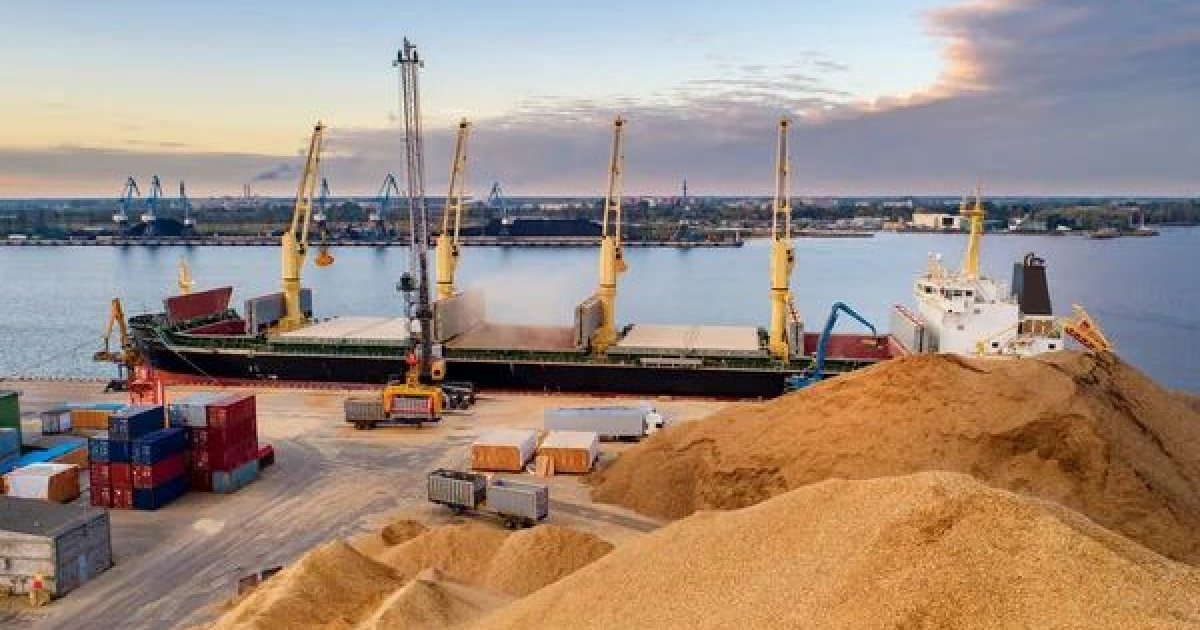
100 Million Tonnes of Grain Exported via the Maritime Corridor

A total of 100 million tonnes of grain have already been transported via Ukraine’s maritime corridor. This was announced by Oleksii Kuleba, Vice Prime Minister for Restoration and Minister for Communities and Territories Development of Ukraine, on Telegram.

He recalled that for the fourth consecutive year, Russia has been systematically attacking ports, logistics infrastructure, and energy facilities with missiles and drones in an attempt to disrupt Ukrainian exports and deliberately undermine global food security.

“Despite this, the Ukrainian maritime corridor continues to operate steadily and remains a key export route. Since its launch in September 2023, 168.9 million tonnes of cargo have been transported through it, including 100 million tonnes of grain. This is an important indicator not only for Ukraine, but also for dozens of countries that depend on Ukrainian agricultural products,” Kuleba wrote.

According to him, 73.2 million tonnes of cargo have already been shipped via the corridor in 2025 alone, of which 38.1 million tonnes were grain. Behind these figures is the daily work of people—port workers, seafarers, logistics specialists, dispatchers, engineers, and repair crews—who operate in difficult and dangerous conditions while ensuring vessel movements, cargo handling, and the fulfillment of export contracts.

“Thanks to this work, Ukraine remains part of the global food system and continues to meet its commitments to international partners. The Ukrainian maritime corridor has been and remains a reliable export route—for Ukraine and for the world,” the vice prime minister concluded.

Russia’s Oil Production Falls to a 16-Year Low

Russia’s oil production totaled 512 million tonnes in 2025, according to an article by Russian Deputy Prime Minister Alexander Novak published in Energy Policy magazine, The Moscow Times reports.

According to the data, oil output has been declining for the third consecutive year: it stood at 516 million tonnes in 2024, 530 million tonnes in 2023, and 535 million tonnes in 2022.

As a result, Russia’s oil production has fallen to its lowest level since 2009, when output amounted to 494.2 million tonnes. Even during the pandemic crisis in 2020, production was slightly higher at 512.7 million tonnes.

The government’s plan for the year предусматривал increasing output to 520 million tonnes. Higher production was also permitted under the OPEC+ agreement, which raised Russia’s quota from 8.98 to 9.57 million barrels per day.

In reality, by the end of the year Russian oil companies were producing only 9.33 million barrels per day, and in December, instead of rising, output unexpectedly and sharply declined by 250,000 barrels per day.

The decline in production is the result of U.S. sanctions against Rosneft and Lukoil, which undermined exports to India and China, notes Janis Kluge, an expert at the German Institute for International and Security Affairs.

The collapse in prices for Russia’s Urals crude, now selling at $35–37 per barrel—almost a 50% discount to Brent—has made production at many Russian oil fields unprofitable.

Russia’s oil industry, which accounts for a quarter of state budget revenues and nearly half of the country’s export earnings, is “gradually sliding into crisis,” says Craig Kennedy, an expert at Harvard University’s Davis Center for Russian and Eurasian Studies.

Hotel by Ukrainian Developer Wins the World’s Most Prestigious Award

The Anantara Dragon Seseh Bali hotel, developed by the Ukrainian Taryan Group, has received the world’s most prestigious real estate award, CNN reports.

The hotel was named Best in the World in the New Hotel Construction and Design category at the International Property Awards, with the award ceremony held in London.

In addition to the top global honor, the project was also recognized as the best in three categories in the Asia-Pacific region: New Hotel Construction and Design, Hotel Architecture, and Developer Website.

The hotel’s dragon-shaped architectural concept, closely integrated with Bali’s coastal landscape, was designed by renowned British architect John Dawes.

“This victory demonstrates that projects created in Ukraine are not only capable of competing at the highest global level, but also of consistently becoming the best. That is exactly what we expect from every one of our projects—to ensure that each new project is better than the previous one,” commented Artur Mkhitaryan, Founder and CEO of Taryan Group.

This marks the third project by the company to win at the International Property Awards. Previously, the titles were awarded to Taryan Towers and Nver, both residential developments in Ukraine’s capital.

Nver, located in central Kyiv on Lesia Ukrainka Boulevard, was named Best in the World in the Mixed Use Development category at the International Property Awards 2024/2025. The complex stands out for its futuristic architecture, a 50-meter-high panoramic bridge with swimming pools, and a high level of security.

Taryan Towers, another Kyiv-based residential complex, was recognized as the Best Residential High-Rise Development in the World at the International Property Awards 2020–2021. The towers received high marks across multiple criteria, including location, architecture, infrastructure solutions, construction materials, and building security.

Businesses to Receive Additional Support

The Cabinet of Ministers is introducing a new business support program. Some individual entrepreneurs (sole proprietors) will be able to receive a one-time payment of up to UAH 15,000, Prime Minister Yuliia Svyrydenko announced on Telegram.

According to her, Group 2 and 3 sole proprietors operating in socially important sectors—such as food service establishments, pharmacies, coffee shops, grocery stores, bakeries, and other essential businesses and services—will be eligible to receive between UAH 7,500 and UAH 15,000.

“The amount of the payment depends on the number of employees, provided there is at least one hired worker,” the Prime Minister explained.

Applications can be submitted through the Diia portal. They will be verified by partner banks, after which the State Employment Service will transfer the funds. The money may be used to purchase and repair energy equipment, buy fuel for generators, or pay electricity bills.

Svyrydenko also noted that businesses meeting the criteria of the 5–7–9% program will be able to obtain loans at 0% interest to purchase generators and battery storage systems. The state will compensate the interest rate difference through the Entrepreneurship Development Fund.

“Loans are provided by around 50 partner banks under the 5–7–9% program for a term of up to three years. The maximum loan amount is up to UAH 10 million,” the Prime Minister added.

Further details and the program’s launch date will be announced by the Ministry of Economy.

S&P Upgrades Ukraine’s Credit Rating After Debt Restructuring

International credit rating agency S&P Global Ratings has upgraded Ukraine’s credit rating following the successful completion of the restructuring of debt obligations linked to economic growth, Bloomberg reports.

According to the agency, Ukraine’s rating was raised to CCC+ from selective default, with a stable outlook.

S&P noted that the further restructuring of a small portion of debt that remains in default would not have a significant impact on Ukraine’s ability or willingness to meet its other debt obligations.

The decision follows a similar move by Fitch Ratings, which in December also removed Ukraine from selective default status.

The restructuring involved the elimination of so-called GDP warrants—an instrument that, according to Finance Minister Serhii Marchenko, would have been “toxic” for the country’s post-war economic recovery. The exchange was supported by around 99% of warrant holders.

Ukraine’s zero-coupon bonds maturing in 2035 and 2036 rose by about 3 cents on the dollar, making them among the best-performing assets in emerging markets.

Chinese Walker S2 Robots to Be Deployed at Airbus Production Facilities

Chinese company UBTech Robotics has signed an agreement to supply humanoid robots to the manufacturing facilities of European aerospace giant Airbus. The deal marks another step in the company’s expansion of industrial applications for its robots beyond China, SCMP reports.

Airbus has acquired the Walker S2 robot as part of a joint study exploring the potential of robotization in aircraft manufacturing.

The agreement follows a similar partnership last month with U.S. chipmaker Texas Instruments (TI), highlighting the Chinese company’s accelerated push into overseas markets and the growing adoption of humanoid robots across industries, including aviation, electronics manufacturing, automotive production, and home appliances.

The Walker S2, unveiled in July 2025, stands 1.76 meters tall and is equipped with dexterous arms, a vision system for environmental perception, and the ability to carry loads of up to 15 kg. It runs on UBTech’s proprietary Co-Agent artificial intelligence system and features an autonomous battery-swapping mechanism, enabling continuous operation in industrial settings.

The model is already being used by companies such as automaker BYD and electronics manufacturer Foxconn.

Founded in Shenzhen in 2012, UBTech became the first Chinese humanoid robotics startup to go public in Hong Kong in 2023. Last year, the company secured orders worth $201 million and plans to ship tens of thousands of industrial robots this year.

UBTech shares rose 6.76% on Monday to HK$142.20.

WP2Social Auto Publish Powered By : XYZScripts.com