Saudi Arabia Begins Cutting Oil Production

Saudi Arabia has been forced to start reducing its oil production, according to Bloomberg, citing a source.

According to the report, the reason is the rapid filling of crude storage tanks amid the effective blockade of the Strait of Hormuz.

The world’s largest oil exporter has followed the example of neighboring countries — the United Arab Emirates, Kuwait, and Iraq — which had previously taken similar steps.

Traditionally, Saudi Arabia produces about 10 million barrels of oil per day, around 7 million of which are exported. Under current conditions, the national oil company Saudi Aramco is trying to mitigate the situation by redirecting part of the shipments bypassing the Hormuz route to the port of Yanbu on the Red Sea coast. However, the pipeline’s capacity is not sufficient to fully compensate for the blocked export volumes.

Audi Stops Accepting Orders for Flagship A8 Sedan in Germany

Audi has quietly stopped accepting orders for its flagship sedan, the Audi A8, in Germany. According to Motor1, the model has disappeared from the brand’s online configurator, and the option to place orders in Audi’s home market ended on February 18.

As confirmed by company representative Marcel Bestle, orders for the A8 in Germany were closed about two weeks ago. The availability of the model in other markets will now depend on remaining inventory and other factors. At the same time, the company has not yet announced the exact date when production of the sedan will end, although halting orders in its key market effectively signals that the model’s life cycle is nearing its end.

The current generation of the A8, known as the Audi A8 D5, has been produced since 2017. The update introduced at the end of 2021 failed to significantly boost interest in the car or help it compete effectively with models such as the BMW 7 Series and the Mercedes-Benz S-Class. During the facelift, a long-wheelbase version with the historic Horch name was also introduced for the Chinese market. It was intended to compete with luxury Maybach variants, but the move did not deliver the expected results.

Despite this, the final fate of the flagship sedan has not yet been decided. Audi says it will provide more details about a possible successor later. However, the key word remains “possible,” as a decision on developing a new generation has not yet been confirmed.

According to German media reports, the manufacturer is still searching for a suitable platform for a potential successor. Another facelift for the current generation has been ruled out because new environmental requirements — particularly the upcoming Euro 7 standard — will require significantly cleaner powertrains.

Samsung Galaxy S26 Series Sets Pre-Order Record in Korea

The Samsung Galaxy S26 smartphone lineup by Samsung Electronics has set a new pre-order record in South Korea, according to Android Authority.

During the first seven days — from February 27 to March 5 — the company received 1.35 million orders for the new flagship devices. For comparison, last year’s Samsung Galaxy S25 lineup reached 1.3 million pre-orders only after 11 days.

As expected, the flagship Samsung Galaxy S26 Ultra proved to be the most popular model, accounting for around 70% of all pre-orders. Last year, the Samsung Galaxy S25 Ultra generated about 52% of orders, making the current result particularly notable.

Meanwhile, the base models — Samsung Galaxy S26+ and the standard Samsung Galaxy S26 — together accounted for about 30% of orders. The company did not disclose the exact distribution between the two versions. Last year, interest in these models was roughly even: 26% of buyers chose the standard Galaxy S25, while 22% opted for the S25+ version.

The S26 series smartphones are available in four main colors, as well as two exclusive variants offered only on Samsung’s website. Buyers of the Galaxy S26 Ultra most often chose classic colors — white and black. Owners of the Galaxy S26+ were slightly more adventurous, frequently opting for the Cobalt Violet shade, although black remained one of the most popular choices.

EU Announces €1.5 Billion Investment in Ukraine

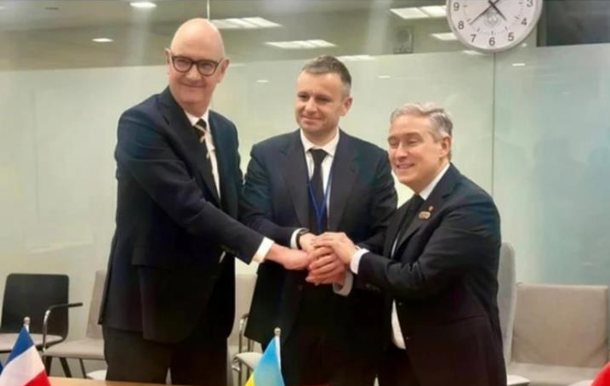
The sixth Supervisory Board of the Ukraine Investment Framework (UIF) has approved a new package of eight programs worth a total of €1.5 billion to support key sectors of Ukraine. This was reported by the European Union Delegation to Ukraine.

The programs are expected to mobilize €3.4 billion in new investments and will support the energy sector, education, telecommunications, agriculture, and small businesses. They will also finance the construction of shelters in educational institutions.

For the first time, the UIF will also allocate funding for dual-use technologies and strategic industries, the EU representation noted, adding that this aligns with the commitments of the European Commission.

The new programs will be implemented by financial institutions, some of which already cooperate with the European Commission in Ukraine — including the European Bank for Reconstruction and Development, International Bank for Reconstruction and Development, KfW, and International Finance Corporation — as well as new partners such as Finnvera, Bpifrance, and Cassa Depositi e Prestiti.

Ukraine’s Reserves Decline for the First Time in Six Months

Ukraine’s international reserves decreased in February 2026 by $2.91 billion, or 5.0%, reaching nearly $54.8 billion as of March 1. This was reported by the National Bank of Ukraine.

“According to preliminary data, Ukraine’s international reserves as of March 1, 2026 amounted to $54,753.4 million. In February they decreased by 5.0%. This dynamic was driven by the NBU’s foreign exchange interventions and the country’s debt payments in foreign currency. These operations were only partially offset by inflows from international partners and from the placement of foreign-currency domestic government bonds,” the statement said.

Despite the decline, the regulator noted that the current level of reserves remains sufficient to maintain the stability of the foreign exchange market.

Overall, several factors influenced the reserves’ dynamics in February. In particular, $1 billion was credited to the government’s foreign currency accounts at the National Bank, including $690.8 million through World Bank accounts under the Extraordinary Revenue Acceleration for Ukraine initiative of the Group of Seven, and $309.6 million from the placement of foreign-currency domestic government bonds.

At the same time, the government of Ukraine paid $804.1 million for servicing and repaying public debt in foreign currency, including $472.2 million for servicing and redeeming domestic government bonds and $331.9 million to other creditors. In addition, Ukraine paid $279.7 million to the International Monetary Fund.

On Ukraine’s foreign exchange market in February, the National Bank sold nearly $2.99 billion, which is $0.74 billion, or 19.8%, less than in January.

The revaluation of financial instruments in February increased the value of reserves by $152.5 million.

“The current level of international reserves is sufficient to cover 5.7 months of future imports,” the National Bank concluded.

“Google Tax” Brought Over UAH 4.2 Billion to the Budget Since the Start of the Year

During the first two months of the year, more than UAH 4.2 billion of the so-called “Google tax” was paid into the state budget. This tax is paid by foreign companies that provide electronic services to Ukrainian users. This was reported by Acting Head of the State Tax Service of Ukraine, Lesia Karnaukh.

This amount is UAH 0.7 billion higher than in the same period last year.

According to Karnaukh, the leading companies paying the tax remain Apple, Google, Valve Corporation, Meta Platforms, Sony, Etsy, and Netflix.

As of today, 151 non-resident entities supplying electronic services to individuals within the customs territory of Ukraine have registered as VAT payers.

“The payment of this tax is an important element of fair taxation of the digital economy and contributes to additional revenues for the State Budget of Ukraine,” Karnaukh added.

Billion-Dollar Deal: Speedtest and Downdetector to Be Acquired by Accenture

Shares of Ziff Davis surged 60% after the company announced it had entered into a definitive agreement to sell its Connectivity division to Accenture for $1.2 billion, according to Reuters.

The U.S.-based Ziff Davis agreed to sell its Connectivity division, which includes the Speedtest app by Ookla and the outage monitoring service Downdetector, to consulting firm Accenture.

The sale price is subject to certain adjustments at closing. The proceeds will be taxed in accordance with applicable law.

In 2025, the Connectivity division generated $231 million in revenue, accounting for approximately 16% of Ziff Davis’ total revenue. The company expects the division’s financial results to be classified as discontinued operations in its consolidated financial statements for both the current and prior periods, beginning with the first quarter of fiscal year 2026.

The proceeds are planned to be used for general corporate purposes and capital allocation in line with the company’s debt obligations.

The deal is expected to close in the coming months. Until then, Ziff Davis will continue to operate the division.

Ziff Davis’ financial advisors on the transaction were Evercore and Citi, while legal counsel was provided by Kirkland & Ellis.

South Korea Sees Biggest Stock Market Crash in Nearly 20 Years

The stock market in South Korea suffered its sharpest decline on March 4. The KOSPI plunged 12.1% by the end of the session to 5,093.54 points, marking the worst two-day drop since the 2008 financial crisis, according to Bloomberg.

At the start of trading, the index had already fallen more than 8%, triggering an automatic trading halt. Volumes surged amid panic selling. The decline was exacerbated by the index’s high concentration, with nearly half of its capitalization accounted for by a handful of technology companies. Shares of Samsung Electronics dropped nearly 12%, while SK Hynix fell about 10%.

Additional pressure came from a sharp weakening of the national currency. The South Korean won surpassed 1,500 per U.S. dollar during trading for the first time in 17 years. The Bank of Korea said it stands ready to take measures to curb volatility and “herd behavior” among investors.

South Korea’s finance minister stated that the sell-off was driven by external shocks rather than domestic economic problems.

The market came under pressure amid a sharp rise in oil prices and escalating conflict in Iran. Brent futures climbed to nearly $84 per barrel. Daniel Yoo, a market strategist at Yuanta Securities, noted that South Korea is heavily dependent on oil prices and vulnerable to their fluctuations. The country is the world’s fourth-largest oil importer.

Oil Prices Could Rise to $100

Oil prices could exceed $100 per barrel if the Strait of Hormuz remains closed to tanker traffic for another five weeks, according to a forecast by analysts at Goldman Sachs Group Inc..

This week, Brent crude climbed above $85 per barrel amid concerns over supply disruptions from the Middle East following the start of military actions by the United States and Israel against Iran. Tehran retaliated with strikes on Israel and several Persian Gulf countries, affecting energy infrastructure in the region. Tanker passage through the Strait of Hormuz — which accounts for about 20% of global oil flows — has effectively halted due to Iranian threats.

Goldman analysts raised their average Brent price forecast for this year to $71 per barrel from $64, and for WTI to $67 from $60.

They also increased their Brent price forecast for the second quarter of 2026 by $10, to $76 per barrel, noting that restrictions on oil supplies through the Strait of Hormuz would lead to lower OECD inventories and reduced production in Middle Eastern countries.

“Oil price increases could prove even more significant than our estimates suggest, as prolonged supply disruptions may lengthen the time between the restoration of output and its full recovery,” Goldman said in its report.

One of the World’s Largest LNG Exporters Declares Force Majeure

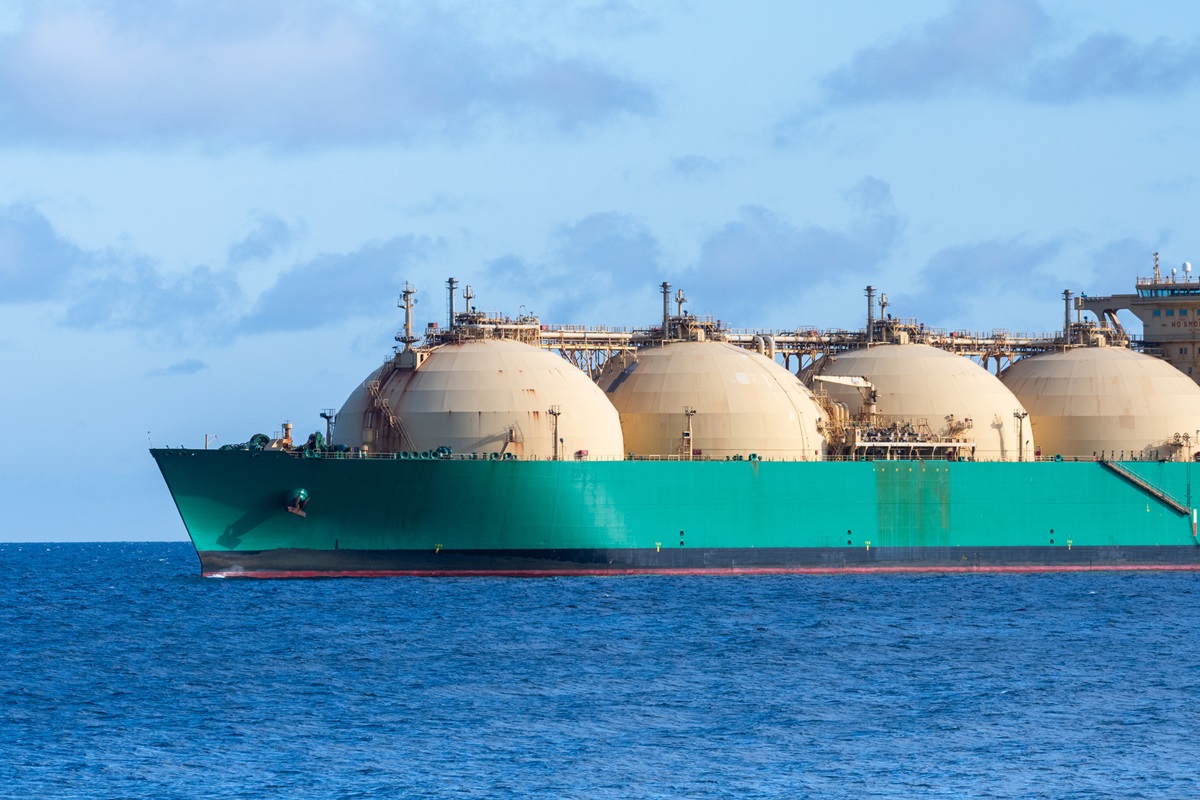
State-owned QatarEnergy has declared force majeure on supplies of liquefied natural gas (LNG) and related products following the suspension of production amid Iranian attacks on its facilities in Qatar.

QatarEnergy is one of the world’s largest exporters of LNG.

In recent days, the company suspended LNG production and related output after Iranian attacks targeted facilities in the industrial cities of Ras Laffan and Mesaieed. One drone struck a power plant water reservoir, while another hit a QatarEnergy industrial site.

Qatar is the world’s largest LNG exporter, accounting for roughly 20% of the global market.

Earlier, Qatar halted LNG production, while Saudi Arabia shut down its largest oil refinery. In addition, oil and gas facilities in Iraqi Kurdistan and Israel have also been closed.

WP2Social Auto Publish Powered By : XYZScripts.com