The full-scale war has become an unprecedented test not only for government institutions and businesses, but also for the charitable sector. Organizations that just a few years ago operated as volunteer initiatives were forced, in record time, to transform into large-scale operational structures managing multi-billion-hryvnia budgets, complex logistics, and a high level of responsibility for every decision they make.
The Serhiy Prytula Foundation has become one of the most striking examples of such a transformation. Over the course of the war, it has evolved into a powerful institution implementing large-scale projects in support of Ukraine’s Defense Forces, working with international partners, and introducing modern management and technological solutions.
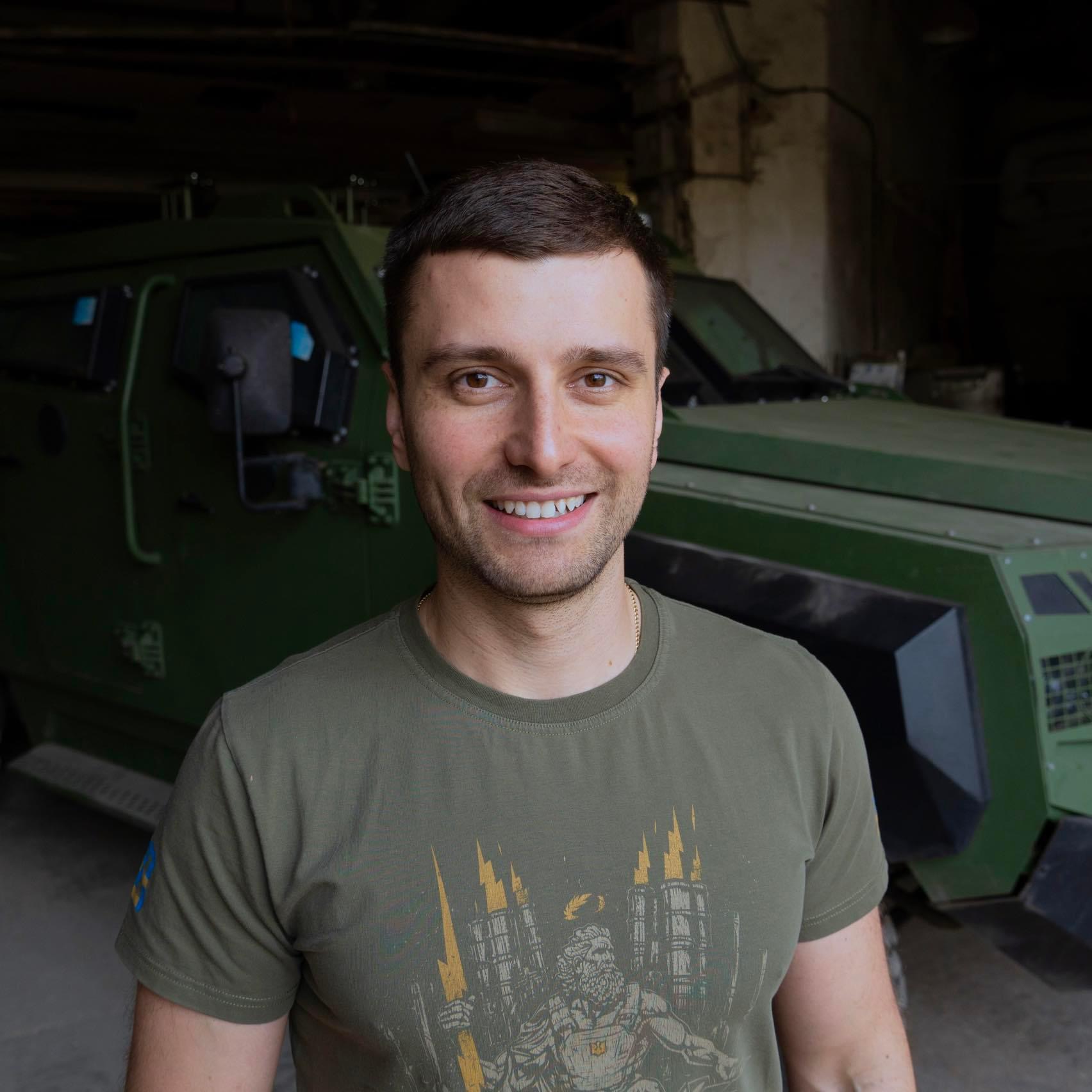
In this interview, Andrii Shuvalov, СЕО of the Serhiy Prytula Foundation, discusses how his understanding of leadership has changed during wartime, why system-driven management has become more important than individual heroics, how decisions are made when the cost of a mistake is measured in human lives, and why public trust remains the organization’s most valuable asset.
We also discuss the Foundation’s transformation from a volunteer movement into a fully-fledged operational organization, the role of technology and artificial intelligence in modern philanthropy, the challenges of scaling operations, and the lessons that Ukraine’s experience can offer to international organizations and future leaders.
LeadershipDaily: You lead one of the most dynamic charitable organizations during wartime. How has your leadership model changed over the past few years, and what did you have to rethink first and foremost?
A. Shuvalov: The war presented us with challenges of such magnitude that the old management model simply would not have survived. Along with the transformation of the Serhiy Prytula Charity Foundation, my leadership model has also changed dramatically. If I were to highlight the key shifts in my thinking, I would point to three main areas:
- Emotional intelligence. Today, approximately 70–80% of my time is devoted to working with people: providing emotional support, building motivation, and maintaining focus. Under conditions of prolonged stress, a team needs more than a manager who simply assigns tasks. It needs a leader who instills confidence and inspires people to move forward.
- From hands-on management to system-based leadership. At the beginning of the full-scale invasion, we all operated in firefighting mode and relied heavily on manual management. That was natural under the circumstances. However, to remain effective in the long term, we had to rebuild the organization. We minimized chaos and reduced the human factor wherever clear processes and algorithms should be in place. We transitioned from reactive management to a systematic and strategic approach.
- Focus on what matters most. Leadership transformation is also about the ability to eliminate distractions and concentrate on priorities. We are currently working intensively on the Foundation’s strategy for the coming years. We are narrowing our areas of activity to avoid spreading our resources too thin. Our goal is to focus exclusively on the areas where we are objectively the strongest and where we can deliver the greatest benefit to the country.
LeadershipDaily: How do you make decisions when the cost of a mistake is measured not in reputation, but in human lives? Do you have personal principles or frameworks that help you maintain clarity?
A. Shuvalov: Every potential decision we make is filtered through four fundamental criteria:
- The interests of Ukraine’s Defense Forces — our absolute priority.
- Maximum effectiveness — we calculate the return on every hryvnia invested: how many lives it can save and how much enemy equipment it can help destroy.
- Absolute transparency — all decision-making, procurement, and reporting processes must be completely transparent, both for Ukrainian citizens and for our donors.
- Innovation — the enemy adapts constantly, so relying on approaches that worked two years ago is a path to failure. We continuously seek technological and unconventional solutions that provide our military with an advantage on the battlefield.
LeadershipDaily: What does an “effective leader” mean to you today in the context of war and constant crisis? Is it about speed, resilience, empathy, or something else?
A. Shuvalov: Today, an effective leader is first and foremost about resilience. A constant crisis requires the ability to withstand pressure and remain effective over the long term without burning out personally while keeping the team engaged and motivated.
As for speed and empathy, these are important tools, but they must serve resilience. Moreover, speed often conflicts with effectiveness. In wartime, circumstances change instantly. If you spend too much time searching for the perfect and most effective solution, the window of opportunity will close. By the time a decision is made, it may already be irrelevant.
LeadershipDaily: The Serhiy Prytula Charity Foundation has evolved from a volunteer initiative into a large-scale institution. How did you manage to build a structured and manageable organization without losing speed and flexibility?
A. Shuvalov: Unlike a traditional business, we could not press pause, shut down for restructuring, and say, “Wait while we reorganize ourselves, and then we’ll return to supporting the military.” We had to rebuild the airplane while it was already in flight.
This transition happened gradually, and we began it in late 2022, when we clearly understood what we needed to become in order to endure a long war.
The key elements of this transformation were:
- Prioritizing processes over individuals. At the beginning of the full-scale invasion, everything depended on the heroism and resilience of specific people. That was our foundation. But we live in the real world: people burn out, join the Armed Forces of Ukraine, or simply leave the organization. The cost of mistakes or operational disruptions is too high. Therefore, we shifted our focus from specific individuals to robust and reliable processes. Today, everyone performs an important function, but if a person changes, the system does not suffer critically and continues to operate smoothly.
- Continuous transformation. The institutional maturity we have achieved by 2026 is not the result of a sudden decision made a year ago. It is the outcome of three years of daily work that remains largely invisible to the public: optimizing processes, developing clear operational frameworks, and implementing automation. Constantly and consistently.
LeadershipDaily: What was the turning point when it became clear that you were no longer a “volunteer movement” but a fully-fledged operational organization?
A. Shuvalov: That turning point came in the summer of 2022. It was then that we clearly realized that the emotional momentum of the first months of the war had served its purpose, and from that point forward, only systematic management would prevail.
For us, the key indicator of the transition to a full-fledged operational structure was the introduction of strict internal procedures. We completely redesigned and optimized our processes:
- Procurement and logistics: We implemented clear approval procedures for every transaction, especially for international contracts.
- Aid administration: We ensured full documentary compliance, from collecting complete documentation from military units to obtaining photographic reports.
- Financial tracking: We established a transparent path for every hryvnia — from the moment it reaches the Foundation’s accounts, through every stage of the organization’s internal operations, to the final public report.
LeadershipDaily: Which management decisions proved to be the most difficult during the scaling process, and where did you make mistakes?
A. Shuvalov: The most difficult decisions are always those involving people and the closure of projects into which significant effort and resources have already been invested.
The toughest management decision was discontinuing certain areas of activity. As we scaled, we realized that we could not be everywhere at once. For example, we completely shut down major projects such as the production of command-and-control vehicles and the refurbishment of captured heavy military equipment, transferring this expertise to the state.
This automatically meant reducing staff and reallocating people to other functions. However, it was the right strategic decision because it freed up enormous resources and allowed us to focus on areas where we are objectively more effective than the state apparatus.
LeadershipDaily: How do you balance urgent tasks (reactive work) with long-term strategy (systemic change)?
A. Shuvalov: The ratio is 60/40 in favor of strategy.
- 60% of our resources, management time, and attention are devoted to long-term planning, systemic transformation, and large-scale procurements.
- 40% remains allocated to responding to immediate challenges and putting out fires.
LeadershipDaily: The Foundation operates with an exceptionally high level of public trust. How do you maintain that trust, and what risks do you see in losing it?
A. Shuvalov: Public trust is the most valuable asset of our organization. For us, it is a very tangible resource. If trust disappears, donations stop, and the Serhiy Prytula Charity Foundation simply ceases to exist.
We maintain this trust through our actions and through the tangible results of our work.
When it comes to the risks of losing trust, we clearly divide them into two categories:
- External threats. The enemy fully understands the strength of Ukraine’s volunteer movement. That is why Russian intelligence services and their agents systematically work to discredit major charitable foundations. Their goal is simple: undermine trust, reduce fundraising, and thereby weaken Ukraine’s Defense Forces.
- Internal destructive influences. Unfortunately, we also see attempts by certain domestic actors to fuel manipulation and attack the volunteer sector for their own interests.
We are fully aware of these risks. At present, this information pressure is not critical for us, but it would be inaccurate to say that it is not noticeable.
LeadershipDaily: Where do you draw the line between complete transparency and operational security, especially during wartime?
A. Shuvalov: During wartime, there can be no compromise between transparency and operational security, because the safety of our military units always comes first. No report is worth giving the enemy the opportunity to identify logistics routes or the positions of the Defense Forces.
That is why our management decision is to publish information with a time delay, usually around one month.
People naturally want to see the results of their donations immediately, and that is completely understandable. However, we act rationally. If today we deliver advanced strike UAVs and publicly announce that they are being transferred to a specific brigade in the Donetsk region, enemy intelligence will instantly analyze that information. They will understand that these drones are about to enter combat and strengthen our forces.
That is why we have found a balance: we report to the public on every single contribution and every piece of equipment delivered, but we do so with a slight delay.
LeadershipDaily: How do you measure the effectiveness of your work? Which metrics truly matter to you?
A. Shuvalov:
- Funds raised (from the start of the full-scale war through June 2026, we raised UAH 12.5 billion).
- Reputation, which is the foundation for fundraising.
- The volume of aid delivered.
- Motivated employees who are capable of delivering results.
- Alignment with our strategy.
LeadershipDaily: Can the Ukrainian volunteer and charitable sector be considered a new model for the world? If so, what makes it fundamentally unique?
A. Shuvalov: Absolutely. The Ukrainian volunteer and charitable sector can certainly be viewed as a new model for the world—a model that has proven its effectiveness under critical conditions.
Its uniqueness lies in the unprecedented level of public engagement. Never before have citizens of any country supported their own military on such a scale and with such consistency. In Ukraine, the line between a “donor” and a “participant” has disappeared. Millions of people are involved in supporting the country’s defense every day—financially, organizationally, and technologically.
We are witnessing phenomena that once seemed impossible. Where else is there a country in which society independently raises billions to protect its own skies? Where citizens collectively fund sophisticated military capabilities, from drones to communications systems? Where society unites and effectively purchases a satellite for the needs of its armed forces?
But it is not only about scale. What is fundamentally new is the combination of speed, trust, and a horizontal organizational structure.
The Ukrainian sector operates without excessive bureaucracy, adapts rapidly to the needs of the frontline, and continuously innovates—from technological solutions to communication and fundraising models.
It is a living system that learns and evolves in real time.
LeadershipDaily: What could international organizations learn from Ukraine today — and vice versa?
A. Shuvalov: What international organizations can learn from Ukraine:
- Speed and flexibility in decision-making. We regularly cooperate with major international donors and see that they operate in a very different reality.
We work closely with international partners, but at the same time we understand that they are not living in a wartime environment. For them, responding to an email may take months, which is perfectly normal in their context but not always effective in ours. Therefore, speed and decision-making are areas where we could certainly teach valuable lessons.
- Military innovation and technology. As of 2026, Ukraine is at the forefront of the world in terms of military technologies and their practical application.
What can we learn from them?
Perhaps institutional maturity and long-term planning. International organizations have spent decades, and in some cases more than a century, building robust systems capable of functioning effectively through any crisis. They know how to mobilize billions in resources and play a long-term strategic game.
For the Ukrainian sector, which grew out of a highly dynamic and often improvised volunteer movement, adopting this level of institutional discipline is essential to ensuring that we remain resilient and effective even after the war.
LeadershipDaily: What role do technologies play in the Foundation’s work today—from logistics to analytics? Are there any solutions that have been true game changers for you?
A. Shuvalov: For our Foundation, each year represents a new stage of technological evolution. We moved beyond Excel spreadsheets long ago and built our operations around a comprehensive ERP system that integrates all our data, procurement activities, warehouses, and analytics into a single living ecosystem.
As for a true game changer, 2026 has become the year of Artificial Intelligence for us. Today, we are systematically integrating AI into all key areas where it can optimize workflows, increase efficiency, and reduce routine tasks.
LeadershipDaily: In your opinion, which technologies are currently overvalued and which are undervalued in humanitarian and military assistance?
A. Shuvalov: What is significantly undervalued today:
- Artificial Intelligence (AI). Although we actively implement AI within the Foundation, its potential remains underestimated across the global volunteer and humanitarian sectors. The world has not yet fully grasped the scale of AI’s capabilities, and we are only at the beginning of this journey.
- Short-range air defense systems and technologies for their modernization. The potential of developing short-range air defense remains underestimated. This includes investments in increasing response speed, automating target detection, and improving interception accuracy.
LeadershipDaily: If we imagine that the war ends tomorrow, what will be the Foundation’s next mission? And what role do you see for yourself in this new chapter?
A. Shuvalov: Even if hostilities were to end tomorrow, the threat posed by our neighbor would not disappear. That is why the Serhiy Prytula Charity Foundation will not cease its work—we are already preparing for this transition today.
Our primary objective on the day after victory is to preserve our unique assets: the knowledge we have accumulated, our expertise, logistics networks, and the trust of our international partners, so that we can continue to be as useful as possible to the country in peacetime.
For example, we see an important role in contributing to the development of a new architecture for Ukraine’s Defense System.