
Introduction
Just ten years ago, most executives built their businesses around relatively stable forecasts. The geopolitical environment was more predictable, technological changes occurred gradually, and economic cycles allowed companies to develop long-term plans stretching five to ten years into the future.
In 2026, the world looks entirely different.
Wars, geopolitical conflicts, trade restrictions between major economies, the rapid development of artificial intelligence, energy challenges, inflationary shocks, and a shortage of skilled talent have created an environment in which uncertainty has become the new normal.
Under these conditions, the key question for business is no longer, “Where can we find new growth opportunities?”
Instead, it has become:
How do we make the right decisions when complete information simply does not exist?
The answer to this question defines the new model of leadership in 2026.
The End of a Predictable World
The past three decades have been a period of unprecedented stability for global business. Following the end of the Cold War, the global economy became increasingly integrated. Companies gained access to low-cost labor, international markets, global supply chains, and a relatively predictable geopolitical environment.
It was under these conditions that modern strategic management models emerged. Businesses learned to plan years ahead, build long-term budgets, and forecast consumer behavior with a high degree of accuracy.
However, after 2020, this model began to break down.
The world entered a phase of what can be described as permanent turbulence, where crises ceased to be exceptions and became a constant factor that must be considered in every management decision.
For today’s CEO, instability is no longer a risk. It has become a fundamental operating condition.
Geopolitics Has Returned to Business
Ten years ago, most leaders of international companies could afford to pay little attention to global politics.
Today, the situation is dramatically different.
The war in Ukraine has become one of the most significant economic shocks of the 21st century. It has affected energy markets, global food security, international logistics, and investment flows.
At the same time, the world has faced escalating tensions in the Middle East, growing rivalry between the United States and China, and persistent risks surrounding Taiwan.
For businesses, this means that political decisions increasingly have a greater impact on corporate performance than marketing campaigns or product innovations.
Today, leaders of large organizations must analyze not only financial reports but also political risks, sanctions policies, international relations, and potential military conflicts.
Trade Wars and the End of the Globalization Era
For decades, globalization was the primary driver of economic growth.
Companies moved production to lower-cost countries, built complex international supply chains, and optimized costs on a global scale.
Today, this model is undergoing a fundamental transformation.
The trade confrontation between the United States and China has gradually evolved into a struggle for technological dominance. Restrictions on semiconductor exports, sanctions against technology companies, and increasingly protectionist government policies are forcing businesses to reconsider their presence in key markets.
As a result, more companies are adopting concepts such as:
For executives, this means making difficult decisions between efficiency and business security.
Artificial Intelligence as a New Source of Uncertainty
While previous technological revolutions unfolded over decades, the artificial intelligence revolution is happening in real time.
Generative AI is already transforming:
The challenge is that no one can accurately predict the speed of these changes.
Many professions may be fundamentally transformed within the next few years. At the same time, companies are forced to make investment decisions today.
This creates a new challenge for modern executives: how do you invest in technology when it is impossible to know with certainty what that technology will look like just 12 months from now?
As a result, an increasing number of companies are abandoning large-scale, one-time transformation projects in favor of rapid experimentation and more flexible innovation models.
Energy Security Has Become a Competitive Advantage
Energy risks are no longer a concern exclusively for energy companies.
Recent events have demonstrated that the cost of electricity can affect business competitiveness just as much as labor or raw material costs.
This became particularly evident in Europe following the energy crisis of 2022–2024.
Many manufacturing companies were forced to rethink their business models due to the sharp rise in energy prices.
As a result, investments in:
have evolved from environmental initiatives into strategic business necessities.
The Global Competition for Talent
Another defining characteristic of the new economy is the shortage of qualified talent.
Despite automation and the rapid advancement of artificial intelligence, demand for highly skilled professionals continues to outpace supply.
This is particularly true for:
In many countries, demographic shifts and aging populations further intensify the challenge.
As a result, competition between companies is increasingly focused not on attracting customers, but on attracting and retaining talent.
For business leaders, this requires a fundamental reassessment of traditional approaches to talent management, corporate culture, and leadership development.
A New Reality for CEOs
All of these factors have created an entirely new management environment.
If the key competency of leaders in the past was the ability to develop long-term plans, today the most important capability is the ability to adapt quickly to change.
Modern CEOs can no longer rely solely on historical data and financial models.
They must make decisions in conditions of incomplete information, high uncertainty, and constant external shocks.
For this reason, the most critical leadership skill of 2026 is no longer the ability to predict the future, but the readiness to act when the future remains impossible to predict.
From the Era of Forecasting to the Era of Adaptation
For most of the twentieth century, corporate success was built on the ability to predict the future. Business schools taught executives how to develop five-year strategies, forecast markets, build detailed financial models, and establish long-term objectives.
However, by 2026, the central challenge is that the pace of change has become faster than the pace of planning.
According to the McKinsey Global Survey, more than 70% of executives at large organizations now review their strategic priorities at least once every quarter, whereas only a decade ago most companies reviewed them once a year.
In practice, today’s CEO is no longer managing a stable organization but rather a continuous process of transformation and change.
The Collapse of Long-Term Forecasting
Before the COVID-19 pandemic, most global corporations had approved development plans extending through 2025–2030.
In just a few months, the pandemic:
Business models that once appeared stable suddenly stopped working.
Then, the war in Ukraine reshaped Europe’s energy markets, while the rise of generative artificial intelligence called the future of entire professions into question.
The world has become too complex for linear forecasting.
Inflation and the Death of Static Budgets
According to Deloitte estimates, more than 60% of CFOs at international companies now use dynamic budgeting models.
The reason is simple.
Whereas budgets were once prepared a year in advance, today the cost of energy, logistics, or raw materials can fluctuate by double-digit percentages within a single quarter.
As a result, companies are increasingly adopting rolling forecast models — a continuous process of reviewing and updating financial projections.
AI Is Disrupting Traditional Planning
Generative artificial intelligence has become one of the most powerful drivers of strategic uncertainty.
According to PwC, more than 40% of executives acknowledge that they cannot accurately assess AI’s impact on their industries even within a three-year horizon.
As a result, the primary objective is no longer to create a perfect plan, but to build an organization capable of adapting faster than its competitors.
Microsoft: Betting on the Future Before It Becomes Obvious
When Microsoft began investing heavily in OpenAI in 2019, most analysts viewed generative AI as a promising but distant technology.
Satya Nadella took a different view.
The company invested billions of dollars before ChatGPT became a global phenomenon.
As a result, Microsoft was able to integrate AI across virtually its entire product ecosystem, including:
The key lesson from Microsoft is that major decisions are often made long before complete certainty exists.
NVIDIA: A Twenty-Year Strategy
Today, NVIDIA is one of the world’s most valuable companies.
However, its success did not emerge overnight.
In the early 2000s, the company began developing GPUs as a computing platform, even though its primary market at the time was video gaming.
For two decades, NVIDIA invested in technologies that many considered niche.
When the artificial intelligence boom arrived, the company already possessed a mature ecosystem.
It is a powerful example of how strategic patience can create a competitive advantage that lasts for decades.
Amazon: A Culture of Fast Decisions
Years ago, Jeff Bezos introduced the famous 70% Rule.
If you have approximately 70% of the information required to make a decision, you should make it.
Waiting until you have 90–100% of the information usually means losing valuable time.
It was this philosophy that enabled Amazon to:
The core principle is simple: mistakes can be corrected, but lost time cannot be recovered.
Nestlé: Scenario Planning as a Standard Practice
Nestlé operates in more than 180 countries worldwide.
The company does not rely on a single forecast of the future.
Instead, it develops multiple alternative scenarios, including:
Each scenario comes with a predefined set of management actions and contingency plans.
This approach enables Nestlé to respond more quickly to shifts in consumer markets and changing economic conditions.
Danone: Managing Resilience
Following the pandemic, Danone fundamentally redefined its concept of efficiency.
Previously, the company’s primary objective was cost reduction.
Today, Danone invests heavily in:
As a result, resilience has become a new source of competitive advantage.
What Global Leaders Have in Common
According to Gartner 2026, the world’s most successful companies share five key characteristics:
The Most Challenging Business Case of Our Time
Today, Ukrainian companies operate in an environment that many leading international business schools use as a case study in extreme management.
Executives are required to simultaneously address issues related to:
This is precisely why Ukraine has become a unique laboratory for modern leadership.
Industry
Following the outbreak of the full-scale war, dozens of enterprises were relocated.
Executives effectively built entirely new production systems in real time.
Many factories resumed operations within just a few months after relocating.
Agriculture
Ukrainian agricultural companies successfully restructured their export routes through:
What would have required years of negotiations during peacetime was accomplished within a matter of months.
Logistics
Logistics operators created an entirely new transportation map for Ukraine.
Companies began operating through dozens of alternative routes while continuously adapting to emerging risks and changing circumstances.
IT
Ukrainian IT companies have become a powerful example of global resilience.
Despite the war, they retained the majority of their international contracts and continued exporting services worldwide.
Many clients view the Ukrainian experience in crisis management as a significant competitive advantage.
Investments
Despite the ongoing war, international investment funds continue to invest in Ukrainian companies.
For investors, not only financial performance matters, but also the quality of leadership teams and their ability to navigate uncertainty.
Ukrainian CEOs as a New Global Case Study
In reality, Ukrainian executives are already operating in an environment that may become the norm for the rest of the world tomorrow.
This is why the experience of Ukrainian businesses is increasingly being studied by international consultants, investors, and business schools.
From Charisma to Systemic Leadership
If leaders in the twentieth century were often judged by their personal charisma, in 2026 entirely different qualities have become decisive.
The new leadership model can be expressed as:
Leader 2026 = Speed × Adaptability × Trust × Risk Management
Importantly, this is a multiplication formula.
If any one of these factors equals zero, the entire system breaks down.
Speed
Success no longer belongs to those who make perfect decisions.
It belongs to those who make decisions faster than their competitors.
Adaptability
Modern leaders are willing to abandon their own assumptions and change course even after years of investment and commitment.
Trust
Research by Deloitte shows that team trust has become one of the most important drivers of productivity during times of crisis.
People are willing to operate in uncertainty only when they trust their leadership.
Risk Management
Leaders no longer attempt to predict the future.
Instead, they build organizations capable of surviving and thriving under any scenario.
Outlook to 2030
By the end of this decade, the role of the CEO will change more dramatically than it has over the previous thirty years.
Future executives will increasingly resemble architects of adaptive systems rather than administrators of stable organizations.
The most critical leadership competencies will include:
Companies that learn to operate effectively in conditions of permanent turbulence will gain the greatest competitive advantage of the next decade.
That is why the most important question for a leader in 2030 will no longer be, “What will happen?”
Instead, it will be: “How quickly can we adapt to whatever happens?”

Throughout 2026, Russian troops carried out strikes on dozens of fuel infrastructure facilities in Ukraine—as a result of the constant attacks, 37 gas stations belonging to the Naftogaz group were destroyed. According to the company, some of the damaged gas stations have already been repaired and returned to operation. At the same time, some facilities […]

Georgia’s only oil refinery, located in the port of Kulevi—the Kulevi Oil Refinery—will stop purchasing Russian oil in August–September 2026 and switch to crude from Kazakhstan and Libya, according to Reuters. The European Union has given the company until January 25, 2027, to phase out Russian oil. According to Black Sea Petroleum (BSP), the company […]
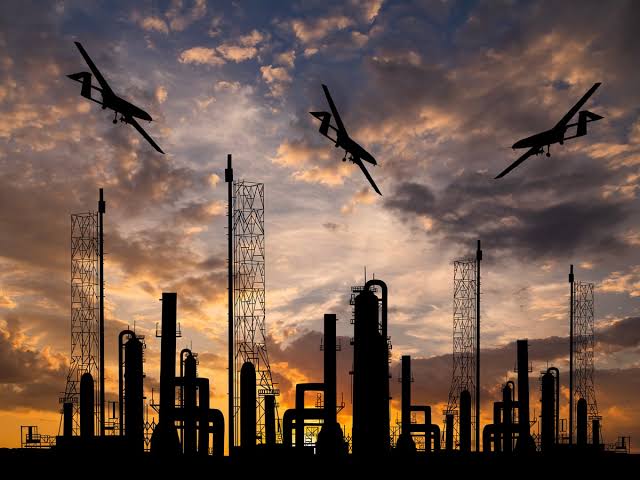
Ukrainian strikes on Russia’s oil infrastructure have caused oil refining volumes to fall to their lowest level in nearly the entire period of Vladimir Putin’s rule. Specifically, in July, Russian refineries processed about 3.6 million barrels per day, the lowest figure since May 2002. Bloomberg reported this, citing an estimate by EA Analytics. This is […]
The Bulgarian government has decided to classify two companies within the Lukoil group as assets of strategic importance to national security. The companies in question are Lukoil Aviation Bulgaria and Lukoil Bulgaria Bunker, which supply the country with aviation and marine fuel, according to the publication Novinite. The decision was taken by the Council of […]
US tech giants – Google, Amazon, Microsoft and Meta – have sharply increased their capital expenditure since the start of the AI boom in 2023. The companies are investing hundreds of billions of dollars in data centres, cutting-edge chips and energy infrastructure, anticipating long-term returns from the technology. The scale of these investments demonstrates just […]
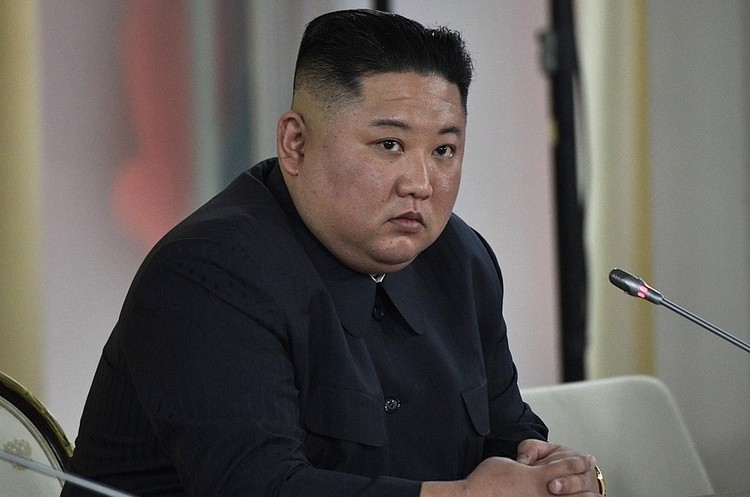
North Korea’s economy continues to grow, despite international sanctions and the country’s isolation, according to the Yonhap news agency, citing data from the Bank of Korea. According to estimates by the Bank of Korea, North Korea’s GDP has been growing by more than 3 per cent for the third year running – largely thanks to […]

The Australian internet regulator, eSafety, has taken Telegram to court for allegedly failing to remove material promoting terrorism. This was reported by Reuters, citing the Office of the Australian eSafety Commissioner. If the allegations are substantiated, the platform could face a fine of up to 54.6 million Australian dollars – approximately 38 million US dollars. […]
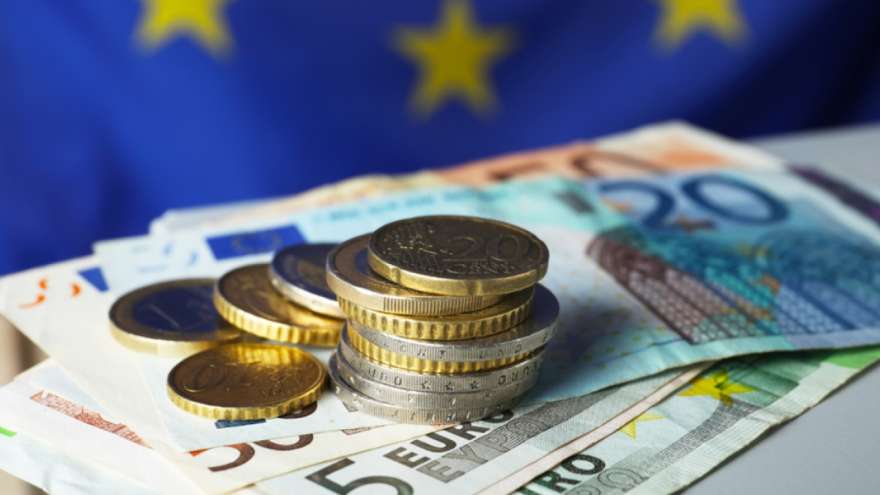
Year-on-year inflation in the eurozone accelerated to 2.9% in July 2026, up from 2.8% in June. These preliminary figures were released by Eurostat. The figure was in line with analysts’ expectations. The rise in inflation came against a backdrop of rising energy prices, particularly following fluctuations in the oil markets. Among the main components of […]

У новому році українським автомобілістам доведеться платити більше. Відповідно до поправок до Податкового кодексу України, про які редакція LDaily уже розповідала на сторінках свого журналу, у 2017 році законодавець має намір підняти транспортний податок, встановити новий акцизний збір і відновити податок на переобладнані автомобілі. У першу чергу податкова реформа торкнеться власників нових машин (не старше 5-ти […]
Next
Національний банк України дозволив бізнесу купувати іноземну валюту за рахунок кредитних коштів у гривні без обмежень по сумі. Про це повідомляє пресслужба НБУ в середу, 7 серпня. “Зазначене послаблення дозволить підприємствам більш ефективно управляти ліквідністю і купувати необхідні обсяги валюти для виконання власних зобов’язань у зручний для себе час”, – йдеться в повідомленні. Крім того, […]
Next
Apple employees opposed the corporation’s new rule, which requires them to work from the office at least three days a week from the fall. Verg, citing a letter from employees to the head of the corporation Tim Cook, reported this. The letter refers to the refusal of many employees to return to the office. The […]
Next
Ціна акцій американської компанії Apple встановила новий рекорд. За підсумками торгів 7 липня вона зросла до 144,57 доларів. Ринкова вартість корпорації тепер становить 2,4 трлн доларів. У кінці січня акції Apple досягли піку, а потім їх ціна почала знижуватися аж до найнижчих значень у березні. Після цього вартість акцій знову почала зростати. З початку 2021 […]
Next
За підсумками транвя продажі Toyota Motor Corp. досягли третього поспіль місячного рекорду завдяки високому попиту на гібридні автомобілі в США, Японії та Китаї. Про це напередодні повідомило агентство Bloomberg. “Глобальні продажі Toyota, включаючи дочірні компанії Daihatsu Motor Co. і Hino Motors Ltd., становили 955 532 автомобілі минулого місяця, що на 8% більше, ніж роком раніше. Світове виробництво […]
Next
Світові стала відома найбагатша людина в історії. Джеф Безос впевнено обійшов по фінансам Білла Гейтса. Загальна вартість стану засновника «Amazon» на сьогоднішній день, доходить до 150-ти мільярдів доларів США. У той час як у Білла Гейтса, на 55 мільярдів доларів менше. Такі кардинальні зміни відбулися через умови, що скориговані з урахуванням інфляції. І тепер, 54-річний […]
Next
Влада Канади заарештували фінансового директора і дочку засновника китайської компанії Huawei Мен Ваньчжоу. У США жінку звинувачують в порушенні санкцій проти Ірану. Раніше уряд США намагався переконати провайдерів бездротового зв’язку та інтернету в країнах-союзниках відмовитися від телекомунікаційного обладнання Huawei. За їх словами, Вашингтон турбується, що продукція компанії використовується в Німеччині, Італії та Японії, де знаходяться […]
Next
Платоспроможні банки України за січень-липень 2024 року отримали 93,616 млрд гривень прибутку після оподаткування. Це на 12,5% більше ніж рік тому, свідчать дані Національного банку України. Рейтинг із прибутковості очолює державний ПриватБанк, який заробив 37,165 млрд гривень. На другому місці державний Ощадбанк (10,997 млрд гривень), на третьому місці – банк іноземної банківської групи Райффайзен Банк – 4,867 […]
Next
У патентній війні, яка триває вже багато років, між Apple і Samsung почався новий виток. Так, «яблучна» корпорація знову звернулася до Верховного суду США з проханням ухвалити рішення проти Samsung щодо справи про порушення прав на той самий патент, попросивши при цьому не направляти цю справу до нижчої інстанції на повторний розгляд. Наприклад, Reuters нагадує, […]
Next
Американська корпорація McDonald’s має намір піти з Казахстану через проблеми з постачанням м’ясних котлет, спричинених повномасштабним вторгненням Російської Федерації в Україну. Про це пише видання Bloomberg. Журналісти уточнюють, що казахстанські компанії не підпадають під західні санкції, проте після відходу McDonald’s із Росії заклади в Казахстані більше не можуть закуповувати м’ясні котлети у російських постачальників. “Збої, спричинені […]
Next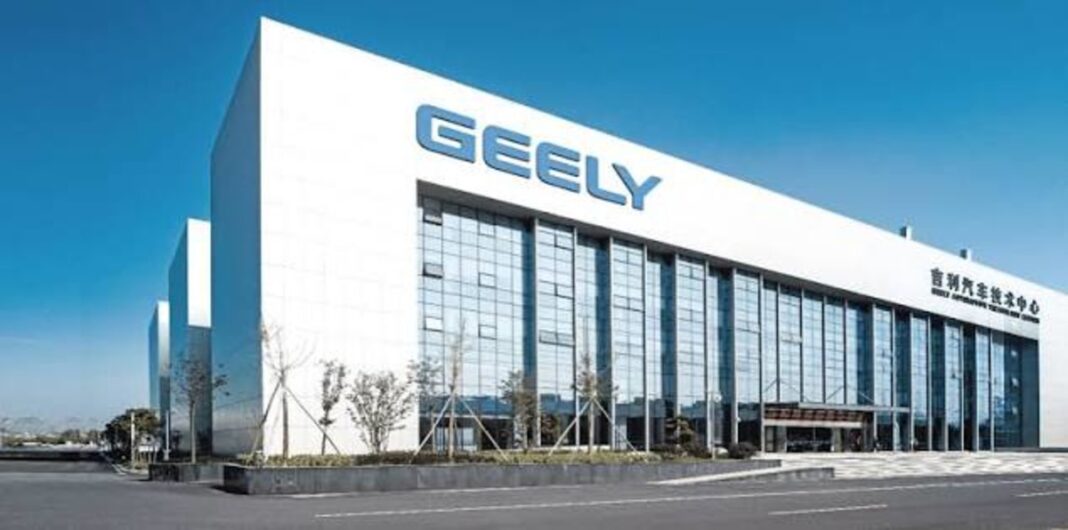
Chinese automaker Geely has reached an agreement with Ford to manufacture vehicles on one of the assembly lines at the American company’s plant in Almussafes, near Valencia, according to Reuters. The facility has been operating well below capacity for several years. The new partnership will enable Geely to establish local production in Europe while reducing […]
Next
У травні ПАТ «Укрнафта» збільшила видобуток газу і нафти в порівнянні з аналогічним періодом минулого року. Як повідомляє прес-служба компанії, в травні 2019 ПАТ “Укрнафта” видобула 130,7 тис. тон нафти і конденсату і 98,4 млн кубометрів газу, що відповідно на 8,5% і 10,4% більше в порівнянні з травнем 2018 року і на 3,9% і 4,6% […]
Next
У Швейцарії банки Швейцарії почали закривати рахунки клієнтам, які мають громадянство РФ, навіть якщо вони одночасно мають паспорт іншої країни. Про це напередодні повідомило російське видання Вєдомості. Так, за інформацією керуючого партнера швейцарського юридичного бюро Leolex Романа Кудінова, з такою проблемою зіткнулися кілька клієнтів UBS та Credit Suisse з подвійним громадянством. Усі вони сплачують податки […]
Next
The coronavirus pandemic has allowed Ukrainian pharmaceutical companies to enter new world markets – the EU and Asia. The head of the board of Darnitsa Group Dmitry Shymkov in an interview stated this with the executive director of the European Business Association Anna Derevyanko. In particular, the shortage of medicines arose due to the fact […]
Next
В Україні з 30 червня почнуть діяти нові граничні ціни на електроенергію для бізнесу, які майже вдвічі перевищать ціни до підвищення. Про це повідомила Національна комісія, що здійснює державне регулювання у сферах енергетики та комунальних послуг (НКРЕКП). Так, нові граничні ціни на електроенергію для бізнесу передбачають, що з 30 червня у вечірній пік споживання, з 19:00 […]
Next
Як публікують французькі ЗМІ, в березні 2017 року спливає термін угоди Nestlé і компанії L’Oréal, яка діяло на протязі 40 років. За заявою представників швейцарського продовольчого гіганта Nestlé, керівництво компанії не має наміру продовжувати термін дії зазначеної угоди. Нагадаємо, що документ Nestlé і сім’ї Bettencourt стартував в 1974 році, а закінчується 21 березня 2018 року. […]
Next