Trump Names the Country That Will Buy Venezuelan Oil

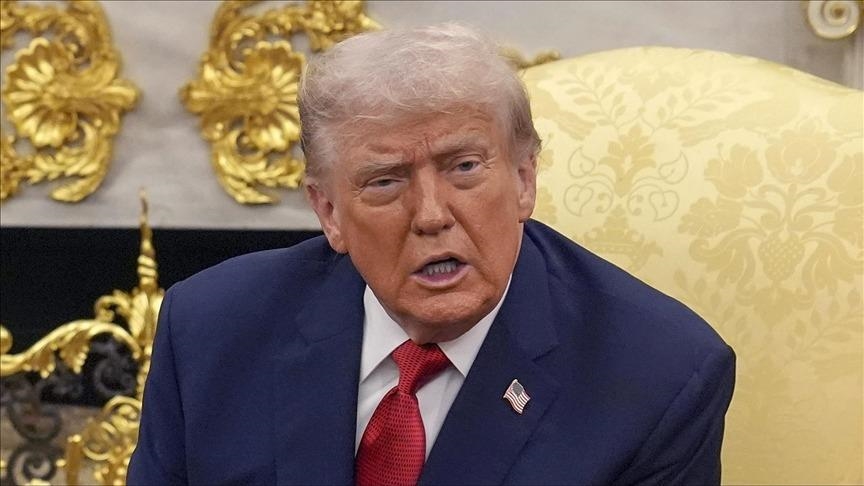
India will purchase oil from Venezuela. U.S. President Donald Trump told reporters this on the evening of January 31 while flying to Florida.

The American leader also urged China to strike a deal to buy oil from Venezuela.

“China can come in and make a great oil deal. You know, we’d be happy to see them. We’ve already made a deal: India will buy Venezuelan oil instead of buying it from Iran. So we’ve already agreed on the concept of the deal. But China can do it too,” Trump said.

According to the U.S. president, the United States has not yet discussed with Venezuela how profits from oil sales would be distributed.

“They (Venezuela – ed.) are doing a great job… They’re going to make more money than ever before. And it will be good for us. I think Venezuela will really make it,” the White House chief stressed.

In Trump’s view, Cuba may also want to sign an agreement to purchase oil.

Lukoil Reaches Agreement to Sell Its International Assets

Russia’s oil company Lukoil, which is under U.S. sanctions, has found a buyer for its foreign assets. The buyer is the U.S. investment fund Carlyle, the company’s press service reported.

The parties have signed an agreement concerning Lukoil’s subsidiary, LUKOIL International GmbH. The deal does not affect assets in Kazakhstan, which will remain under the group’s ownership and continue operating under their current licenses.

“The agreement is not exclusive and is subject to the fulfillment of a number of conditions precedent,” Lukoil said.

The transaction must be approved by the U.S. Treasury’s Office of Foreign Assets Control (OFAC). Lukoil is also continuing negotiations with other potential buyers.

Carlyle is one of the largest U.S. private equity investment funds, managing $474 billion in assets. Its head of energy strategy is Jeff Currie, who for many years served as Global Head of Commodities Research at Goldman Sachs.

Lukoil produces about 2% of the world’s oil, with roughly 0.5% coming from its international assets. The company owns three oil refineries in Europe, stakes in fields in Ghana, Egypt, Iraq, Kazakhstan, Nigeria, Mexico, and Uzbekistan, as well as hundreds of filling stations worldwide, including in the United States. In 2024, the value of its international assets was estimated at $22 billion.

Russia’s Military Budget Is “Cracking” Amid Peace Talks

Russia is facing serious financial difficulties in funding its war against Ukraine. Against the backdrop of negotiations, this narrows the Kremlin’s ability to prolong the war without economic consequences, Bloomberg reports, citing sources familiar with the matter.

The Russian government is preparing for the budget deficit to exceed planned levels if military spending rises again.

Moscow is currently seeking up to 1.2 trillion rubles in additional revenue to keep the deficit within the targeted 1.6% of GDP.

The price of Russia’s Urals crude remains below the level assumed in the budget, while the ruble exchange rate is significantly stronger than forecast.

Under these conditions, oil and gas revenues could fall more than two trillion rubles short of expectations, further worsening the deficit.

Last year, the Kremlin was forced to revise its budget parameters. It has been trying to cover the shortfall through record volumes of domestic borrowing, but such borrowing is becoming increasingly expensive.

Despite mounting economic pressure, the Kremlin has shown no willingness to scale back its territorial demands in talks over Ukraine and continues to insist on the “transfer” of the Donbas.

Sources note that the combination of budget constraints, sanctions, and uncertain energy revenue prospects is gradually weakening Russia’s position and narrowing Russian dictator Vladimir Putin’s “window of opportunity” to continue the war without serious domestic economic consequences.

Russia Cuts Oil Prices for India to Win Back Buyers

Russian oil producers are continuing to increase discounts on oil for India in an effort to sell cargoes that refineries had previously rejected due to sanctions imposed by the administration of Donald Trump. This was reported by a former top executive of one of Russia’s energy companies in comments to the Financial Times.

The average export price of Russia’s Urals crude fell to $39 in December — its lowest level since the pandemic — and slipped slightly further in January, to $34–36 in mid-month and $36–38 by the end of the month. Discounts on Russian oil exceeded $25 per barrel, and for some cargoes reached nearly $40 per barrel.

India is increasingly reducing its purchases of Russian crude as it diversifies its imports. According to Bloomberg estimates, average daily shipments to Indian ports fell in December to around 1.2 million barrels, the lowest level in more than three years.

On January 21, a European Union ban came into force on imports of petroleum products made from Russian oil. India had previously been a major supplier of such fuels to the EU.

EU Officially Restricts Financial Operations with Russia

The EU has officially added Russia to its “blacklist” of high-risk countries for money laundering and terrorist financing. This is evidenced by data published in the Official Journal of the Council of the EU.

EU High Representative for Foreign Affairs Kaja Kallas also announced that Russia has been placed on the so-called blacklist due to money-laundering risks.

“Today, the EU added Russia to the blacklist because of the risk of money laundering. This will slow down and increase the cost of transactions with Russian banks,” she said on Thursday in Brussels at a press conference following a meeting of the EU Foreign Affairs Council.

She added that work is currently ongoing both on financial assistance to Ukraine for the period 2026–2027 amounting to €90 billion and on a 20th sanctions package.

The decision entered into force on January 29 and предусматривает enhanced scrutiny by European banks of any transactions linked to Russia.

The European Commission adopted this decision on December 3, 2025, and it entered into force 20 days after publication, as neither the European Parliament nor the Council of the EU raised objections.

Previously, Russia had not been added to the FATF “blacklist” — the international body combating money laundering — despite Ukraine’s demands. The reason was objections from countries such as China, India, Saudi Arabia, and South Africa, which kept Russia off the list.

The European Commission decided to act independently and included Russia on the “blacklist” regardless of FATF.

Under the new rules, any transactions involving Russia in European banks will now be subject to thorough checks, and financial risks for Russian organizations in the EU will be significantly restricted.

Russia’s membership in FATF had earlier been suspended due to its gross violation of the organization’s core principles.

Russian financial authorities stated that the EU’s decision is politicized and lacks concrete evidence of shortcomings in Russia’s anti–money-laundering system.

European Commission Allocates €153 Million in Humanitarian Aid to Ukraine and Moldova

The European Commission has announced the allocation of €153 million in emergency aid to Ukraine and Moldova, which is hosting Ukrainian refugees. This was reported on the European Commission’s website.

The statement notes that millions of Ukrainians are facing freezing temperatures without electricity amid prolonged Russian strikes on energy infrastructure.

In response to urgent needs, the EU is allocating the first €145 million in humanitarian assistance for Ukraine “to provide protection, shelter, food, cash assistance, psychosocial support, and access to water and medical services.”

An additional €8 million will support the hosting of Ukrainian refugees who have fled the war in Moldova.

“This week, 447 electricity generators worth €3.7 million were delivered to restore power supply to hospitals, shelters, and other critical services. A further 500 generators are currently being deployed, all from the strategic rescEU reserves, to support the operation of essential services,” the European Commission added.

Since Russia’s full-scale invasion in February 2022, the European Commission has allocated more than €1.4 billion for humanitarian assistance programs for Ukraine and Moldova.

India Expects Further Cuts in Purchases of Russian Oil

Imports of Russian oil into India, the world’s third-largest oil buyer, are expected to continue declining, the country’s Energy Minister Hardeep Puri said, according to Bloomberg.

He noted that supplies from Russia have already fallen to 1.3 million barrels per day, down from an average of 1.8 million barrels per day last year. Puri emphasized that this reduction is driven by market conditions rather than mandatory government directives.

The minister added that Indian companies make independent decisions on purchasing Russian oil and currently have the ability to diversify suppliers, buying crude from 41 countries. In addition, companies are seeking to increase volumes from Canada and the United States.

Earlier, the United States stepped up pressure on India’s purchases of Russian oil by imposing additional tariffs. Despite this, supply volumes have remained relatively stable in part due to the attractive discount on Russian crude.

Electric Vehicles Overtake Gasoline Cars in EU Sales for the First Time

For the first time in the history of the European Union, sales of fully electric vehicles have surpassed those of cars powered exclusively by gasoline engines. This is shown in a new December report by the European Automobile Manufacturers’ Association (ACEA).

According to the data, electric vehicles accounted for 22.6% of all new car registrations in the EU, while the share of gasoline-powered models stood at 22.5%. At the same time, hybrids remained the largest market segment, making up 44% of registrations, including plug-in hybrids capable of covering limited distances on electric power alone.

Analysts note that the result is partly explained by the reclassification of some gasoline cars into the “mild hybrid” category, which formally includes electrification but still relies on internal combustion engines. According to independent auto analyst Matthias Schmidt, a clear overall lead of electric cars over ICE models across the entire region is still several years away, but he calls the current figure an important signal of change.

Across the broader European market, which also includes the United Kingdom and Norway, car sales have been rising year-on-year for six consecutive months. Competition has intensified due to the active expansion of Chinese brands such as BYD, Changan, and Geely, while European manufacturers like Volkswagen and BMW are accelerating the launch of new electric models.

In December, total car sales in the EU, the UK, and EFTA countries rose by 7.6% to 1.2 million units, and for the whole of 2025 the market reached 13.3 million vehicles, the highest level in the past five years, although still below pre-pandemic levels. Within the EU alone, December sales increased by 5.8% to nearly 1 million cars.

Registrations of electric vehicles in December jumped by 51%, plug-in hybrids by 36.7%, and conventional hybrids by 5.8%. Taken together, these categories accounted for 67% of all new registrations in the bloc.

The EU and India Conclude a Historic Free Trade Agreement

The European Union and India have finalized a free trade agreement that will cover 25% of global GDP and nearly one-third of world trade, the EU’s press service reported.

The EU and India trade goods and services worth more than €180 billion annually, supporting around 800,000 jobs in the EU. The agreement is expected to double EU exports of goods to India by 2032 by eliminating or reducing tariffs on 96.6% of goods exported from the EU to India. Overall, tariff reductions are expected to save about €4 billion per year in customs duties on European products.

“Today, the EU and India are making history by deepening the partnership between the world’s largest democracies. We have created a free trade area with a population of 2 billion people, and both sides will benefit economically. We have shown the world that rules-based cooperation continues to deliver excellent results,” said European Commission President Ursula von der Leyen.

For his part, Indian Prime Minister Narendra Modi stressed that people around the world are calling this agreement the “mother of all deals.” “This agreement will open up enormous opportunities for 1.4 billion people in India and millions of people in Europe,” he said.

The EU noted that agriculture, automotive manufacturing, and services will benefit the most from the deal. Tariffs on EU-made cars will be gradually reduced from 110% to 10%, while duties on auto parts will be completely eliminated within five to ten years.

Tariffs of up to 44% on machinery, 22% on chemicals, and 11% on pharmaceuticals will also be largely removed. Duties on EU wines will be cut from 150% to 75%, while tariffs on olive oil will be reduced from 45% to 0%. India will also fully eliminate duties on processed foods such as pasta and chocolate.

The agreement will also grant EU companies preferential access to India’s services market, including key sectors such as financial services and maritime transport.

The official signing of the EU–India agreement will take place after a legal review, which is expected to last five to six months.

Work on the agreement began in 2007. Negotiations repeatedly stalled and were suspended in 2013, before resuming in 2022.

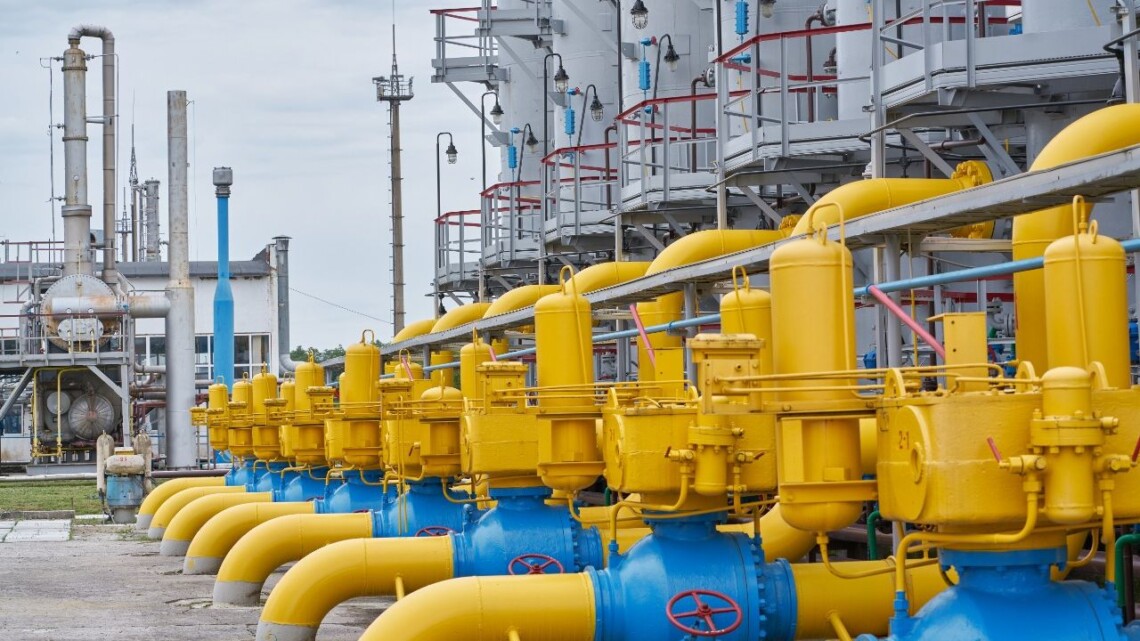
Ukraine to Receive €85 Million for Additional Gas Purchases

Ukraine will receive €85 million through EBRD instruments, which will be used to purchase additional volumes of gas. This was announced by First Deputy Prime Minister and Energy Minister Denys Shmyhal on Telegram.

“€85 million through EBRD instruments for the purchase of additional volumes of gas for Ukraine. Work on securing the corresponding grant from one of the European countries is already nearing completion,” he wrote.

According to Shmyhal, this was discussed during talks with the President of the European Bank for Reconstruction and Development, Odile Renaud-Basso.

“I informed the EBRD about the difficult situation in Ukraine’s energy system due to damage caused by Russian strikes. Repair crews are currently working to restore electricity and heat. The work is ongoing around the clock,” the official added.

It was also noted that continued financial support from the EBRD for Ukrainian companies Ukrenergo and Ukrhydroenergo helps ensure repairs, procure equipment, and implement new solutions so that people have electricity and heating.

WP2Social Auto Publish Powered By : XYZScripts.com