The European Union Expands Sanctions Against Russia and Belarus

The Council of the European Union has imposed restrictive measures on an additional 12 individuals and two entities over Russia’s continued hybrid actions, including foreign information manipulation and cyberattacks against the EU, its member states, and partners. The EU has also expanded the scope of its sanctions regime against Belarus to cover Belarus’s own hybrid hostile actions against its European neighbors. This was stated in an official announcement by the EU Council.

The Council added to the sanctions list individuals involved in promoting pro-Russian propaganda as well as anti-Ukrainian and anti-NATO narratives. Among them are former military and police officers from Western European countries. In total, restrictive measures now apply to 59 individuals and 17 entities.

Sanctions were imposed on the International Russophile Movement for spreading destabilizing narratives on behalf of the Russian government, as well as on Russia’s 142nd Separate Electronic Warfare Battalion based in Kaliningrad, which conducts exercises and cyberattacks, including GPS signal disruption in several EU member states.

Members of Russia’s military intelligence (Unit 29155) and the cyber threat group Cadet Blizzard were also sanctioned for carrying out attacks on Ukrainian government institutions, EU member states, and NATO allies in order to collect sensitive information and destabilize political situations.

The Council also introduced a new criterion for imposing sanctions on companies and individuals who “benefit from, are involved in, or facilitate actions or policies associated with the Republic of Belarus that are aimed against democracy, the rule of law, or the stability and security of the EU and its member states.”

This decision is primarily linked to systematic launches of weather balloons carrying contraband from Belarus into Lithuania.

The new criterion also covers interference with, damage to, or destruction of critical infrastructure, as well as systematic actions leading to disruptions in the operation of such infrastructure. This formulation applies, in particular, to the situation affecting Vilnius Airport due to weather balloons originating from Belarus.

In describing the challenges faced by Lithuania, it is noted that weather balloons from Belarus have already affected hundreds of flights and thousands of passengers, causing significant losses for airlines.
German automakers face their biggest slump in the past 15 years

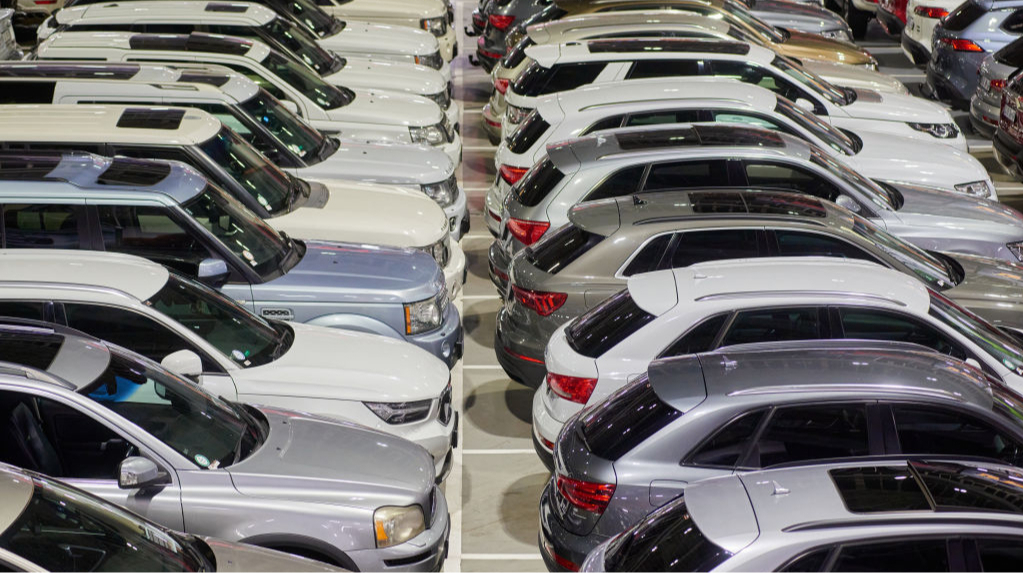
Germany’s automotive industry is currently experiencing its most difficult quarter in the last 15 years. This is according to an analysis by the consulting firm EY, reported by the tabloid BILD.

From July to September, the operating profit of Volkswagen, BMW, and Mercedes-Benz collapsed by 76% to just €1.7 billion.

These figures are the lowest since 2009. At the same time, overall revenue and sales remain relatively stable.

However, no other country with a major automotive industry has recorded such weak results.

China has proven to be particularly painful: sales there fell by 9%, and China’s share of total sales dropped from a previous 39% to 29%. In China, premium models are selling worse, and in the electric vehicle segment buyers are increasingly choosing local brands.

In Germany, companies including Bosch, Mercedes, and Volkswagen have already announced job cuts.

EY considers these measures painful but ultimately unavoidable.

Russia Demands $230 Billion from Euroclear

The Central Bank of Russia, which has filed a lawsuit in a Moscow court against the Belgian depository Euroclear, is demanding 18.2 trillion rubles (approximately $229 billion), Russian media report.

On December 12, the Russian central bank filed the claim over what it described as the “illegal actions of the Euroclear depository causing damage,” as well as over plans by the European Commission to use frozen Russian assets to finance Ukraine.

It has now become known that the Central Bank of Russia’s lawsuit against Euroclear, seeking 18.2 trillion rubles (around $229 billion), has been officially submitted to the Moscow Arbitration Court.

Ukraine and Germany to Establish a Joint Drone Manufacturing Venture

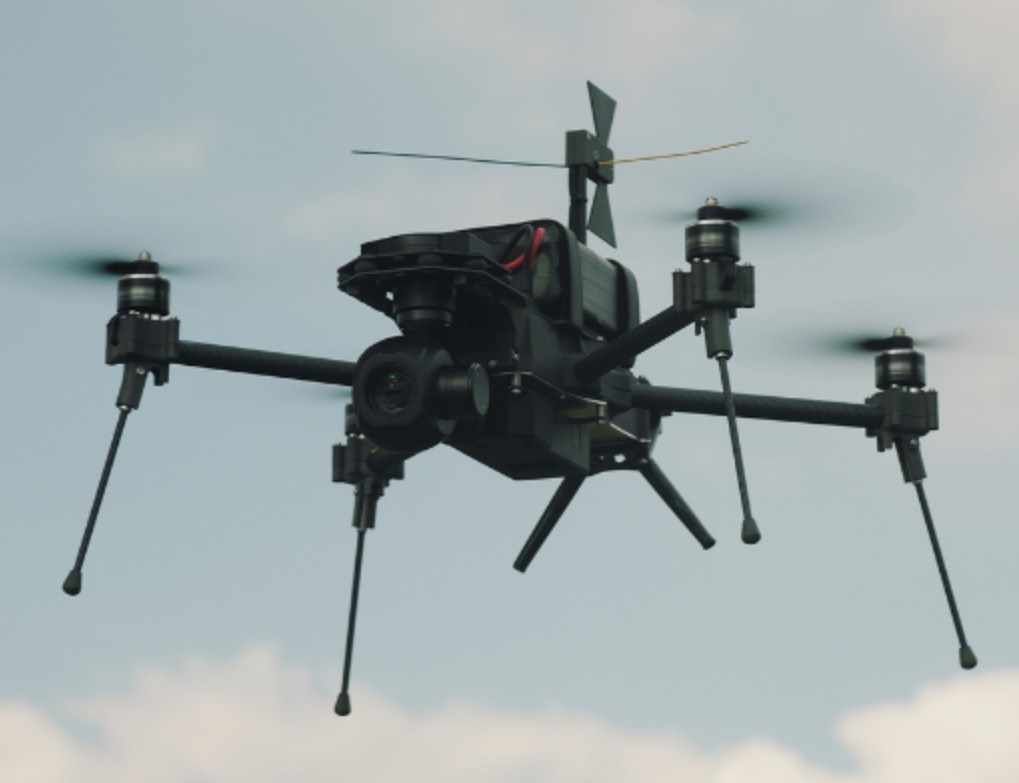
Ukrainian company Frontline Robotics and German-Ukrainian UAV manufacturer Quantum Systems are launching Europe’s first joint drone production venture in Germany, Quantum Frontline Industries, under the Build with Ukraine program. This was announced in a press release by Quantum Systems.

The announcement was made at the 8th German-Ukrainian Economic Forum in Berlin.

Frontline Robotics will provide licensed designs, training services, and full technical support, while Quantum Systems will supply the industrial infrastructure and manage manufacturing operations.

“Ukrainians have revolutionized warfare through the use of drones; now, together, we will revolutionize industrial warfare. Together with Frontline Robotics, we will build on our proven expertise and create Europe’s first production facilities of this scale for Ukraine,” said Sven Kruk, Co-CEO of Quantum Systems.

Frontline Robotics CEO Yevhen Tretiak called the establishment of the first Ukrainian-German defense joint venture “an important mission.”

One of Russia’s largest oil refineries halts operations after drone attack

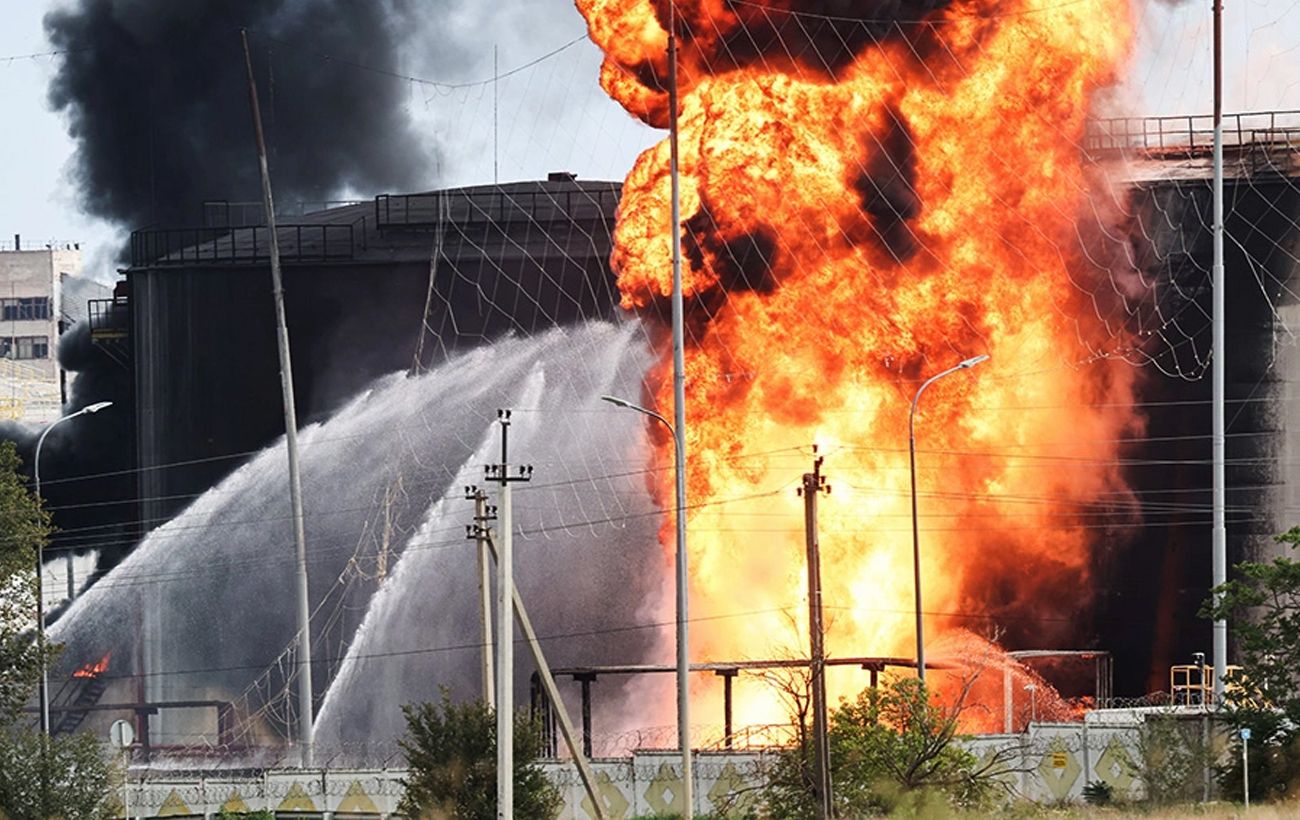
Russia’s Slavneft-Yaroslavnefteorgsintez (YANOS) oil refinery, which was hit by a drone attack on December 12, has suspended fuel production, Reuters reports.

The refinery, located about 250 km from Moscow and ranked among Russia’s top five largest plants, suffered damage to its AVT-4 unit in a fire. This unit accounts for about one-third of the plant’s capacity. The oil loading rack was also damaged.

The refinery, owned by Rosneft and Gazprom, produced 2.6 million tonnes of gasoline, 4 million tonnes of diesel fuel, and 4.7 million tonnes of fuel oil last year. It became the second major refinery to halt production in December.

The Telegram channel Astra reports that the Saratov oil refinery also suspended operations following an attack overnight on December 13. The strike damaged an electrical cable, forcing the plant to shut down for several hours. This marked the tenth attack on the facility since the beginning of 2025.

The Saratov refinery is one of Russia’s oldest oil-processing facilities, with a processing capacity of 4.8 million tonnes of crude oil.

In November, Ukraine’s Armed Forces used drones at least 14 times to strike Russian refineries, setting a new record and surpassing August, when 12 plants were attacked. At least three of them temporarily halted fuel production, including the Ryazan refinery, Russia’s third-largest by capacity.

Last year, drone attacks pushed Russia’s oil refining volumes down to a 12-year low of 266 million tonnes. By the end of the current year, output is expected to remain at roughly the same level. From January to October, refinery production declined by 3% to 5.2 million barrels per day.

Ukraine Outlines a Strategy for Implementing AI in Business

Ukrainian companies need to boldly experiment with artificial intelligence (AI). Success will belong not to those with the most powerful model, but to those who integrate it most effectively into their processes. This was discussed during a panel at this year’s Forbes Tech 2025, according to the press service of Metinvest.

The discussion featured Oleksii Molchanovskyi (Ukrainian Catholic University) and Oleksandr Krakovetskyi (DevRain, Microsoft AI MVP), and was moderated by Maksym Balaniuk, Director of the Innovation Center at Metinvest Digital. Participants debated whether AI-driven business transformation is a sprint or a marathon and reached several key conclusions.

Experts emphasized that AI is not a suddenly new technology, but an evolution that has been ongoing since the 1950s. Therefore, the key question for companies is not “whether to use AI,” but “how exactly to integrate it into their processes.”

“One of the most notable trends is the shift in roles: the era of prompt engineering is coming to an end, as modern models are capable of understanding imperfect queries and working with them. Context engineering is taking its place. Companies need to build infrastructure with clean, well-structured data that gives models an understanding of real business context. Without this, AI remains a ‘smart encyclopedia’ that cannot effectively solve applied business tasks,” Balaniuk said.

Speakers also paid particular attention to the issue of responsibility. Even when AI makes mistakes, responsibility for decisions always lies with humans. In business processes, the human-in-the-loop principle remains fundamental, so companies must manage risks rather than avoid technology out of fear of errors.

Discussing the pace of development, participants agreed that businesses need to operate on two levels simultaneously: rapidly testing solutions while building long-term infrastructure, Balaniuk noted. The industry is moving exponentially, with market leaders already working with multi-agent systems in which different AI models interact to find optimal solutions.

“Ukrainian companies need to boldly experiment with AI, invest in data cleanliness and structuring, develop a culture of responsibility, and engage experts. The winner is not the one with the most powerful model, but the one who integrates it best into their processes. AI is no longer a tool of the future—it is already a core element of competitiveness today,” Balaniuk concluded.

China Sets a New Record in Automobile Production

By the end of November, China’s monthly automobile production exceeded 3.5 million vehicles for the first time ever. This marks a new all-time record, Ukravtoprom reported, citing data from the China Association of Automobile Manufacturers.

Over the first 11 months of the current year, automobile production and sales in China reached 31.2 million and 31.1 million units respectively, representing year-on-year increases of 11.9% and 11.4%.

Vehicle exports from January through November totaled more than 6.3 million units, up 18.7%.

It is worth noting that in October, Chinese automakers lost ground in the European market after a record breakthrough recorded a month earlier. In the hybrid vehicle segment, their combined market share fell by about 3 percentage points to 12.6% from the September peak. Registrations of new electric vehicles also declined, to 11.8% from 12.6% across the EU, EFTA countries, and the United Kingdom.

At the same time, demand for Chinese cars increased in Ukraine. From January to September, Ukrainians purchased 14,684 passenger cars imported from China, which is 27% more than during the same period in 2024.

The EU Indefinitely Freezes €210 Billion in Russian Assets

European Union ambassadors have agreed on a mechanism to indefinitely freeze Russian assets in Europe, preventing their return to Russia outside the sanctions regime. This was announced by European Commission President Ursula von der Leyen on social media platform X.

EU countries agreed to freeze €210 billion in Russian assets for an indefinite period. The decision will no longer require renewal every six months. It was adopted with 25 votes in favor, while two countries did not support it.

“We are sending Russia a clear signal: as long as this brutal war of aggression continues, the costs for Russia will only increase. This is a powerful message to Ukraine: we want to ensure that our brave neighbor becomes even stronger both on the battlefield and at the negotiating table,” von der Leyen stated.

Reuters notes that this decision removes the risk that Hungary and Slovakia could block the extension of the freeze on Russian assets, which could otherwise have allowed the funds to be returned to Russia.

The indefinite freeze could also persuade Belgium to support the EU’s plan to use these funds to provide Ukraine with a reparations loan of up to €165 billion.

Bloggers and media fined ₴67 million for illegal casino advertising

Following inspections conducted by PlayCity over six months, 14 bloggers, websites, and media outlets were fined a total of ₴67.2 million. During monitoring, specialists identified content that violated regulations on gambling advertising. This was reported by the press service of the Ministry of Digital Transformation.

“Gambling advertising in Ukraine is regulated by strict rules. Their purpose is to limit manipulative formats and, above all, protect young people from risky content,” the statement said.

Advertising is permitted only if the client is a gambling operator holding a Ukrainian license and the advertisement is placed in media outlets specified by law. It must also clearly display a 21+ age restriction and include a responsible gambling warning.

Violations include any content that shows a game interface, bets, or winnings; promotes brands of illegal operators; promises bonuses, “free play,” or other advantages; presents gambling as an easy way to make money; or disguises advertising as personal experience.

“Popular bloggers have a huge influence on their audiences, so responsibility for gambling advertising here is especially high. If it does not comply with legal requirements—from format to content—it will have consequences for those who publish it,” emphasized PlayCity head Hennadiy Novikov.

Government Allocates an Additional ₴2.4 Billion for Frontline Regions

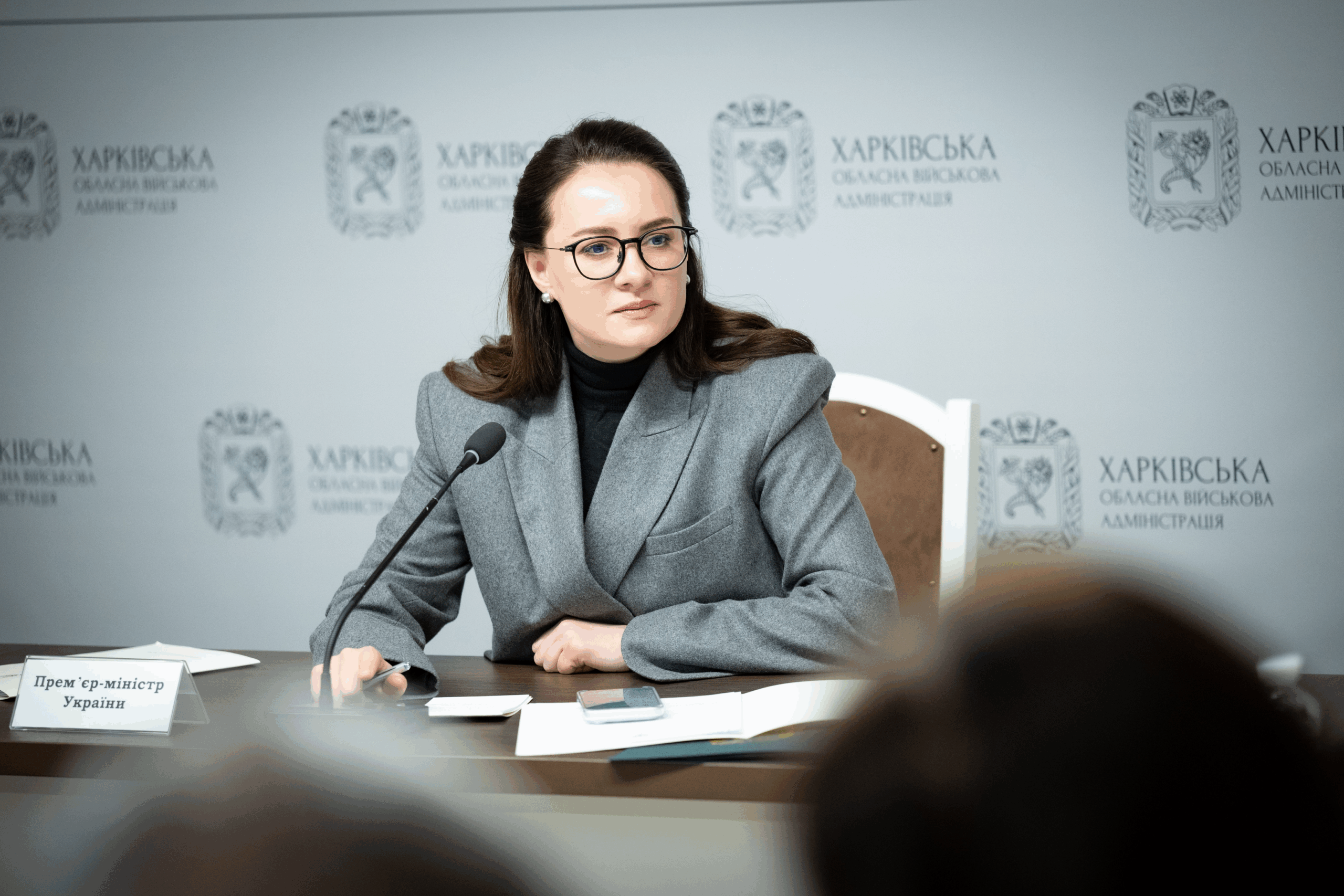
The Cabinet of Ministers has approved the allocation of more than ₴2.4 billion in additional funding for roads and fuel for generators in Ukraine’s frontline regions. Prime Minister Yuliia Svyrydenko announced the decision on Telegram following a visit to Kharkiv.

According to her, the government allocated an additional ₴665.3 million for the purchase of fuel for nine frontline regions. In addition, a total of ₴1.8 billion was allocated from the reserve fund to maintain critical roads in frontline areas.

“The decision was made in response to numerous requests from the Armed Forces of Ukraine. These roads are essential for logistics, medical, and humanitarian needs—for both the military and civilians,” Svyrydenko wrote.

She уточнила that ₴1.46 billion will be allocated to the Agency for Restoration for state-significance roads in the Kharkiv, Mykolaiv, and Odesa regions.

Another ₴306 million will be directed to regional military administrations for local roads in the Mykolaiv and Kherson regions.

Svyrydenko also reported that the government has distributed ₴1.6 billion in additional subsidies for the fourth quarter of 2025 to support local budgets, including those of frontline regions.

WP2Social Auto Publish Powered By : XYZScripts.com