Media Expose Network of Companies Trading Sanctioned Russian Oil

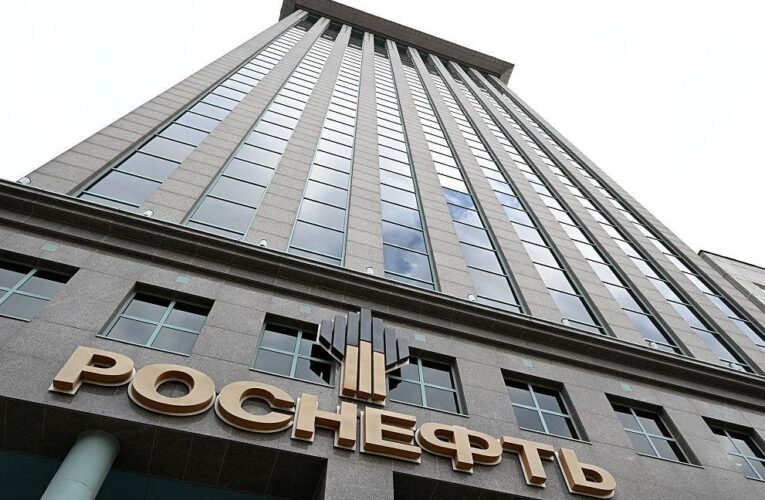
Journalists at the Financial Times have uncovered a network of nearly 50 companies exporting sanctioned Russian oil while concealing its origin. According to the report, Rosneft has been the most meticulous in organizing such schemes. The company came under U.S. sanctions in October 2025. Following their introduction, a previously little-known firm, Redwood Global Supply, became the largest exporter of Russian crude.

Redwood and other firms in the smuggling network are linked to Azerbaijani businessmen who closely cooperate with Rosneft.

According to the newspaper, 48 “independent” companies operating at different physical addresses appear to jointly participate in Russia’s shadow fleet operations. All of them use the same private email server.

The FT identified 442 web domains whose registration data show they all rely on a single email server — mx.phoenixtrading.ltd.

The publication then matched domain names with companies listed in Russian and Indian customs documents as being involved in transporting Russian oil. For example, foxton-fzco.com corresponds to Dubai-based Foxton FZCO, which exported $5.6 billion worth of oil from Russia. In total, companies in the network exported more than $90 billion worth of Russian crude.

The actual volumes are likely higher: customs data are incomplete, and the FT took a conservative approach in identifying companies and calculating shipments to avoid double counting.

Among the listed firms is Coral Energy, owned by Azerbaijani businessman Tahir Garayev, who is under UK sanctions. The domain TahirQarayev.com also used the same mail service. The domains bellatrix-energy.com and nord-axis.com correspond to Bellatrix Energy and Nord Axis, which are included on the EU sanctions list.

A key figure in the network is another Azerbaijani businessman, Etibar Eyub, who used the domain EEOffice.com. Rosneft CEO Igor Sechin reportedly provided Eyub and Garayev with “privileged access” to the company’s products.

The organizers divided the firms into two groups: tankers belonging to one group are used to purchase oil cargoes in Russia, while the other group handles sales in Indian and Chinese markets. Only two companies appear in both Indian and Russian customs documents.

Two traders familiar with the Russian oil market told the FT they believe trading through Redwood is conducted by Eyub.

The use of dozens of shell companies is an old tactic dating back to the 1990s, experts at the Carnegie Russia Eurasia Center noted.


France to Allocate €71 Million in Grant Aid to Ukraine

France will provide Ukraine with €71 million in grant financial assistance, part of which will be directed to the energy sector, Energy Minister Denys Shmyhal announced.

According to him, the agreements were reached during a meeting with France’s Minister of the Economy, Finance and Industry, and Minister for Energy and Digital Sovereignty, Roland Lescure.

As part of the arrangements, the sides also signed a cooperation document in the field of nuclear energy, which, Shmyhal said, lays the foundation for deepening strategic partnership and modernizing Ukraine’s energy sector.

The minister noted that Ukraine has already received more than 50 shipments of humanitarian energy assistance from France, including over 140 high-capacity generators. In addition, €5.7 million was contributed to the Energy Support Fund. France has also decided to supply another 150 generators during February.

“Together with France, we are implementing three important infrastructure projects to strengthen the resilience of regional energy systems. We see strong engagement and readiness from French companies to continue and deepen cooperation,” Shmyhal added.

Ford Warns of Rising Car Prices Due to Computer Memory Shortages

The global artificial intelligence boom is beginning to impact the automotive industry. As reported by The Drive, Ford Motor Company Chief Financial Officer Sherry House said that shortages of memory chips are already pushing up production costs and could lead to higher vehicle prices.

She made the remarks at the Wolfe Research auto and semiconductor summit in New York City. According to House, the company currently has supply under control and sufficient inventories, but procurement prices for memory are already rising.

The reason lies in strategic decisions by the world’s three largest memory manufacturers — Samsung Electronics, SK hynix, and Micron Technology — which have redirected production lines toward chips for AI data centers, even though some of those centers are still under construction.

As a result, supplies of NAND and DRAM memory for other industries, including automotive, have declined. The situation was further complicated by Micron’s decision to shut down its Crucial brand, which served the retail market, in order to free up resources for major cloud clients such as Amazon, Google, Microsoft, and OpenAI.

Ironically, back in 2023 Micron noted that the average car was already using around 90 GB of memory across various electronic modules — a figure expected to triple by 2026. The rapid growth of driver assistance systems, infotainment platforms, and onboard software is turning modern vehicles into powerful computing platforms, making them increasingly dependent on steady memory supplies.

Analysts at Counterpoint Research are already observing signs of “panic buying” in the automotive chip sector. According to company representative MS Hwang, manufacturers are attempting to build up inventories amid fears of further supply tightening.

If the trend continues, consumers may face another round of car price increases — driven by competition with the artificial intelligence industry for critical semiconductor resources.

Japan to Invest $36 Billion in Three Projects in the United States

U.S. President Donald Trump has approved the first investment projects under the trade agreement with Japan announced last year, U.S. Commerce Secretary Howard Lutnick said, according to Bloomberg.

Earlier, Japan agreed to invest $550 billion in the U.S. economy, while the United States committed to cutting tariffs on Japanese imports from 25% to 15%.

The first projects under the agreement involve $36 billion in investments and focus on power generation, the oil and gas sector, and manufacturing.

The largest project is a gas-fired power plant near Portsmouth, with investments totaling $33 billion, according to the U.S. Department of Commerce. Lutnick said it would be the largest “gas power plant in history,” with a capacity of 9.2 GW. The facility will be operated by SB Energy, a subsidiary of Japan’s SoftBank.

The second project involves construction of the deepwater Texas GulfLink terminal for oil exports on the coast of the Gulf of Mexico in Brazoria County, Texas. Japan will invest $2.1 billion in the project, which will be operated by Sentinel Midstream. The terminal is expected to enable oil exports worth $20–30 billion annually, or $400–600 billion over 20 years.

The third project focuses on producing synthetic diamond grit, which would fully meet U.S. domestic demand. The roughly $600 million facility will be located in Georgia and operated by Element Six, a subsidiary of De Beers. Diamond grit is a critical raw material for the semiconductor, automotive, and oil and gas industries. China currently dominates the synthetic diamond market.

Lutnick noted that the three projects will create thousands of high-quality jobs.

Until Japan’s initial investments are repaid, profits will be shared equally; afterward, the United States will receive 90% and Japan 10%.

Announcing the deal in July 2025, Trump said the United States would begin supplying Japan with automobiles, rice, and other agricultural products.

Ukraine’s Ministry of Digital Transformation Announces a New Phase of Cooperation with Microsoft

The Ministry of Digital Transformation of Ukraine and Microsoft have signed a Memorandum of Cooperation aimed at developing digital infrastructure, implementing innovative technologies, and strengthening the artificial intelligence ecosystem in Ukraine, the ministry’s press service reported.

“It is important for us that global technology leaders not only provide services but also become part of our ecosystem. Continuing cooperation with Microsoft sends a clear signal to investors: despite the war, Ukraine remains a reliable partner and a place for innovation. Together we are strengthening cyber resilience, expanding access to digital services, and opening new opportunities for an innovative future. We are grateful to our partners for their unwavering support,” said Oleksandr Bornyakov, Acting Minister.

Key areas of cooperation include:

  • development of modern and secure IT infrastructure;

  • implementation of cloud and hybrid solutions;

  • improvement of digital skills;

  • strengthening the AI ecosystem, infrastructure, and integration of AI solutions;

  • deployment of digital solutions in innovation and advanced technology sectors.

Russian Oil Companies Forced to Cut Drilling Activity

The collapse in prices for Russian crude is undermining company profitability, forcing producers to drill and extract less oil. In particular, drilling activity fell by 16% in December 2025 compared with December 2024. Overall, it declined by 3.4% over the year, according to industry statistics cited by Bloomberg.

A total of 29,140 kilometers of wells were drilled during the year — a lower figure was recorded only in pre-war 2021, when the global economy was recovering from the COVID-19 pandemic and OPEC+ significantly restricted output to support prices.

Meanwhile, oil production fell for the second consecutive month in January, reaching 9.246 million barrels per day — now 328,000 barrels below Russia’s allocated OPEC+ quota.

Brent crude prices have risen 13% since the start of the year amid growing geopolitical tensions, primarily linked to Iran and Venezuela.

Russia has accumulated about 150 million barrels of oil on tankers that have left the country but were not delivered to buyers who refused the cargoes — mainly Indian refiners.

The global price increase has not helped Russia, as the discount on its crude grades has continued to widen, now reaching $27–29 per barrel for Urals crude.

Many of Russia’s oil fields are becoming depleted. To maintain daily output at roughly 9.2–9.4 million barrels, companies need to drill between 26,000 and 29,000 kilometers of wells annually. If drilling continues to decline, production will inevitably fall.

An additional negative factor for the industry is the bankruptcy of smaller oil firms. According to Rosstat, half of the companies engaged in oil and gas extraction recorded losses totaling 575 billion rubles between January and November 2025.

Apple Launches a Competitor to YouTube and Spotify

Apple is preparing a major update to its Podcasts service. Users will soon be able to watch and download video content directly through the app, according to CNBC.

Industry analysts say the new version of Apple Podcasts brings the service much closer in functionality to competitors such as Spotify, YouTube, and Netflix.

“Twenty years ago, Apple added podcasts to iTunes, and more than ten years ago we introduced the dedicated Podcasts app,” said Eddie Cue, Apple’s Senior Vice President of Services.

He explained that in the updated Apple Podcasts app, users will be able to switch seamlessly between watching and listening to episodes from a single feed. They will also have access to picture-in-picture mode and the ability to download video episodes for offline viewing.

The new format will introduce dynamic video ad insertion. Apple noted that it will not charge content creators or providers for distributing video podcasts.

Apple also plans to roll out artificial intelligence across its upcoming products. Together with Google, the company has officially confirmed that models from Google Gemini will be used in the updated version of the Siri voice assistant and other generative features.

EU Launches Investigation into Chinese Platform Shein

The European Union has launched a formal investigation into the Chinese platform Shein over potential violations of EU law, including the sale of illegal goods and the use of so-called “addictive” design features, The Guardian reports.

Last year, the European Commission requested information from the company, whose sales have been rapidly growing in Europe, and has now opened a formal probe.

In addition to concerns about the possible sale of unlawful products, regulators are also examining how the platform itself operates.

The investigation focuses on three key areas:

  • mechanisms to prevent the sale of prohibited items, such as child-like sex dolls and weapons;

  • the platform’s “addictive” design, where interface elements may encourage compulsive behavior;

  • recommendation algorithms that may overwhelm consumers with commercial offers.

Officials in Brussels said the company is cooperating with the investigation.

The launch of the probe does not automatically imply a ban on Shein’s operations. Blocking sales in Europe would be considered a last resort in the event of systemic violations.

The media outlet notes this is already the second similar investigation into major online marketplaces in the EU — in late 2024, authorities opened a probe into the e-commerce giant Temu.

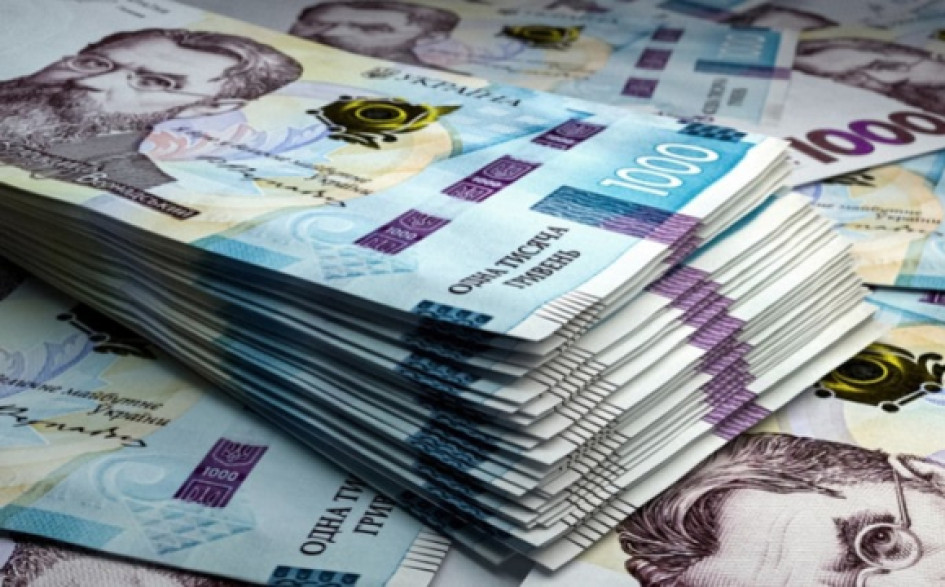
Ukraine’s Finance Ministry Raises UAH 17.4 Billion at Government Bond Auctions

The Ministry of Finance of Ukraine raised the equivalent of UAH 17.40 billion for the state budget on February 17 during auctions of domestic government bonds, the ministry’s press service reported.

The largest share of investment came from bonds with a 3.8-year maturity and a yield of 13.1% per annum (weighted average – 12.92%), which brought in UAH 8.4 billion.

Three-year bonds with a yield of 16.43% per annum (weighted average – 16.42%) generated UAH 2.2 billion in revenue.

Bonds with a 1.2-year maturity and a yield of 15.40% per annum (weighted average – 15.34%) attracted UAH 2.1 billion.

The ministry also placed euro-denominated bonds with a 1.4-year maturity and a yield of 3.25% per annum (weighted average – 3.14%), raising €92 million.

Since the beginning of 2026, the government has already raised UAH 81.5 billion, and since the start of the full-scale war — more than UAH 2 trillion. All proceeds from wartime bonds are directed toward supporting the Armed Forces of Ukraine and strengthening the country’s financial resilience.

Romania and the United States to Build a Rare Earth Processing Plant

Authorities in Romania and the U.S. company Critical Metals Corp have signed an agreement to construct a rare earth elements processing plant in Brașov.

According to Romania’s Energy Minister Bogdan Ivan, the facility will process concentrate extracted by the American company in Greenland.

The new project is expected to help Romania become a global player in the rare earth metals sector. The minister added that by mid-April, Romanian authorities will determine the financing terms for the construction and specify which metals will be processed at the plant.

“The initiative covers the entire economic cycle — from resource extraction at the Tanbreez deposit in Greenland to processing and final industrial use in Europe and the United States,” Ivan said, recalling plans by the European Union to become fully independent from Chinese rare earth processing.

Critical Metals Corp confirmed that the project will help reduce Europe’s and the United States’ dependence on supplies from China. The plant will be built through joint financing by the American and Romanian sides on an equal basis (50/50).

WP2Social Auto Publish Powered By : XYZScripts.com