
Content
-
Ukraine’s War Experience: Between Innovation, Medicine, and Global Constraints
The full-scale war has become not only a test for Ukraine but also an environment for the rapid accumulation of unique experience — from tactical medicine to military innovation. Today, this experience is being closely studied around the world in an effort to understand how it is reshaping the nature of modern warfare and what implications it may have for future defense systems. In a conversation with Leadership Daily, Fedir Serdiuk— a Ukrainian entrepreneur, founder of humanitarian, medical, and defense initiatives, and co-founder of FAST and MOWA Defense, as well as the humanitarian organization PULSE — explains why Ukraine’s experience is still too early to be considered the foundation of a new global industry, how the role of medicine on the battlefield is transforming, and which lessons of this war the world risks overlooking.
-
System Over Chaos: How the Serhiy Prytula Foundation Became One of the Country’s Most Effective Charitable Organizations
The full-scale war has become an unprecedented test not only for government institutions and businesses, but also for the charitable sector. Organizations that just a few years ago operated as volunteer initiatives were forced, in record time, to transform into large-scale operational structures managing multi-billion-hryvnia budgets, complex logistics, and a high level of responsibility for every decision they make. The Serhiy Prytula Foundation has become one of the most striking examples of such a transformation. Over the course of the war, it has evolved into a powerful institution implementing large-scale projects in support of Ukraine’s Defense Forces, working with international partners, and introducing modern management and technological solutions. In this interview, Andrii Shuvalov, СЕО of the Serhiy Prytula Foundation, discusses how his understanding of leadership has changed during wartime, why system-driven management has become more important than individual heroics, how decisions are made when the cost of a mistake is measured in human lives, and why public trust remains the organization’s most valuable asset. We also discuss the Foundation’s transformation from a volunteer movement into a fully-fledged operational organization, the role of technology and artificial intelligence in modern philanthropy, the challenges of scaling operations, and the lessons that Ukraine’s experience can offer to international organizations and future leaders.
-
Ukraine’s Green Economic Renaissance: Why Global Capital Is Looking to Ukraine’s Future
Climate Finance Strategist Ted Kronmiller explains why Ukraine may become one of the world's largest destinations for institutional capital, how climate finance is transforming global investment, and why the country's reconstruction represents a once-in-a-generation economic opportunity.
-
True Leadership Today Is About Balancing Resilience, Care for People, and Readiness for Change
In an exclusive interview with LeadershipDaily, Sergii Gontar, General Manager of Philips Ukraine, discusses how the war has reshaped leadership and the management of an international business, why Ukraine has become a market of long-term opportunities, which technologies will define the future of healthcare, and the role that artificial intelligence, digitalization, and public-private partnerships will play in rebuilding the country and creating a modern, people-centered healthcare system.
-
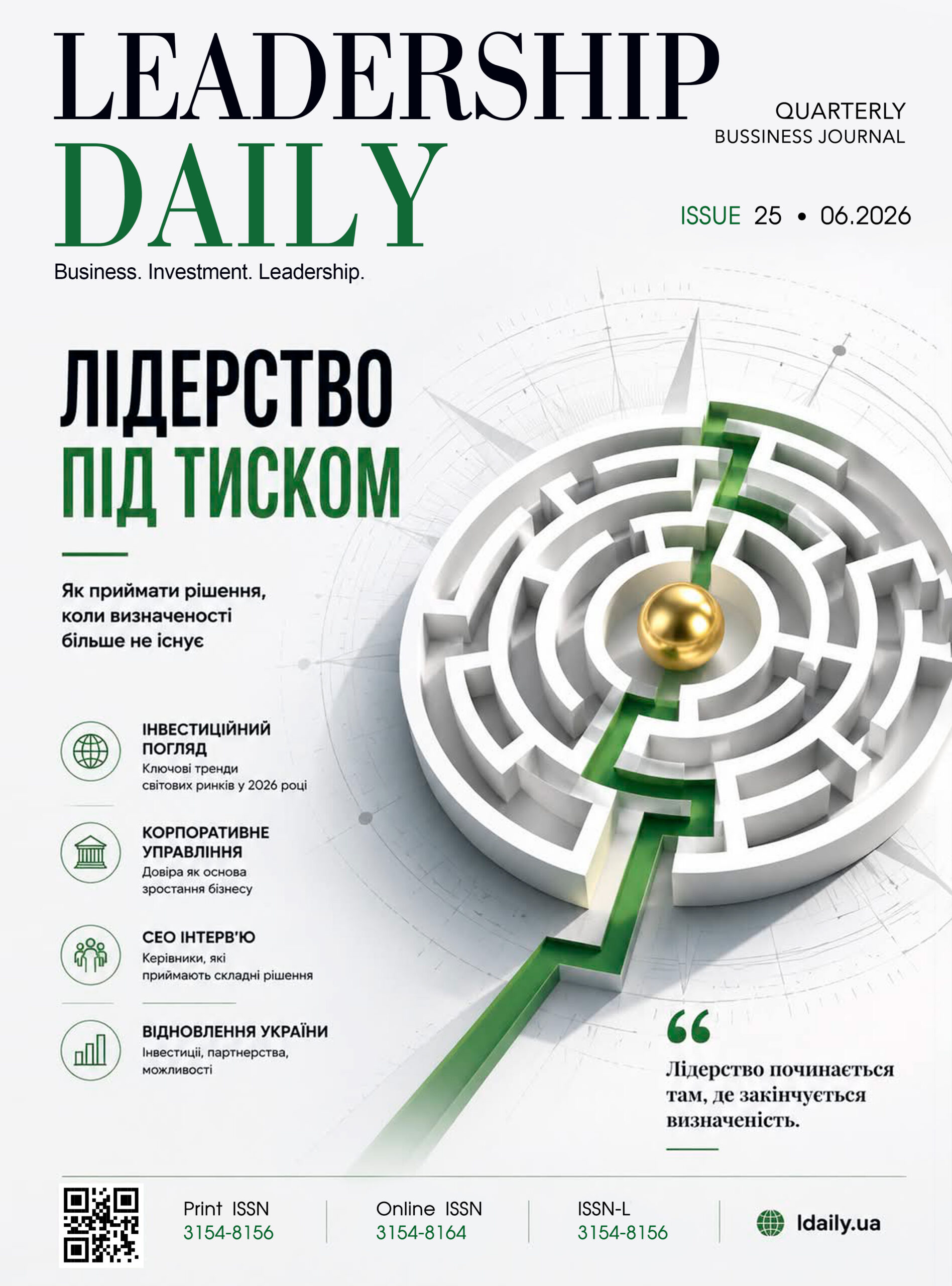
#LDaily #25 06.2026
-

#LDaily #24 11.2025
-

#LDaily #23 03.2025
-

#LDaily #22 03.2024
-

#LDaily #21 02.2024
-

#LDaily #20 07.2023
-

#LDaily #19 04.2023
-

#LDaily #18 12.2021
-

#LDaily #17 04.2021
-

#LDaily #16 12.2020
-

#LDaily #15 09.2020
-

#LDaily #14 06.2020
-

#LDaily #13 03.2020
-

#LDaily #12 12.2019
-

#LDaily #11 09.2019
-

#LDaily #10 05.2019
-

#LDaily #9 03.2019
-

#LDaily #8 01.2019
-

#LDaily #7 09.2018
-

#LDaily #6 06.2018
-

#LDaily #5 03.2019
-

#LDaily #4 12.2017
-

#LDaily #3 03.2017
-

#LDaily #2 12.2019
-

#LDaily #1 01.2017