
Samsung has officially explained why the Samsung Galaxy S26 lineup has become more expensive compared to its predecessors, according to The Verge.
According to Mobile Division COO Won-Joon Choi, a shortage of memory chips and the overall rise in component costs played a significant role in shaping the new pricing.
In an interview with the publication, the executive acknowledged that memory shortages made a “significant contribution” to the higher prices of the Galaxy S26 and S26 Plus models. In addition, rising material costs and tariff policies affected the final price tag. As a result, the new devices cost $100 more than their predecessors at launch.
The base Galaxy S26 now comes with 256GB of storage instead of 128GB. However, even with doubled storage, its starting price of $899 is $40 higher than the price of the Samsung Galaxy S25 with the same 256GB configuration at release. The price increases are not limited to the United States — adjustments have also been made in other markets.
The flagship Samsung Galaxy S26 Ultra received several notable upgrades that partially justify the higher cost. These include a built-in privacy display and the largest vapor chamber cooling system ever installed in the brand’s smartphones.
Memory-related issues have also been confirmed by company partners. During its February quarterly earnings report, Qualcomm stated that due to component shortages it is seeing a “100 percent” decline in the mobile chip segment. The company also emphasized that the AI industry’s demand for chips could shape the smartphone market throughout the year.
OpenAI has raised $110 billion in a deal that values the startup at $730 billion, marking the largest funding round to date for the developer of ChatGPT, according to Bloomberg.
The largest contribution came from Amazon, which invested $50 billion. SoftBank Group and Nvidia each invested $30 billion. OpenAI said the funds will be used to expand computing capacity and attract top talent to advance artificial intelligence development.
The new $730 billion valuation does not include the newly raised capital. After the funds are added, the company’s valuation rises to $840 billion.
Under the terms of the deal, OpenAI will use Amazon’s Trainium chips and jointly develop models for Amazon’s engineering teams. In addition, OpenAI will spend an extra $100 billion on Amazon Web Services services over the next eight years.
OpenAI CEO Sam Altman said the partnership with Amazon opens up new market opportunities. Amazon CEO Andy Jassy added that the investment will deliver long-term benefits.
Microsoft, one of OpenAI’s key previous investors, stated that its relationship with the company remains stable and that no changes to the partnership have occurred.
OpenAI’s competitor, Anthropic, previously raised $30 billion from Nvidia, Microsoft, and other investors, increasing its valuation to $380 billion.
These two AI startups are increasingly attracting a group of venture funds and major technology investors, including Nvidia and Microsoft, which also participated in Anthropic’s latest funding round.
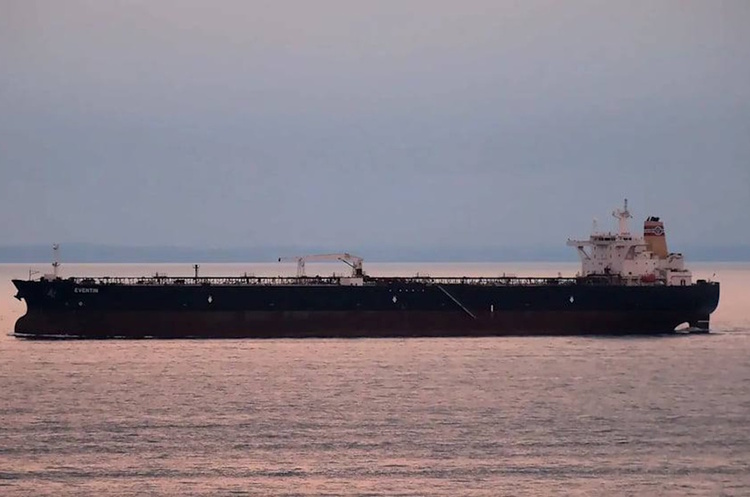
India has significantly reduced its oil imports from Russia: in January, deliveries fell by 40% compared to December and by more than half year-on-year. This is according to a report by international pricing agency Argus Media, cited by Russian state-aligned news agency RBC.
Volumes dropped to their lowest level since June 2022, reaching 859,000 barrels per day (3.68 million tonnes). India’s Ministry of Commerce had previously reported a 5% decline in purchases in 2025, to 84.86 million tonnes. In December 2025, imports of Russian oil fell 4% year-on-year and 25% compared to November, to 5.78 million tonnes.
A key reason for the decline was increased pressure from the United States and New Delhi’s efforts to secure a favorable trade agreement with Washington. In January, the share of Russian oil in India’s total imports fell to 21.2%, according to Reuters. This marks the lowest level since October 2022, when the country had just begun ramping up purchases from Russia amid the war in Ukraine.
India is compensating for the lost volumes by increasing imports from the Middle East, which now account for 55% of its total oil imports. Its main supplier has become Saudi Arabia.
The price of **Venezuela**n oil has been about $15 per barrel lower than Brent crude, making it attractive for Indian refineries, many of which are technologically optimized for processing heavier grades.

Streaming giant Netflix has withdrawn from the race to acquire Warner Bros., declining to raise its offer after Paramount outbid its previous proposal.
Netflix executives acknowledged that as the price increased, the deal — which had effectively been agreed upon last December — lost its appeal for shareholders. The path is now clear for Paramount’s merger with the well-known Hollywood studio.
In the United States, the bidding war between Netflix and Paramount for Warner Bros was described as “a choice between two bad scenarios.” There were concerns that the streaming company would use the new asset to strike a blow against the traditional film industry by shifting audiences’ focus from movie theaters to online viewing.
However, Paramount’s unexpected entry into the bidding also raised concerns among critics due to the company’s alleged political ties to the administration of Donald Trump.
Paramount will cover a break-up fee of more than $2 billion that Netflix is set to receive following the collapse of the previously agreed acquisition. In addition, Paramount will pay Warner Bros an extra $7 billion on top of the company’s share value, which exceeds $82 billion.
The new four-year Extended Fund Facility (EFF) program for Ukraine approved by the International Monetary Fund (IMF), in addition to an immediate first disbursement of nearly $1.51 billion, предусматриes nine further tranches subject to program reviews and fulfillment of the required criteria.
The program’s total size amounts to nearly $8.1 billion (SDR 5 billion), according to Fund documents released after the program’s approval.
Three reviews are scheduled for this year — in early June, September, and December. If successfully completed, Ukraine will receive two tranches of approximately $0.69 billion each, as well as an additional $0.96 billion.
After that, the program will move to semiannual reviews — in early June and December each year.
In 2027, the two planned tranches will total about $0.88 billion. In 2028, the amounts are set at $0.44 billion and $0.47 billion.
In the final year of the program, two additional tranches are planned — $0.4 billion and $0.86 billion.
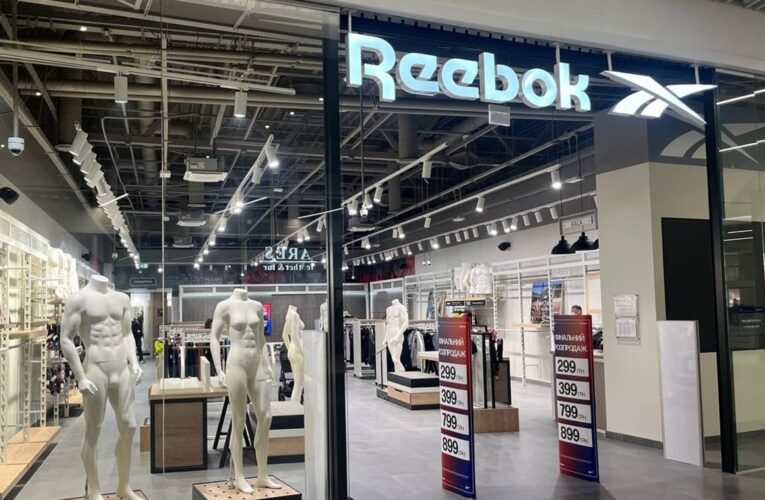
The sports retail chain Reebok is ceasing operations in Ukraine. The brand’s final two stores in Kyiv — located at Retroville and SkyMall — are set to close in spring 2026, according to Forbes.
At Retroville, the lease agreement runs through the end of April, but the exact closing date will depend on how quickly remaining inventory is sold. The SkyMall store will operate until May 8, 2026.
The online store will shut down after warehouse stock is sold out, with no new deliveries planned.
Since March 2022, Reebok’s development in Ukraine has been managed by the Turkish holding FLO Retailing under a license from the U.S.-based Authentic Brands Group, which acquired the brand from Adidas for $2.5 billion. Prior to that, Reebok had operated within Adidas’ structure since 2005.
“Turkish retailers are gradually scaling back operations due to the challenging economic situation in Turkey, and this has affected Reebok’s fate in Ukraine,” media sources note.
Despite the closure, interest in the brand among Ukrainian players remains. Several companies — including Marathon, Intersport, and Sport City — are reportedly in talks regarding potential official distribution rights.
The likely format for a return would not involve standalone mono-brand stores but rather sales through multi-brand outlets. According to Reliance managing partner Dmytro Slobodyanyuk, the transfer of rights could cost between $500,000 and $2 million.
The European Investment Bank (EIB) provided Ukraine with €1.5 billion in new financing for projects across various sectors in 2025, according to an EIB press release cited by Ukrinform.
“In 2025, the EIB Group delivered €1.5 billion in new financing for projects in energy, infrastructure, support for small and medium-sized enterprises, and the advancement of European integration,” the statement said.
The funds were allocated to support electricity, heating, and water supply systems. Last year’s financing marked a record level since the start of the full-scale invasion.
Among last year’s projects was a €300 million agreement with Naftogaz of Ukraine for gas procurement.
Under the Recovery Program, €100 million was allocated for the reconstruction of water and social infrastructure in more than 150 communities. An additional €100 million was provided for a water supply restoration project.
Overall, since 2022, the EIB has allocated €4 billion to Ukraine to strengthen critical infrastructure, ensure uninterrupted municipal services, and support economic activity.
In 2026, energy resilience will remain a key priority for EIB support, alongside expanded assistance for social and municipal infrastructure and technical support for Ukraine’s European integration process.
Ukraine has agreed to undertake commitments under a new Extended Fund Facility (EFF) program from the International Monetary Fund totaling $8.1 billion. This was reported by Member of Parliament Yaroslav Zhelezniak.
One of the first “structural benchmarks” under the IMF program, set for the end of March, calls for the adoption of a package of tax changes for 2026–2027.
According to Zhelezniak, Ukraine has already fulfilled the following requirements:
-
Adoption of the 2026 state budget in line with IMF program parameters;
-
Issuance of a resolution ensuring equal conditions for VAT payers participating in public procurement;
-
Submission to parliament of a draft law amending the Labor Code to update the definition of “employment relations” in accordance with international standards.
At the same time, the following structural benchmarks are still in progress:
-
Any non-systemic banks that come under state ownership will not be recapitalized using fiscal resources and will be transferred to the Deposit Guarantee Fund for market exit in case of prudential violations;
-
By the end of February 2026, the program предусматриes implementation of the recommendations outlined in MEFP ¶51 to strengthen the nomination process for supervisory boards of state-owned banks.
In addition, by the end of March 2026, the program envisages adoption of a tax package for 2026–2027, including:
-
Taxation of income earned through digital platforms;
-
Elimination of the tax exemption on low-value imported postal shipments under €150;
-
Permanent introduction of the increased 5% military levy;
-
Cancellation, effective January 1, 2027, of VAT exemption for sole proprietors exceeding the general VAT registration threshold, which will be moderately raised but not exceed UAH 4 million.
The new program also provides for the appointment of a new permanent head of the State Customs Service of Ukraine.
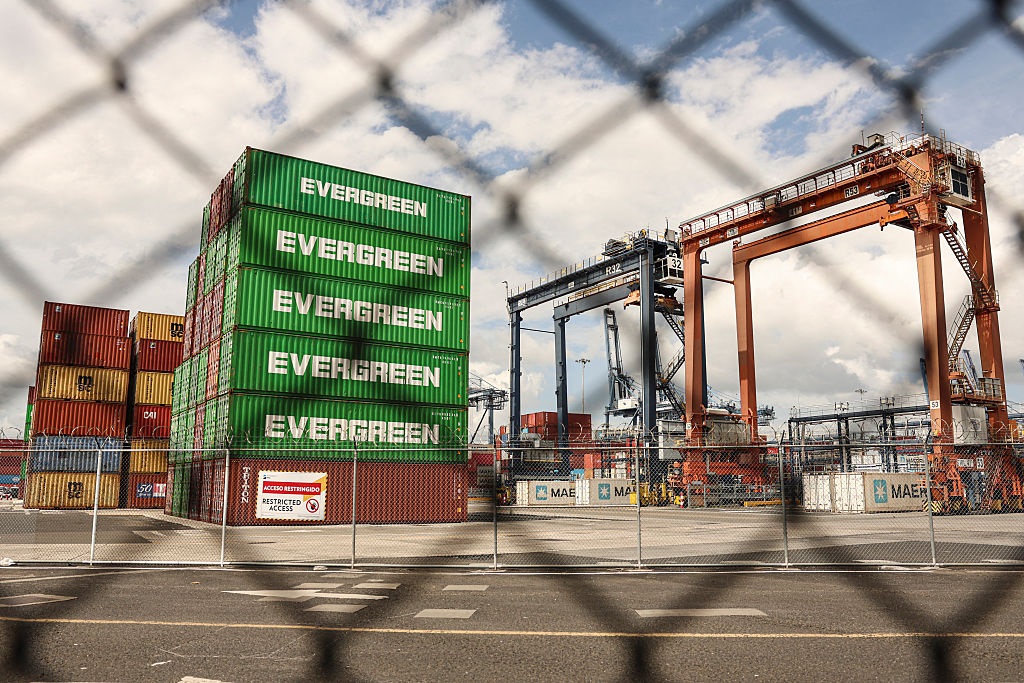
Hong Kong conglomerate CK Hutchison said on Tuesday that Panamanian authorities threatened its employees with criminal prosecution unless they left two key ports along the Panama Canal, according to Reuters.
The move followed a ruling by the Supreme Court of Panama, which annulled the contracts of CK Hutchison’s subsidiary, Panama Ports Company, to operate the terminals.
Washington and Beijing have been contesting influence over the strategic waterway that connects the Atlantic and Pacific oceans.
Law enforcement officers removed CK Hutchison employees from their workplaces and barred them from contacting company management.
CK Hutchison said it considers the court’s decision unlawful.
The Panama Maritime Authority assumed control of the Balboa and Cristobal ports to prevent operational disruptions following the court’s ruling.
The Panamanian government granted temporary concessions to operate the Balboa terminal to APM Terminals Panama, a subsidiary of Maersk. Operations in Cristobal will be handled by TIL Panama, which is part of MSC.
China’s Foreign Ministry said Beijing intends to firmly safeguard the lawful rights and interests of its companies.

Italian automaker Alfa Romeo has resumed orders in Europe for the Quadrifoglio versions of the Alfa Romeo Giulia Quadrifoglio and Alfa Romeo Stelvio Quadrifoglio. The company has also decided to extend production of these variants until 2027.
In spring 2025, the brand announced it would stop taking orders for gasoline versions equipped with 2.9-liter V6 and 2.0-liter Turbo engines due to the need to reduce average fleet emissions. At the time, it planned to keep only the 2.2-liter diesel versions on sale and completely phase out the Quadrifoglio trims.
Now, the company has revised its strategy. CEO Santo Ficili stated that performance and character are an integral part of the brand’s DNA, making the Quadrifoglio versions essential for Alfa Romeo.
Both models are powered by a 2.9-liter twin-turbocharged V6 gasoline engine producing 520 horsepower. The Giulia features rear-wheel drive, while the Stelvio comes with the Q4 all-wheel-drive system.
The cars make extensive use of aluminum and carbon fiber in their construction. The driveshaft, hood, spoiler, and several interior elements are made of carbon fiber. The Giulia sedan also receives an active carbon-fiber front splitter. Both models are equipped with a sport exhaust system by Akrapovič.
Exterior highlights include five-spoke alloy wheels — 19 inches on the Giulia and 21 inches on the Stelvio — along with gray anodized brake calipers. Inside, the vehicles feature Sparco sport seats trimmed in leather and Alcantara.