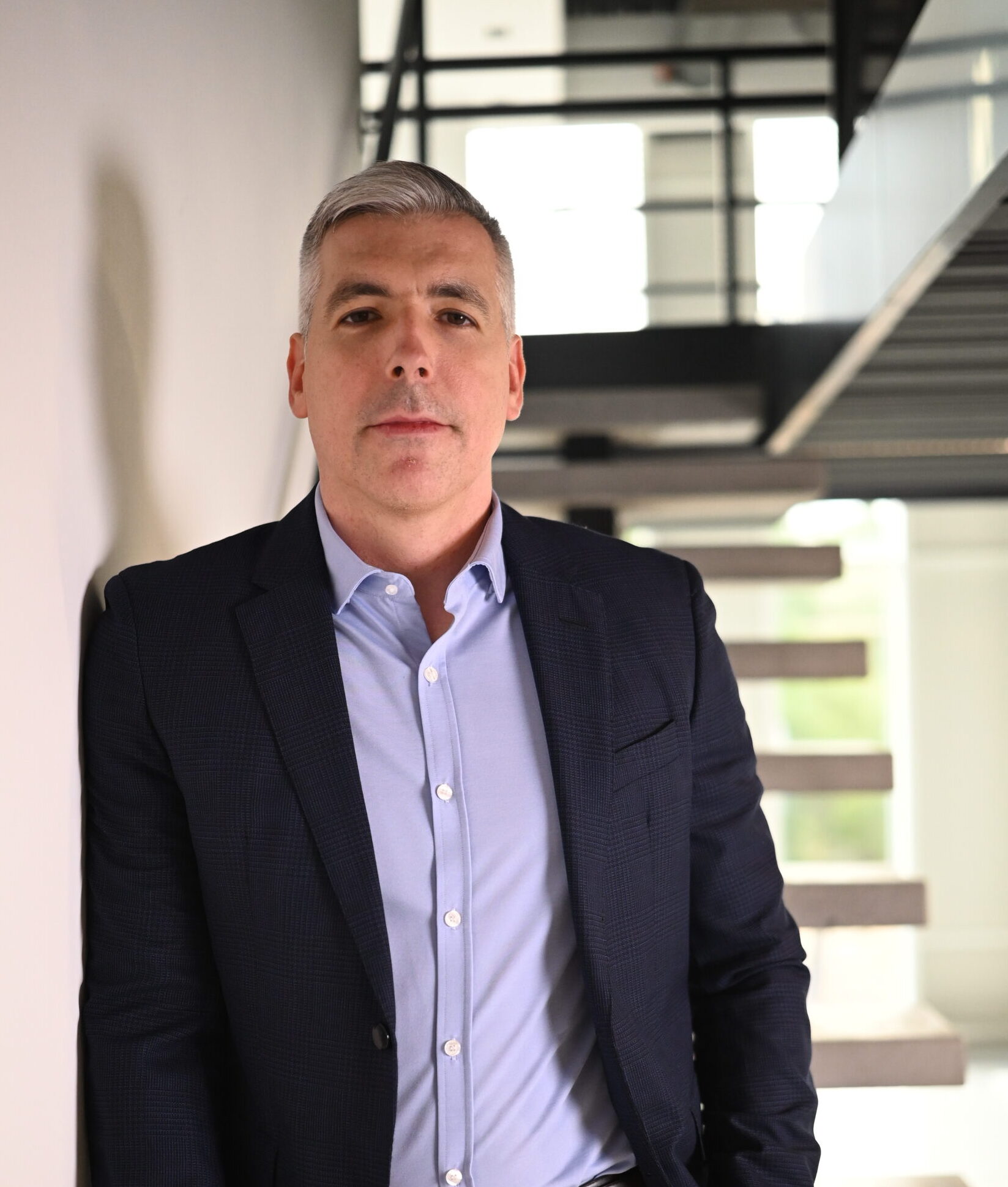
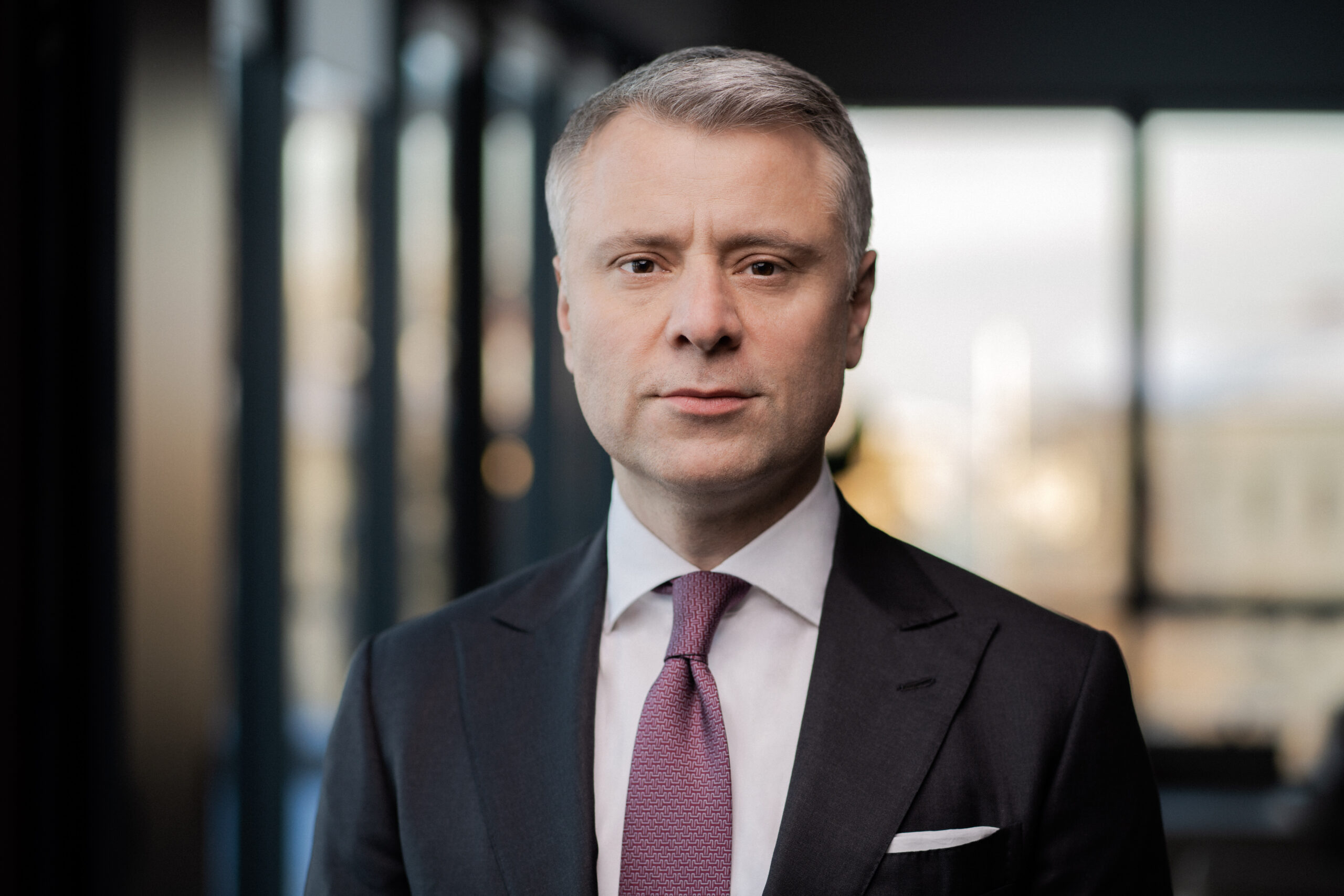
Yuriy Vitrenko, owner of the investment company Balgove Innovations, told Leadership Daily about the specifics of Ukrainian capitalism, his experience working in state and quasi-state structures, the impact of the war, and the prospects for Ukraine’s investment market.
Leadership Daily: You have gone from being a top executive at Naftogaz and Acting Minister of Energy to founding a private company in the innovation and investment sector. What was the main motivation for moving from the public sector to the private sector?
Y. Vitrenko: In fact, I spent much more time working in the private sector. I was a civil servant for only four months—when I served as Acting Minister of Energy. Before that, I worked at PricewaterhouseCoopers, Merrill Lynch in London, in private investments, and I also founded my own investment businesses.
Even Naftogaz was more of an exception for me, because although it is a company, it is still part of the public sector. The problem is that in Ukraine, unlike in developed countries, state-owned companies do not have proper corporate governance. Leaders there are often appointed not to manage the business effectively in the company’s interests, as formally defined in the charter documents. Since the real objectives are different, the main criterion for a manager becomes personal loyalty to the politicians who make the appointment. As a result, it is neither a civilized business nor a public service.
When I worked at Naftogaz in 2014–2020, my goal was to turn it into a normal company with modern corporate governance. We achieved a lot: the Stockholm arbitration, gas market reform including integration with the EU and reducing dependence on Gazprom, and corporate governance reform.
Working in the public sector was a conscious patriotic choice for me. In the private sector I gained substantial business experience and earned significantly higher financial compensation. But I went to work in the public sector when I saw an opportunity to genuinely influence things and change processes.
When I returned to Naftogaz in 2021, within a year the company had already become loss-making, production was falling to record lows, and the gas market reform was effectively being replaced by so-called “free pricing.” In the absence of effective market institutions, this led to abuses by monopolists and discredited the very idea of market reforms.
I agreed to lead Naftogaz for one year—to take the company out of crisis, put it back on a path of sustainable development, appoint an independent and professional supervisory board, and finally run a proper, civilized selection process for the CEO and members of the management board. But then the full-scale war began, and I could not leave at that moment. Later, when the situation partially stabilized, I realized that there were fewer opportunities for real leadership and change, while family circumstances required me to be close to my family.
I am not Don Quixote. I fight real problems within my competence. And from experience I already know what is needed for success. If that is not in place, the fight may be futile—or even cause harm—especially during a full-scale war for the country’s survival. That is exactly what motivated me to return to the private sector.
Leadership Daily: Tell us about your company.
Y. Vitrenko: The idea is based on my experience not only in government or at Naftogaz, but also at Merrill Lynch and in private investments, where investment decisions are made based on facts, sophisticated financial modeling, and deep analytics. In Ukraine, unfortunately, most decisions are made without that—without facts, models, and systematic analysis.
I know well that making high-quality investment decisions requires not only expertise, but also time and resources. In large international investment banks, processes are structured so that in-depth analysis and a presentation can be prepared overnight. In Ukraine, however, due to a lack of data, infrastructure, and well-established processes, similar analysis can take months.
In our investment companies, we conducted such analysis, but only for very large transactions where the resource costs were justified. Today, the development of artificial intelligence makes it possible to perform many of these tasks much faster and cheaper. AI does not replace people, but significantly enhances their work.
That is exactly what the idea behind Balgove Innovations is built on: combining human expertise and the capabilities of artificial intelligence to make investment decisions, especially in an underdeveloped market. Where complete information is lacking, we look for indicators and analytical analogs that allow us to produce estimates as close to reality as possible.
Essentially, Balgove Innovations is an innovation lab focused on how to collect information, analyze assets, and execute investment transactions in conditions of limited data and weak market infrastructure.
Leadership Daily: Your company positions itself as a company that delivers smart investments. What does this term mean for you? What criteria do you consider key for evaluating promising projects?
Y. Vitrenko: Smart investments are precisely investments based on facts. And those facts are part of a financial model. In other words, you can forecast the return on investment—because “smart” means the return is adequate relative to the risks. Two main parameters.
If we also consider investments from the perspective of a certain impact—so-called impact investing, meaning you want to influence something, for example decarbonization or having more women in corporate management—then the approach is slightly different, or additional criteria emerge. But the two core criteria of smart investments are return and risk. And the return must be adequate for the risk.
Accordingly, smart investments are investments made on the basis of decisions that model all available information related to those investments, so that you can obtain a very clear result in terms of expected return and the degree of risk of those investments.
Leadership Daily: Which Ukrainian industries today, in your view, are the most undervalued from an investment perspective?
Y. Vitrenko: It’s a difficult question because of the war. The main risk for any investment in Ukraine today is military risk: direct threats, logistical constraints, capital movement restrictions, a shortage of labor resources, and a declining population. These factors dominate and prevent any universal formula for identifying the “most promising” sectors.
As an active investor, in addition to Balgove Innovations, we continue to invest, including in Ukraine. First and foremost—though indirectly—in DefTech related to defense technologies. These investments can take different forms, including trade finance or working-capital financing, for example to purchase components for drone manufacturers.
At the same time, DefTech includes many solutions that work specifically in Ukraine’s wartime conditions, but do not always have a sustainable global competitive advantage. They are important for Ukraine’s victory right now, but the question is their export prospects after the war ends. That is why, in certain cases, we cooperate with weapons manufacturers for Ukraine, but outside the country.
Leadership Daily: In Europe?
Y. Vitrenko: Yes. If earlier these were simply European companies producing weapons for Ukraine, now there are already Ukrainian companies building production capacity abroad. And sometimes this is not only a matter of financing or protecting production facilities. Some Ukrainian companies are now opening factories and sites in Europe because that is how they can attract the specialists they need. This is already a question of specialists—not only physical protection. Sometimes very highly qualified experts are required, and they exist in Europe in a particular field but not in Ukraine. This is also an object of financing.
So, coming back to the question of attractiveness and undervaluation: our DefTech sector is undervalued, but precisely because it is still difficult to identify those sustainable competitive advantages in the global market. We are actively looking for such opportunities. We can invest ourselves, and we also have partners who want to invest in such projects. Therefore, if more such opportunities emerge, it will have an immediate effect. There will be much more money flowing into these sectors, and valuations will be completely different—much higher. Because right now financial modeling shows that, for example, we finance certain projects, but they make sense not for the entire war, but for a specific phase of it. They make sense right now. What will happen in a month—we don’t know.
Leadership Daily: Innovative ideas in Ukraine often face a lack of access to capital. In your opinion, which mechanisms can most effectively overcome this barrier?
Y. Vitrenko: That is exactly what Balgove Innovations does. Mechanisms for raising capital are my experience—I have been doing precisely this for most of my life. I understand how a foreign investor looks at an investment project. For them, these facts, this financial model, and this analysis are essential. Even if someone objects, “startups don’t need a financial model,” that’s not entirely true. It’s just a different kind of model.
For example, instead of forecasting revenues and profits, you look at somewhat different things. You see that there is a global market that is growing rapidly. You see there are users for whom the product is valuable. They are willing to spend—even if not money, then time—meaning they use the product. And there is a certain level of engagement. In other words, people have chosen your product, spent time on it; that indicates a degree of loyalty. And then this model shows that if that exists, the company has value, because later you can find
opportunities to monetize the value you create for customers, or simply sell the company to another large company that knows what to do with it. Foreign investors need that.
In Ukraine, unfortunately, this is very difficult. And we are not skilled at it, because our decisions are made somewhat differently, and there are objective difficulties in demonstrating this investment attractiveness to foreign investors—showing, prospectively, how value will be created for customers and then monetized. Balgove Innovations helps both sides. On the one hand, it helps analyze investments. But on the other hand, and most importantly, it helps those who want to raise investment to be able to explain to foreign investors why they should invest money.
Leadership Daily: What is the biggest structural problem of the Ukrainian economy that needs to be addressed first in order to improve the investment climate in Ukraine?
Y. Vitrenko: Historically, Ukraine has had a major problem with hidden subsidies, and because of the war it has become bigger. This leads to systemic distortions. Take prices for energy resources or tariffs for housing and коммунальні services. It would be very important for us to move from hidden subsidies to targeted ones, so that a real energy market can function.
As we understand, in Ukraine—especially now, when there is no electricity—energy is a key sector for Ukrainians. Right now, the market practically does not work; the system of market incentives does not work to build anything or to protect energy facilities. In other words, at the moment all of this is not driven by market incentives, but by something else. If we are talking about the economy and systemic change, then, in principle, it would be important—taking into account all wartime constraints—to move from hidden subsidies to targeted ones and allow the market to function.
Another major problem is tax and customs reform. By the way, the transition from hidden subsidies to targeted ones—which can and should happen through digitalization—has every possibility, and the same applies to tax and customs reform. There must be total digitalization using artificial intelligence and computer vision at customs.
In simple terms, there should be no customs clearance without it being recorded on camera and the AI itself determining whether these are luxury goods or, as in the joke, green peas. This is not that complicated. For example, body cameras for customs officers who inspect cargo. At the front, all of this is used—the same AI is used for object recognition. It can also be applied at customs. This would make it possible for the state to collect more money for the war as well. But it would also change the situation for honest business, because then there would be fair competition. Because honest businesses, for example, do not use certain customs schemes, while dishonest ones do. Accordingly, if we are talking about systemic change, there must be fair competition.
Leadership Daily: Many investors still perceive Ukraine primarily through the lens of risk. In your opinion, which of these risks are overstated, and which are underestimated?
Y. Vitrenko: It’s hard for me to say what is overstated. But the risks related to the justice system are underestimated, in my view. Sorry for the not-so-optimistic answer, but I’m speaking as a practitioner.
Leadership Daily: Which three reforms are necessary to most strongly increase Ukraine’s investment attractiveness? Presumably judicial reform?
Y. Vitrenko: The transition from hidden subsidies to targeted subsidies, and tax-and-customs reform. Judicial reform is underway, but it simply requires much more time. I can talk about judicial reform, but from a practical standpoint, the reforms I’m mentioning can be done in three months, whereas judicial reform takes years.
By the way, coming back to your question about systemic, structural problems and barriers: the reforms I’m talking about would make it possible to correct the structural situation—or at least improve it—in energy, and in the labor market. These hidden subsidies also distort incentives in the labor market. Because if, for example, there is a real market, people will understand that it is profitable to do certain things, and accordingly there will be more labor available there.
Even from the perspective of mobilization: if you get rid of hidden subsidies, there will be more economic incentives. I understand it is very difficult, but there must also be economic incentives for people to go to war. Of course, this is a matter of life, so it is very hard to talk about “adequate compensation.” But it still makes it possible to improve the material support and remuneration of soldiers, and, on the other hand, to create economic motivation to join the armed forces. These structural problems accordingly depend on implementing the reforms I’m talking about.
The same applies to the domestic capital market. We are not using the potential of the domestic capital market. You asked a lot about foreign investors. But our domestic capital market is practically not functioning at all, unlike in developed countries. That is, in the domestic market people cannot really invest in corporate bonds, because there are very few of them. They cannot—and there is accordingly no structure, culture, processes, etc. People do not invest in equities. People do not invest in private investment funds or in private equity and private debt funds. In other words, we are not using all the opportunities of the domestic capital market, and this is precisely a structural problem of the Ukrainian economy, which can be addressed at least partially through the reforms I’m talking about.
Leadership Daily: How has your own approach to management and decision-making changed over the past few years? And what have been the key lessons for you?
Y. Vitrenko: The answer is very simple: artificial intelligence. Now, virtually all decisions I make, one way or another, are based on AI. That is, I can verify individual aspects—usually multiple times—for every decision. First, that’s how our work is: all our algorithms are configured for that. But even for personal decisions.
Or even when double-checking: we have a very complex system—150 algorithms, so-called APIs, the latest AI models, etc. But at the same time, I can then verify it in my personal systems. I can set up a virtual board of directors, where ChatGPT argues with Gemini and with *Claude. That didn’t exist before, and now it’s reality.
Leadership Daily: What would you advise foreign investors who want to enter Ukraine but are hesitating?
Y. Vitrenko: Manage military risks. The possibilities for this are limited, but they are increasing, and you need to look at that. Next, they should look at businesses where there is a return that compensates for the risks, or where there is a certain positioning for the future that also compensates for these risks.
And the third point is structuring. At least in some cases, investments can be structured in a way that makes them less risky. For example, as I said, you invest in trade finance / working capital. And the corporate structure must be optimized to reduce risks. That is how most investments are done, including in DefTech. Certain companies in the structure are registered outside Ukraine. Certain IP (intellectual property) is also registered outside Ukraine. Production facilities and specialists are not in Ukraine. You can build a hybrid structure, and it is less risky.
Leadership Daily: What advice would you give to Ukrainian startups that want to enter foreign markets?
Y. Vitrenko: If a startup has a proven leadership position in a flexible global market—with hard numbers on users, downloads, or sales—it can already raise investment in the U.S. market today. The United States is currently the largest and most dynamic investment environment, significantly more active than Europe. There are not many such startups, but for them the U.S. market is open.
For FinTech projects, particularly those related to tokenization, London remains the optimal market—it is even stronger in this segment than the U.S. I and my partners are ready to act as investors or partners for such projects.
In DefTech, everything depends on whether there is a sustainable global competitive advantage. If there is, the U.S. market is open, and we are also ready to invest. If, however, the advantage is situational and depends on how the war evolves, raising investment becomes much more difficult, and you need to look for other financing formats.
For startups focused primarily on the Ukrainian market, or those that do not yet have validated metrics, it makes more sense to approach Ukrainian venture funds and specialists who focus on early-stage projects. There are professional teams, such as AVentures Capital, that have significantly more experience working with such projects.
Overall, it is important for Ukrainian startups to clearly understand which category they fall into. A global leadership position is a path to the U.S. or London. Local or early-stage projects require a different approach and different expertise.