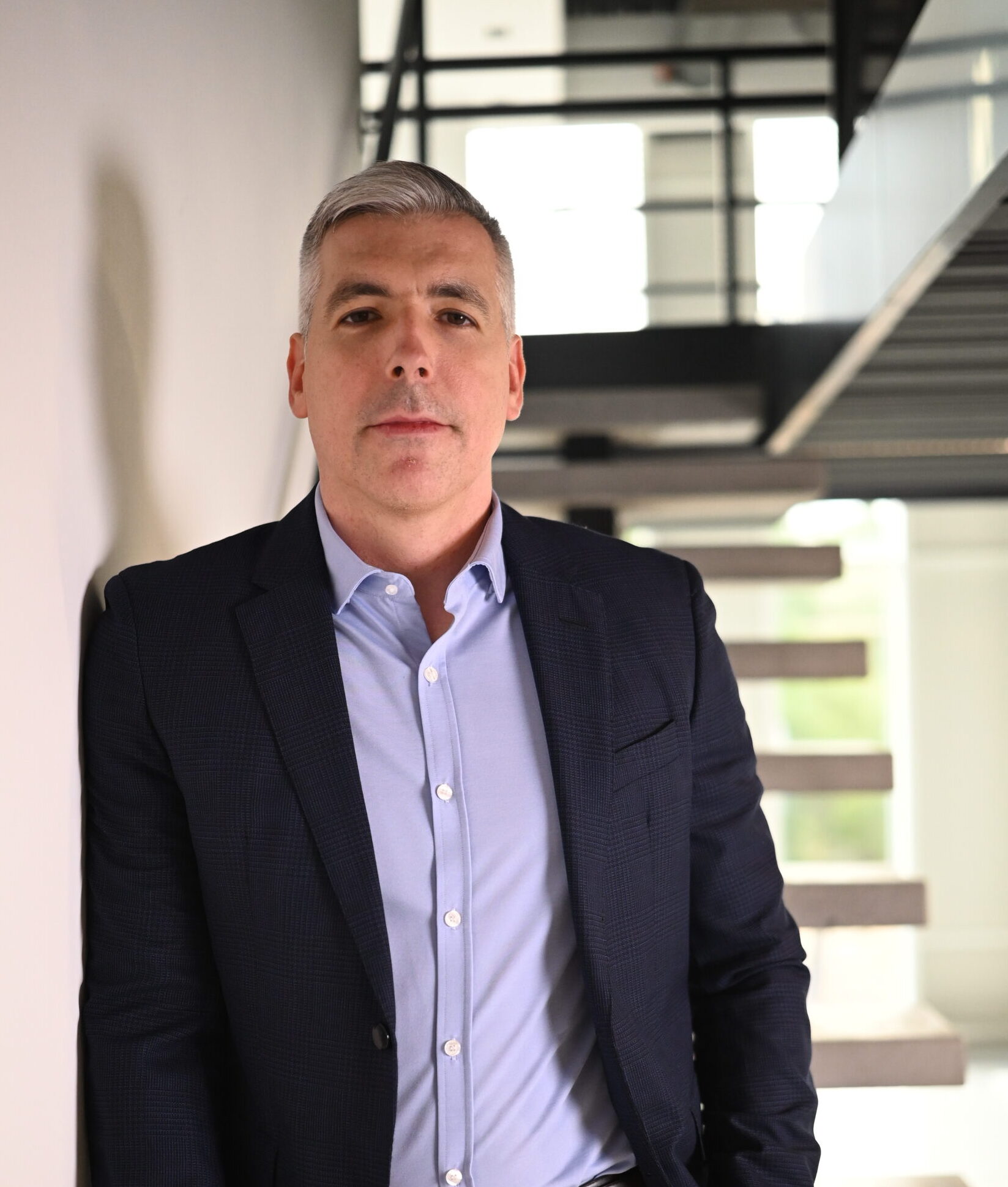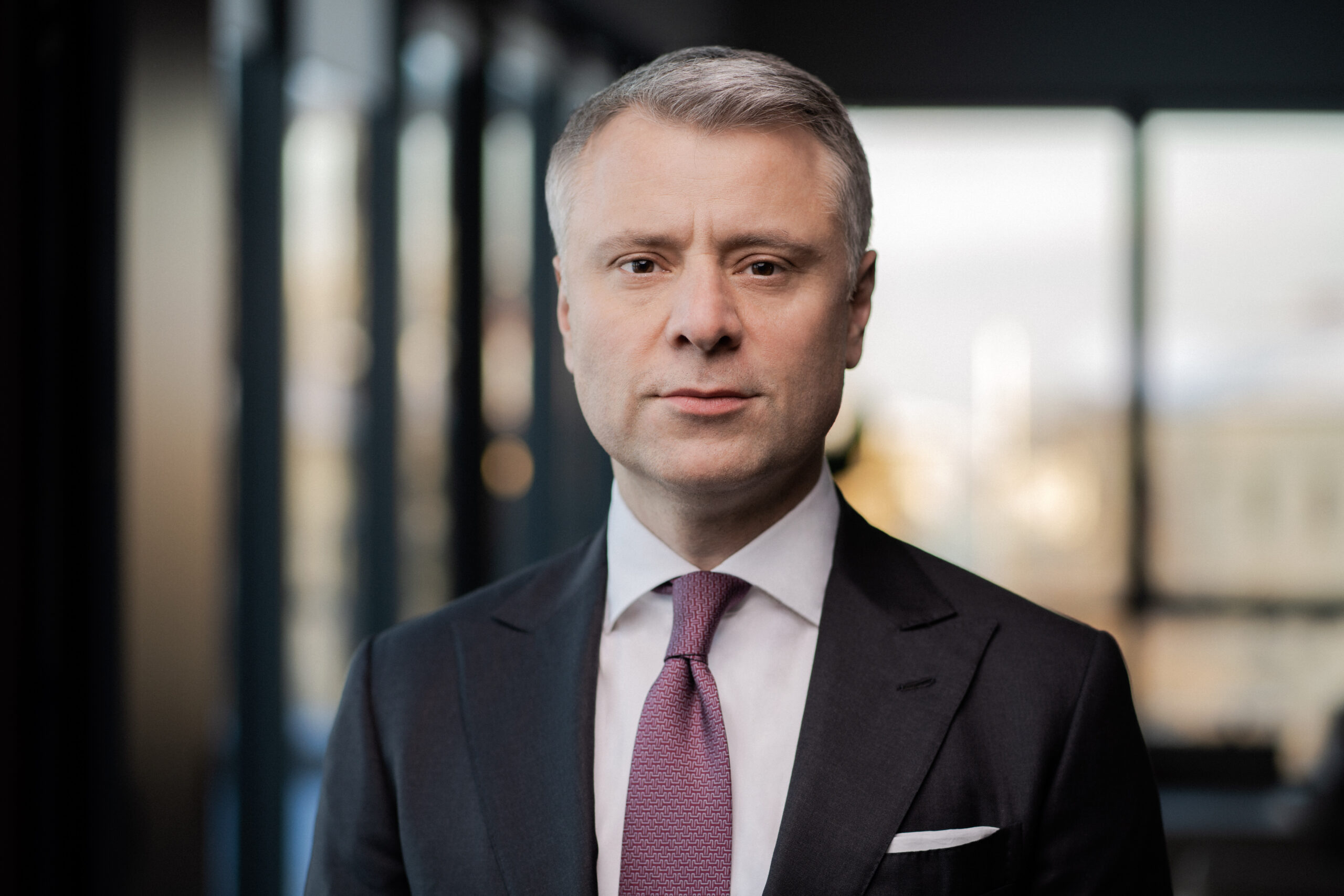

The interview with Marcin Sołtysiak, CEO of ELQ Group, is a conversation about a new architecture of energy and the investments shaping the infrastructural future of nations. The company goes far beyond standard energy projects, placing its strategic focus on small modular reactors (SMRs) as a key element of baseload generation for modern industry.
At the core of this vision are scalability, compliance with the EU taxonomy, and predictability as a key value in the global market. ELQ Group works with full-cycle projects — from preparing them to ready-to-build status to delivering them as an EPC contractor, integrating its own technologies and know-how. The company is also actively involved in modernizing energy grids in line with EU standards, laying the groundwork for the deployment of high-tech generation assets of the future.
In the conversation, Marcin Sołtysiak explains why the difference between an ambitious presentation and a real infrastructure asset lies in the depth of preparation, which engineering filters separate declarative concepts from tangible investment projects, and how Ukrainian teams with decades of experience are becoming a key factor in delivering complex energy solutions.
LeadershipDaily: Could you please tell us about ELQ as a company? What does your business look like today, and what solutions do you offer?
M. Sołtysiak: ELQ is a company with a 50-year heritage, having evolved from a traditional manufacturer established in 1976 into a modern technological holding. Today, our business stands on three pillars: Production, Implementation (EPC), and Innovation.
We are no longer just selling hardware; we offer a “360° Model” that covers the entire lifecycle of energy projects—from development and financing, through manufacturing of transformer stations, to construction and long-term maintenance.
Our solutions include large-scale renewable energy infrastructure (wind and solar farms), energy storage systems, and through our ELQ Defence division, critical infrastructure protection.
However, strictly speaking, we are looking beyond standard projects. We are entering the realm of Small Modular Reactors (SMRs). For us, SMR is not just a “technological project” but an element of the state’s strategic infrastructure architecture. Whether it is the hydrogen plant for Promet-Plast or future SMR deployments, we are providing the baseload stability that modern industry requires to operate 24/7.
LeadershipDaily: How would you define your investment philosophy in an environment of global uncertainty? What are the key criteria that guide your investment decisions?
M. Sołtysiak: My philosophy is rooted in “sovereign competence.” In uncertain times, you cannot rely purely on outsourcing; you must control the critical path.
This is especially true for energy, which has ceased to be merely an operational cost and has become a fundamental instrument of state power and sovereignty. Countries that possess stable, predictable baseload generation have the ability to plan their development for decades. Those that do not are forced to function in a reactive mode.
Therefore, my key investment criteria are Scalability, Compliance, and Impact. Every project—whether renewable or nuclear—must be scalable to meet the massive demand of digitalization and electromobility, fully compliant with the EU Taxonomy to ensure bankability, and provide the predictability that is now the most valuable currency in the global market.
LeadershipDaily: Polish investments in Ukraine currently account for only 2.6% of total FDI, with one of the main barriers cited as the lack of well-prepared, investment-ready projects. In your view, where does the root of this problem lie — with the state, businesses, or investors themselves?
M. Sołtysiak: The root lies in the gap between a “vision” and “bankable engineering.” The state provides the framework, and investors have the capital, but there is a dramatic shortage of professional developers capable of bridging these two worlds with technical precision.
Many projects in Ukraine—and indeed in the broader region—are stuck at the “PowerPoint stage.” They lack secured land rights, grid connection conditions, or mature environmental assessments.
This mirrors the challenge in the nuclear sector: the difference between a vision and a real project lies in the degree of preparation. At ELQ Investments, we solve this by preparing projects to Ready-to-Build (RTB) status ourselves. We apply rigorous engineering filters—similar to the certification processes in advanced energy—to separate mere declarations from real, executable investment assets.
LeadershipDaily: Could you describe ELQ’s activities in Ukraine and outline your investment projects in the country?
M. Sołtysiak: We operate through ELQ Investments, focusing on decentralized energy infrastructure which is crucial for the country’s resilience. Currently, we are developing a diverse portfolio that includes wind farms, large-scale photovoltaic plants, and waste-to-energy facilities.
Our role extends beyond just investment; we are also the EPC contractor, bringing our technology and know-how to the ground. We are actively involved in the reconstruction of the grid, making it compatible with European standards.
Ultimately, we are preparing the grid for a future where baseload power won’t just come from old coal plants, but from modern sources like SMRs. We are building the “nervous system” of the energy sector now, so that it can handle the high-tech generation assets of tomorrow. It is also important to emphasize that this progress would not be possible without the contribution of our two dedicated teams in Ukraine, whose members bring more than 20 years of experience in the energy sector and deep practical expertise in project development and energy infrastructure.
LeadershipDaily: You have built a €600 million project portfolio in Ukraine with a clearly defined financing structure. What criteria are decisive for you when determining whether a project is truly “investment-ready” in wartime conditions?
M. Sołtysiak: Correction: Our portfolio has actually grown and now exceeds €1,5 billion in project value.
In wartime, “investment-ready” means de-risked through engineering and legal iron-cladding. The decisive criteria are:
Without these elements, a project is speculative. With them, it becomes a strategic asset.
LeadershipDaily: You plan to raise more than 70% of the capital through the Ukraine Reconstruction Fund. How ready are international investors today to enter Ukrainian projects, and what arguments matter most to them?
M. Sołtysiak: International investors are cautious but eager. They know that the reconstruction of Ukraine will be the largest economic project in Europe since the Marshall Plan.
The argument that matters most is structure. Financing complex energy projects—especially those moving towards SMRs or large-scale infrastructure—requires a strong consortium approach. It involves banks, infrastructure funds, and international institutions working in sync. This is not a project for a single investor; it is a structured, multi-stage process requiring “mature capital.”
That is why we established a SICAV fund structure in Prague. It allows us to deploy capital into Ukrainian assets while operating under the safety of Czech National Bank regulations. We provide the “financial certification” that institutional capital requires to enter a high-risk market.
LeadershipDaily: You deliberately chose the energy sector despite the extensive destruction of infrastructure. In your view, where is the line between excessive investment risk and a unique window of opportunity?
M. Sołtysiak: The line is drawn by necessity. Energy is not a luxury; it is the lifeblood of survival and recovery. The destruction of centralized Soviet-era plants has created a vacuum that must be filled immediately.
In fact, the biggest risk for industry today is not the price of energy or the war itself, but the unpredictability of supply.
The window of opportunity lies in building the new system from scratch. We are not rebuilding the old, inefficient coal plants; we are leapfrogging directly to a decentralized, green grid. The “first-mover” advantage here allows us to secure the best grid connections and locations, which will define the market for the next 30 years.
LeadershipDaily: Today, energy in Ukraine is not only a business but also an element of national security. How can an investor balance commercial logic with strategic responsibility?
M. Sołtysiak: They are perfectly aligned. Energy has become a domain of national security, and modern warfare targets centralized weaknesses.A decentralized energy system (microgrids, renewables, eventually SMRs) is harder to destroy than a centralized one, offering greater national security.
Simultaneously, this model offers better commercial returns because it reduces transmission losses and brings generation closer to consumption. By investing in projects that strengthen the grid, we secure our own assets. At ELQ, we treat energy availability as the primary metric of both commercial success and strategic resilience.
LeadershipDaily: You often speak about Ukraine’s long-term energy transformation. In your opinion, which model should replace the pre-war energy system — a centralized or a decentralized one?
M. Sołtysiak: Absolutely a decentralized one. The war has brutally demonstrated the vulnerability of centralized giants. The future is a mesh of distributed generation—wind, solar, biomass, and SMRs (Small Modular Reactors)—supported by local energy storage.
Regarding SMRs, it is crucial to understand that this is qualitatively different from traditional nuclear power. We are talking about modularity, scalability, and the ability to launch capacity in stages. This means a lower concentration of risk and greater financial flexibility.
However, there is one condition: Certification. In advanced energy, certification is not a formality—it is the key filter that separates declarations from real investment projects. Only by passing through rigorous regulatory procedures does a project gain the credibility to become part of this new decentralized system.
LeadershipDaily: You emphasize that Polish businesses should be ready to invest in Ukraine now, rather than after the war ends. Why do you believe the window of opportunity may close if investors wait for peace?
M. Sołtysiak: Because logistics, relationships, and grid permits take years to secure. In the energy sector, specifically, the regulatory and certification pathways are long.If you wait for the peace treaty, you will arrive to find the market crowded with global giants from the US, Germany, and France who have deeper pockets.
Polish business has a geographic and cultural advantage now. We are the hub. If we establish our footprint, supply chains, and partnerships today, we will be the incumbents when the major reconstruction boom begins. Waiting is a strategic error that will cost us our competitive position.
LeadershipDaily: What role can and should Poland play in rebuilding Ukraine’s energy sector — as an investor, an industrial partner, or a technological hub?
M. Sołtysiak: Poland should be all three, but primarily the Industrial and Technological Hub.
We are the natural staging ground. My vision is for Poland to manufacture the components (transformers, switchgear, modules) that Ukraine needs, financing them through joint ventures.
Furthermore, Poland can act as the regulatory bridge. By adopting and certifying technologies (like SMRs) in Poland first, we create a pathway for their deployment in Ukraine. We should act as the bridge between Western capital, Western technology standards, and Ukrainian implementation.
LeadershipDaily: You have opened a facility in Poland capable of producing up to 5,000 transformer substations per year to Ukrainian standards. How critical are local and regional supply chains today for the success of investments in Ukraine?
M. Sołtysiak: Our capacity is reaching 4,500 units annually with the new 2026 plant.
Regional supply chains are critical because borders can be bottlenecks. Having production in Częstochowa allows us to deliver rapidly.
But it’s not just about speed; it’s about quality control. To build a modern grid, you need high-tech components that meet strict standards. The next step is launching production directly in Ukraine. For that, we need Air Defense for industrial parks and Investment Guarantees. If we secure the physical safety, the economic viability is already there, driven by the massive need for reconstruction materials.
LeadershipDaily: Your current portfolio includes 28 projects, ranging from renewables to microgrids and energy storage systems. Based on your experience, which of these areas offer the strongest return potential in the short to medium term?
M. Sołtysiak: In the short term: On-shore Wind and Waste-to-Energy. Wind offers the fastest MW-scale deployment, and Waste-to-Energy solves two problems at once (power and debris/waste management).
In the long term, however, the highest value lies in stable baseload power—technologies that can operate 24/7 regardless of weather.
In the medium term, Energy Storage offers the highest potential. As more renewables come online, the volatility of the grid will increase, and the arbitrage services provided by storage systems (like the gravitational ones we are deploying in Poland) will command premium pricing.
LeadershipDaily: You have set a goal to expand your investment portfolio in Ukraine to over €1,5 billion. What will be the key trigger for this growth — the end of the war, institutional reforms, or the emergence of anchor investors?
M. Sołtysiak: We have essentially reached that valuation target already with our pipeline. The trigger for executing and constructing this full portfolio is the entry of institutional anchor investors into our SICAV fund.
We don’t need to wait for the end of the war; we need capital structures that match the project maturity. Once we demonstrate that our projects have passed the “certification filter”—meaning they are technically sound, legally secure, and ready to build—the capital will flow. It’s about proving that the risk is managed, not absent.
LeadershipDaily: Looking at Ukraine 10 years from now, what kind of energy country would you like to see — and what role do you envision ELQ playing in that future?
M. Sołtysiak: I see Ukraine as the Green Battery of Europe—a powerhouse of renewable energy and hydrogen, exporting clean power to the West.
But let’s be clear: it is not that we first plan the economic model and then fit the energy to it. Energy defines the framework for economic development. If we create a surplus of stable, scalable power (through renewables and SMRs), capital and industry—data centers, heavy manufacturing—will find their own way to this infrastructure.
I envision ELQ not just as an investor, but as one of the primary architects of this new reality—providing the critical infrastructure, the smart grid technology, and the maintenance services that keep this green engine running. We want to be part of the DNA of Ukraine’s new energy independence.