
This interview with Oleksandr Dzhurynskyi, CEO and co-owner of the VIDI Group, focuses on the key dynamics shaping Ukraine’s automotive market in wartime, the company’s strategic response, and the broader social responsibility of business.
The discussion covers VIDI’s 2025 sales results, how the company’s business model has evolved under wartime and economic pressure, and its focus on digital transformation, omnichannel customer experience, and adapting to shifting consumer expectations.
Oleksandr also shares his approach to team leadership and strategic planning through the “2–5–10 years” framework, along with his outlook for market development in 2026. Particular attention is paid to VIDI’s social initiatives: support for the Armed Forces of Ukraine, partnerships with foundations and civil society organizations, assistance for mobilized employees, and charitable projects benefiting children and medical institutions.
This interview is not only about cars and business, but also about responsibility, adaptability, and the role a company can play in sustaining society through crisis.
LeadershipDaily: You lead one of Ukraine’s largest automotive groups. How has your personal understanding of the CEO role changed over the past few years?
O. Dzhurynskyi: Indeed, based on our 2025 sales results, VIDI became the No. 1 automotive retailer in Ukraine — and our lead is significant.
The CEO role has turned out to be far more complex and unpredictable than I once imagined. The biggest shift in my thinking has been moving from controlling processes to managing the team’s time and energy. The real challenge for a CEO today is not allowing routine to “consume” you. If your entire day is spent resolving urgent issues, you lose control over the business’s long-term direction.
A CEO does not — and cannot — be an expert in everything. But the CEO must be the architect of an environment in which every dealership director feels ownership-level responsibility.
LeadershipDaily: How has the war transformed VIDI’s business model—what did you have to change immediately, and what strategically? How has the war changed your company’s operations?
O. Dzhurynskyi: We immediately shifted into a “protect the team” mode. Strategy today is not about perfect schedules or trying to predict the future. It’s about being prepared for multiple scenarios. When risk becomes part of the plan, fear of the unknown fades.
We don’t know when peace will come, but we must know exactly what kind of company we intend to be when it does. I admit that isn’t easy—and right now we are working through this path together as a team.
At VIDI, we follow the 2–5–10 framework. It’s based on McKinsey’s three planning horizons, adapted to life in Ukraine:
2 years — act. What we do here and now: budgets, day-to-day operations, and energy-related challenges. This is our foundation, and it must remain strong under any circumstances.
5 years — see. What will the business look like after the war ends? Which new markets will we enter? Without that picture, you can emerge from a crisis with no clear direction.
10 years — understand. Where is the world heading—electric mobility and hydrogen technologies? A shift from car ownership to mobility-as-a-service? We need to sense global change today so we don’t end up left behind tomorrow.
We made a strategic bet on omnichannel engagement and digitalization so we can be close to the customer 24/7. The war has taught us that a business model must be flexible: when the new-car market stagnates, we strengthen our service operations and our used-car business.
LeadershipDaily: Which parts of the business have proven the most resilient, and which the most vulnerable?
O. Dzhurynskyi: The most resilient areas have been service and spare parts—people continue to keep their vehicles roadworthy. Our financial services have also remained stable: insurance and leasing. The most vulnerable area has been new-car sales, due to logistics disruptions and weaker demand. But our diversified portfolio allows us to balance these risks.
LeadershipDaily: How has Ukrainian consumer behavior changed in theautomotive market?
O. Dzhurynskyi: Customers have become highly rational, while also expecting empathy. In the past, people came to the showroom for information; today they come for attention. Consumers want speed: online booking, instant loan calculations, and full price transparency. If we don’t save the customer time, we lose the customer.
For us, the buyer has become a Guest, and our job is to make that experience flawless.
LeadershipDaily: How do you assess the current market for new cars in Ukraine?
O. Dzhurynskyi: The market is in a phase of “cautious recovery.” It depends heavily on macroeconomic conditions and the situation on the front line. We see serious competition from unofficial imports, but I’m confident that in the long run, those who provide an official warranty and high-quality service will win.
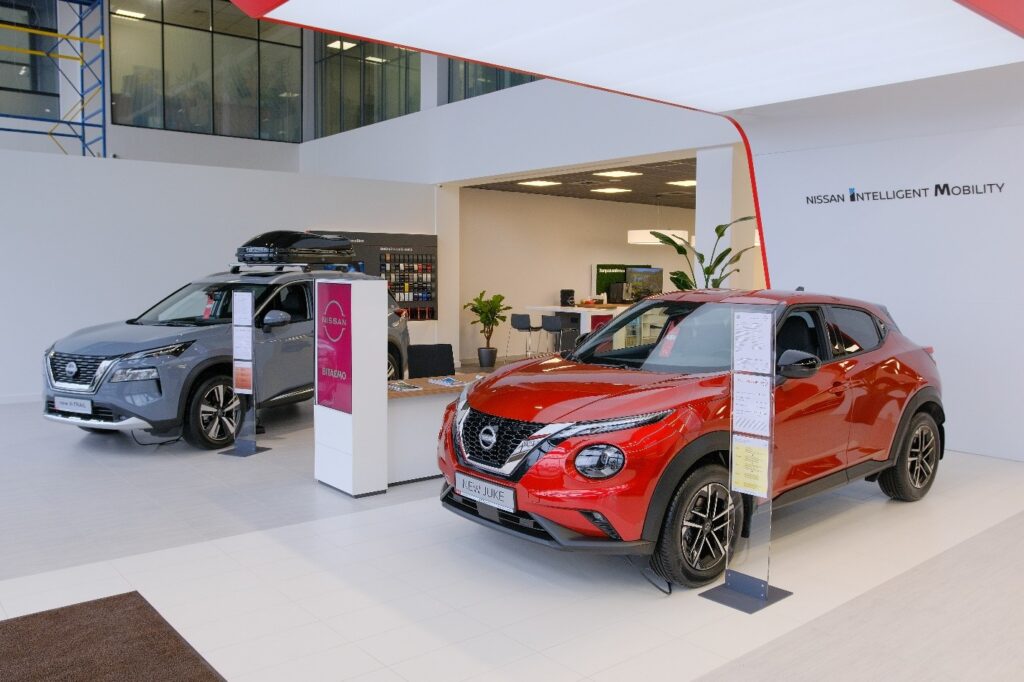
In terms of numbers, the new-car market in 2025 totaled 83,443 vehicles (+17% compared to 2024). But we all understand that this result was driven primarily by a surge in EV demand ahead of the expiration of VAT incentives.
LeadershipDaily: Do you see demand recovering, and what factors influence customer decisions most today?
O. Dzhurynskyi: Yes, demand is recovering. The key factors are vehicle availability in stock (people want to buy now), the dealer’s reputation, and attractive financial instruments. Today’s customer chooses confidence—the assurance that tomorrow they won’t be left alone with a problem.
LeadershipDaily: In 2024–2025, a number of key markets (the U.S., Germany) saw slower growth or even a decline in demand for electric vehicles. What is the situation in Ukraine?
O. Dzhurynskyi: Ukraine’s situation is somewhat paradoxical. For example, in December 2025 alone, electric vehicles accounted for 50.8% of all cars sold (6,500 vehicles).
Unfortunately, the vast majority of these were “grey” sales of Chinese EVs manufactured for China’s domestic market. The surge was driven primarily by an attractive price, rather than consumers’ desire to embrace the “green” trend.
That’s why in the first weeks of January 2026, EV sales still represented more than 25% of total sales, but by the final days of January they had fallen to almost zero. The reasons are clear: the end of incentives, blackouts, difficulty finding operational charging stations, and a sharp increase in the cost per kWh—all of this dampened interest in EVs as effectively as winter conditions.
At the same time, we see many customers returning to hybrids. A hybrid today is a rational compromise. At VIDI, we offer a wide range of electric models, but we always speak honestly with customers about the state of infrastructure and the practical realities of day-to-day use.
LeadershipDaily: How do you see the Ukrainian automotive market in 3–5 years?
O. Dzhurynskyi: I see it as part of the European market. It will be a highly competitive environment, where only large, technology-driven players with impeccable reputations will survive. The share of online sales will grow significantly, and electric vehicles will become a normal part of the urban landscape.
LeadershipDaily: Are major automotive businesses ready to invest in Ukraine’s development today, and under what conditions do such investments make sense?
O. Dzhurynskyi: We are investing even now. It makes sense if you plan to play the long game. The key conditions are clear, predictable rules from the state and belief in victory. We are building new facilities, upgrading our websites, and developing IT because we believe in Ukraine’s potential.
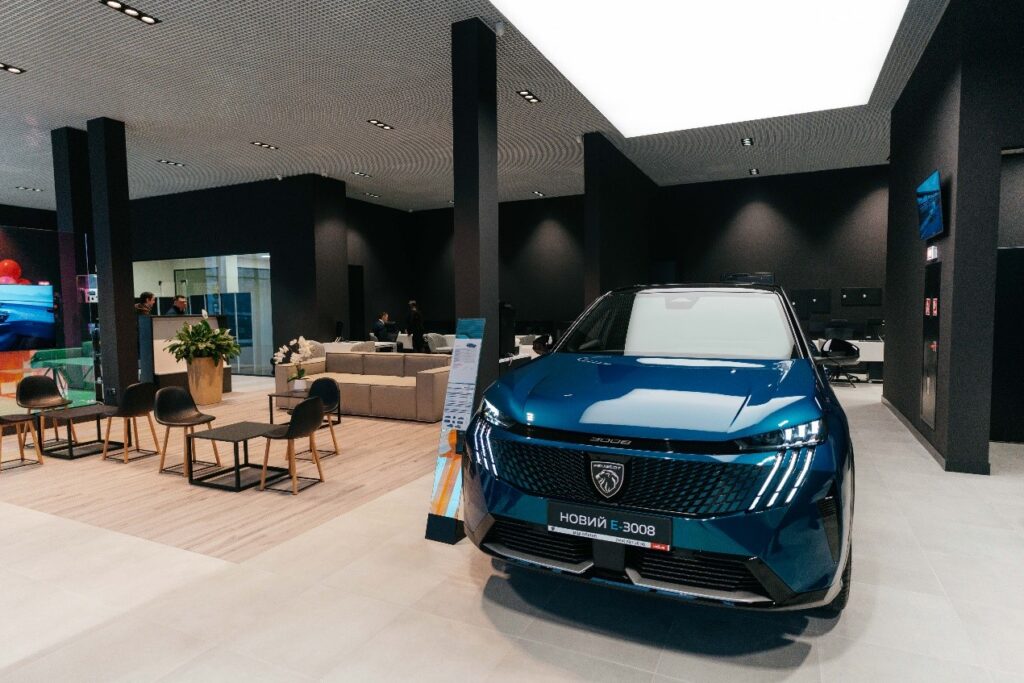
For example, in 2025 alone, VIDI delivered:

Construction is also underway for a new dealership, “Toyota Center VIDI Palmyra,” in Odesa, involving very substantial investment.

LeadershipDaily: Which technological or regulatory changes could have thegreatest impact on the industry?
O. Dzhurynskyi: First and foremost, the harmonization of our legislation with European standards. This will level the playing field between official dealers and “grey” sellers.
Another major driver will be the development of artificial intelligence in customer data management and the automation of service processes.
LeadershipDaily: What steps from the government are most lacking today to support the automotive market and related industries?
O. Dzhurynskyi: What’s missing most is a systemic effort to combat the shadow sector. Official, “white” dealerships sold only 83,443 new cars in 2025 (+17% compared to 2024) and just over 9,000 used cars.
At the same time, 15 “white” automotive companies generate 89% of all tax revenues collected from the market’s overall activity.
In 2025, the VIDI group paid UAH 1.019 billion in taxes (+33.5% vs. 2024). Importantly, 47% of that amount came from payroll taxes, and our wages today are among the highest in Ukraine’s automotive market.
If we look specifically at used cars, out of more than 1.3 million transactions, just over 9,000 are legally registered. Everything else falls into the black or the shadow economy.
A range of tax-evasion schemes are used in the market: undisclosed intermediation when a vehicle is registered directly to the end buyer; using front persons to carry out an untaxed “first sale”; reselling via a power of attorney; off-the-books commission sales; and other practices.
You can also see “brands” that advertise themselves as companies but have no official legal registration. At best, they operate as networks of sole proprietors; in some cases, they are not formally established at all.
And of course there are “black” car flippers who operate actively on social media and beyond—openly boasting about their sales “achievements” while paying no taxes whatsoever.
As a result, more than 90% of car sales in the country remain outside taxation. Official dealers pay all taxes and provide fully declared wages, and we want to see fair competition. It would also be beneficial to introduce state programs that incentivize fleet renewal for businesses.
LeadershipDaily: Do you see potential for Ukraine to become a regional hub for the automotive business after the war—and what would need to happen for that?
O. Dzhurynskyi: Absolutely. We have everything: a strong geographic position, talented engineers, and experience in component manufacturing. What we need are investment-support programs, tax holidays for manufacturers, and, of course, security. My dream is to see a full-scale plant of a global brand operating in Ukraine.
LeadershipDaily: Looking at expectations and forecasts for 2026, what is yourvision for Ukraine’s automotive market? How does the war affect it?
O. Dzhurynskyi: 2026 should become a year of stabilization and active recovery—provided peace comes. The market will be more digital and more environmentally oriented. Demand will shift toward crossovers and energy-efficient vehicles.
And most importantly: all success and market development are possible only thanks to our defenders. Because if there is no Ukraine, there will be no automotive market either. That’s why we must work actively, pay taxes, and support those who are defending Ukraine.
LeadershipDaily: Does VIDI continue implementing its social initiatives today? If so, which ones?
O. Dzhurynskyi: Our business has always been about people. Today, in a time of war, we feel a particular responsibility—to support those defending Ukraine and those who need care the most.
From February 24, 2022 to February 1, 2026, we have allocated UAH 131,762,094 to defense and humanitarian needs.
Key areas of activity:
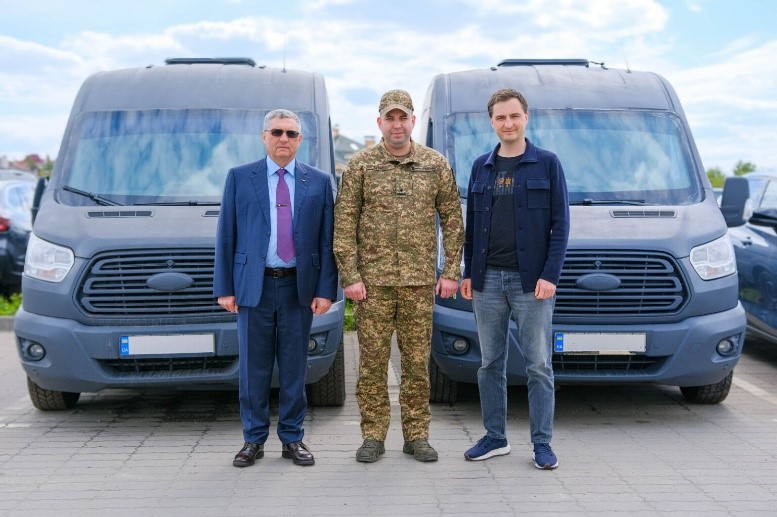
Our own initiative: “Cars for the Front”
VIDI is actively developing this initiative, under which the company provides armored vehicles free of charge to military units.
All vehicles undergo diagnostics, refurbishment, and upgrades. A high level of armor provides protection against enemy fire, shrapnel, and mines.
Joint projects with Ukraine’s defense forces
We work closely with the National Guard of Ukraine, providing what is needed—from purchasing drones to repairing vehicles. Our efforts have been recognized with an official letter of appreciation from the National Guard’s command.
As part of our cooperation with the “Achilles” unit of the 429th Separate Unmanned Systems Regiment, UAH 1.5 million was transferred for the production of modern strike drones.
The Foundation also supported a military training range of the Ground Forces of the Armed Forces of Ukraine. To create proper training conditions for defenders, the Foundation provided the necessary equipment, contributing to more effective training for service members.
Recently, we made a UAH 3 million charitable contribution to support the State Emergency Service in Kyiv region. These funds were used to purchase electronic warfare (EW) systems for brigades operating on the front line.
Partnerships with foundations and civil society organizations
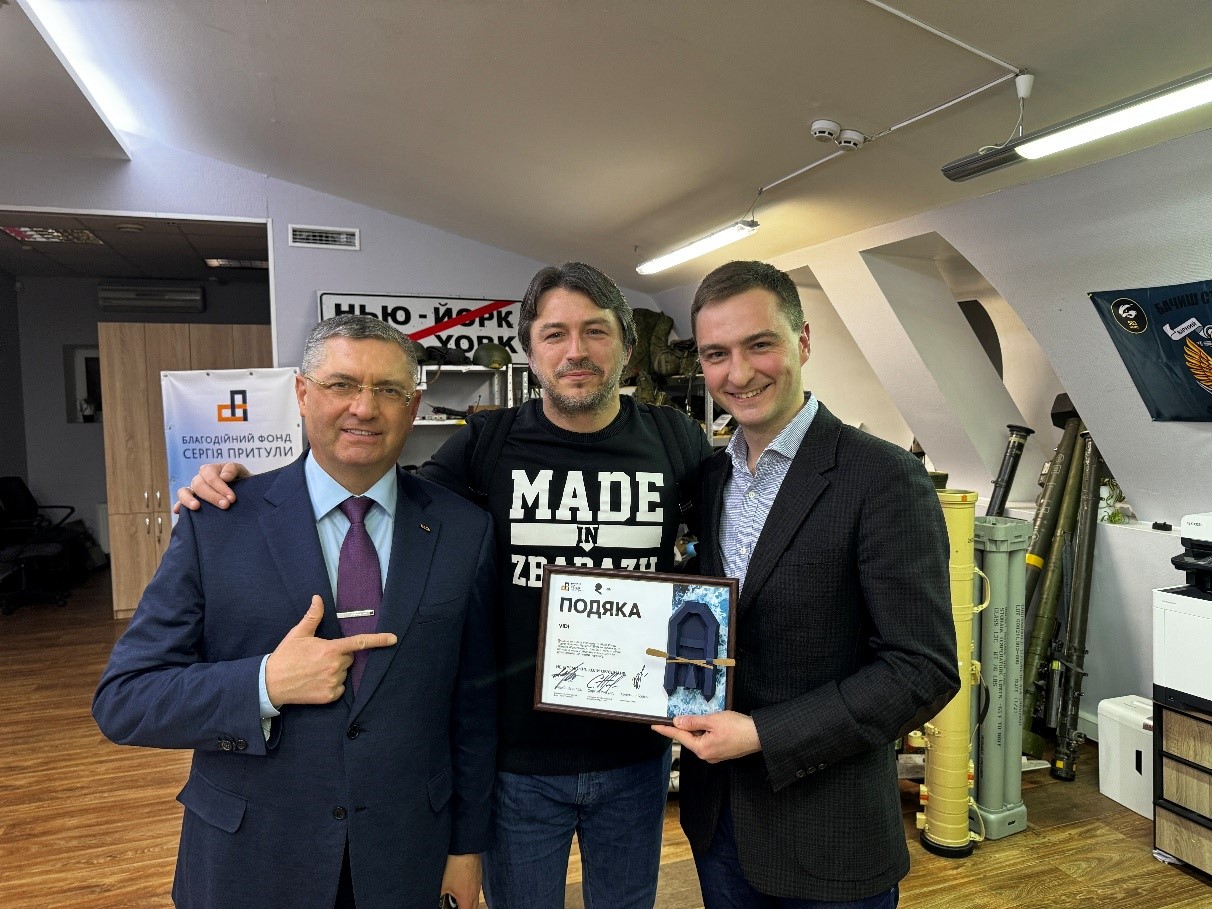
We maintain a structured partnership with the Serhii Prytula Foundation: VIDI makes monthly donations both to projects supporting Ukraine’s Defense Forces and to the foundation’s statutory activities.
We also cooperate with the Come Back Alive Foundation. We have completed the joint fundraising campaign “Reconnaissance Drive,” which raised UAH 15,255,720 in total, including UAH 3,900,000 contributed by the VIDI group. The funds were used to purchase five UAV command-and-control posts and five pickup trucks for marine infantry units.
Support for mobilized employees
Supporting mobilized employees of the VIDI group is one of our top priorities and receives the largest share of our attention and funding.
At present, 75 VIDI employees are serving in the Armed Forces of Ukraine, including two members of the Supervisory Board. The Charity Foundation provides financial support to them and their families and helps purchase equipment, gear, and essential everyday items. All requests are handled urgently and on a priority basis.

Social initiatives